Evaporative Condenser Technology for Food Processing: A 2026 Technical Guide

Evaporative Condenser Technology for Food Processing: A 2026 Technical Guide

What if the engineering precision of your heat rejection system is the primary factor standing between operational stability and the 30% annual leak rate threshold mandated for industrial process refrigeration as of January 2026? You likely recognize that maintaining thermal equilibrium in a high-volume facility is an exacting task, particularly when escalating energy costs and the corrosive realities of harsh processing environments threaten your infrastructure. Unplanned downtime in a perishable food line is more than a maintenance hurdle; it represents a direct risk to product safety and long-term profitability.

This technical guide provides a disciplined analysis of how an evaporative condenser for food processing optimizes thermal efficiency while ensuring compliance with the latest GWP limits and leak detection standards. You’ll learn how to achieve lower head pressure in your compressors and maintain stable condensing temperatures through rigorous mechanical design. We will also preview the material standards necessary for equipment durability and the specific protocols required to navigate the 2026 Technology Transitions Rule effectively, ensuring your facility remains both compliant and productive.

Key Takeaways

  • Understand how leveraging latent heat transfer through an evaporative condenser for food processing significantly reduces compressor head pressure and overall facility energy consumption.
  • Analyze the critical relationship between ambient wet-bulb temperatures and heat rejection performance to ensure stable condensing across varying environmental conditions.
  • Evaluate the mechanical trade-offs between counterflow and crossflow patterns to determine the optimal balance of water usage and fan power for your specific processing line.
  • Learn the precise methodology for calculating Total Heat of Rejection (THR) to ensure seamless integration with industrial ammonia refrigeration compressors and refrigerant vessels.
  • Identify the essential manufacturing standards, including ASME-certified pressure vessel construction and advanced welding protocols, required to maintain structural integrity in harsh industrial environments.

The Critical Role of Evaporative Condensers in Food Processing

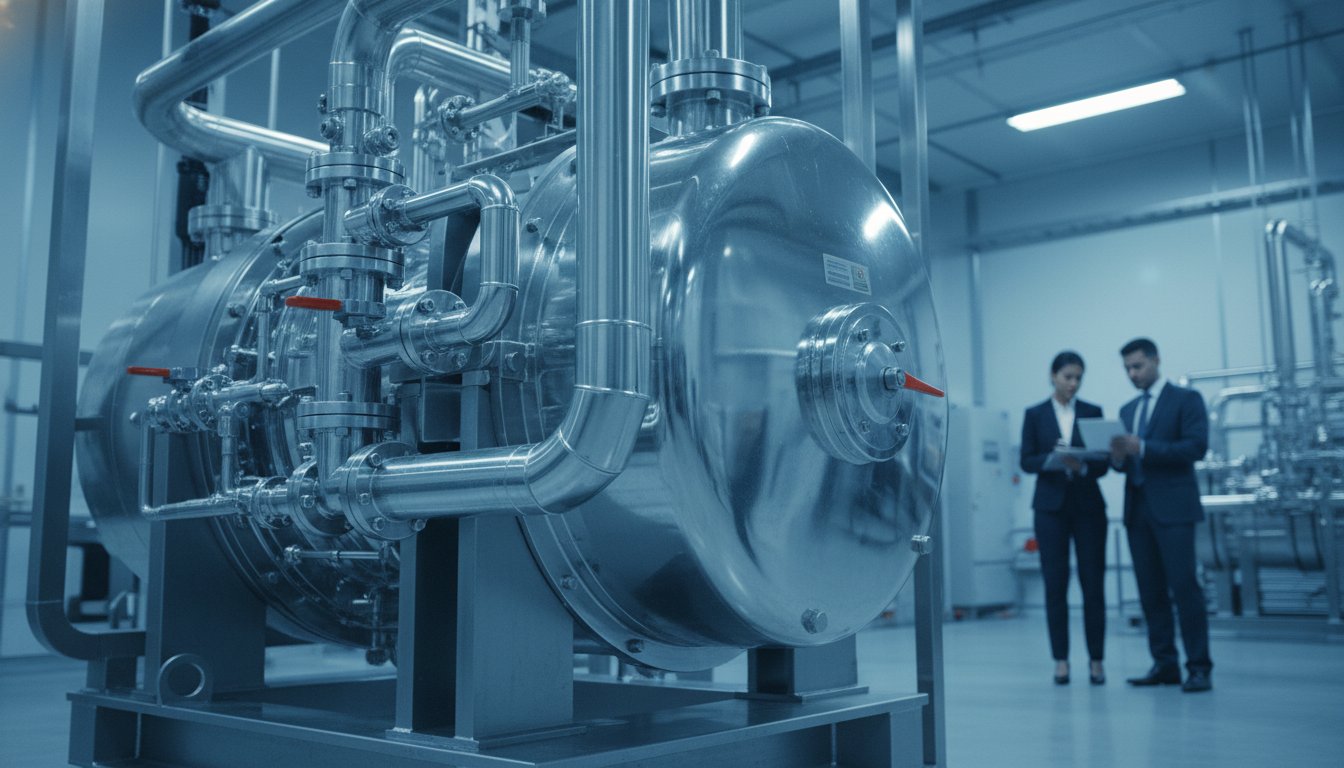
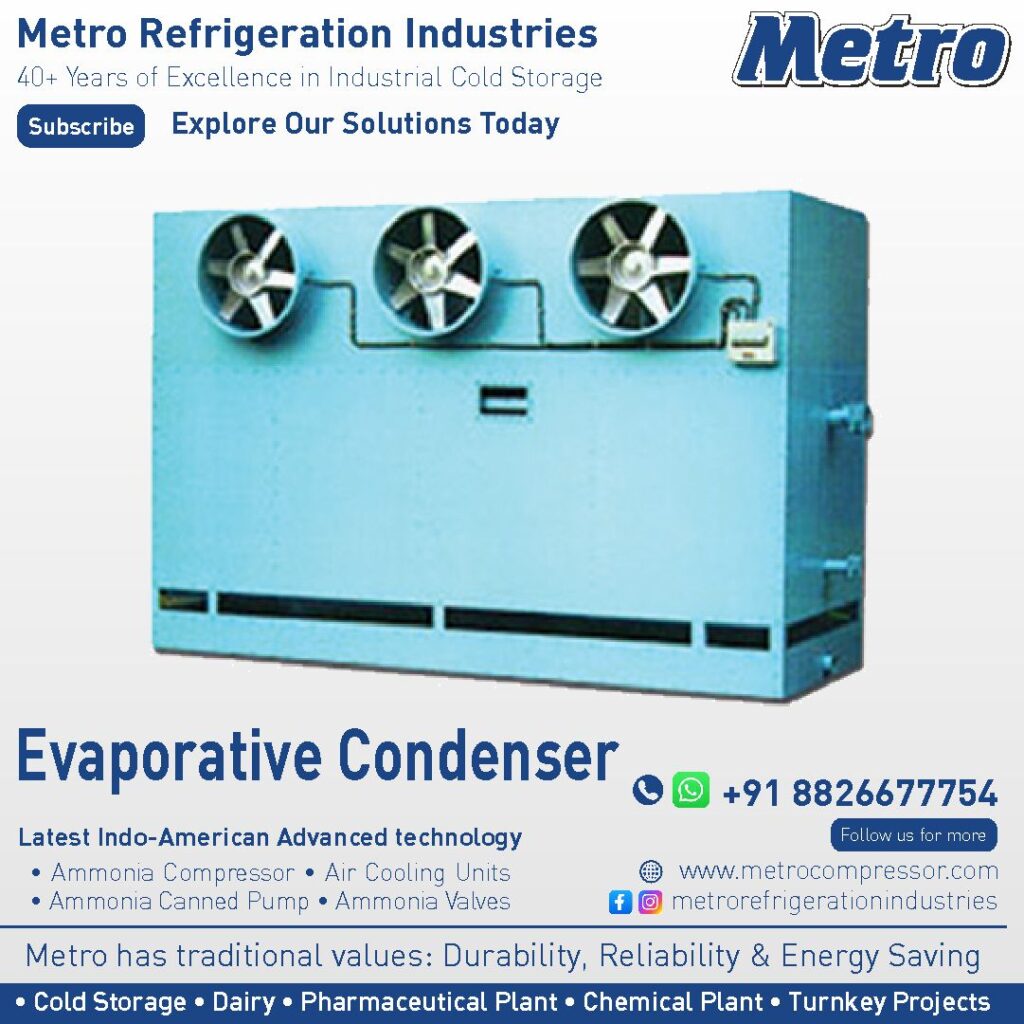
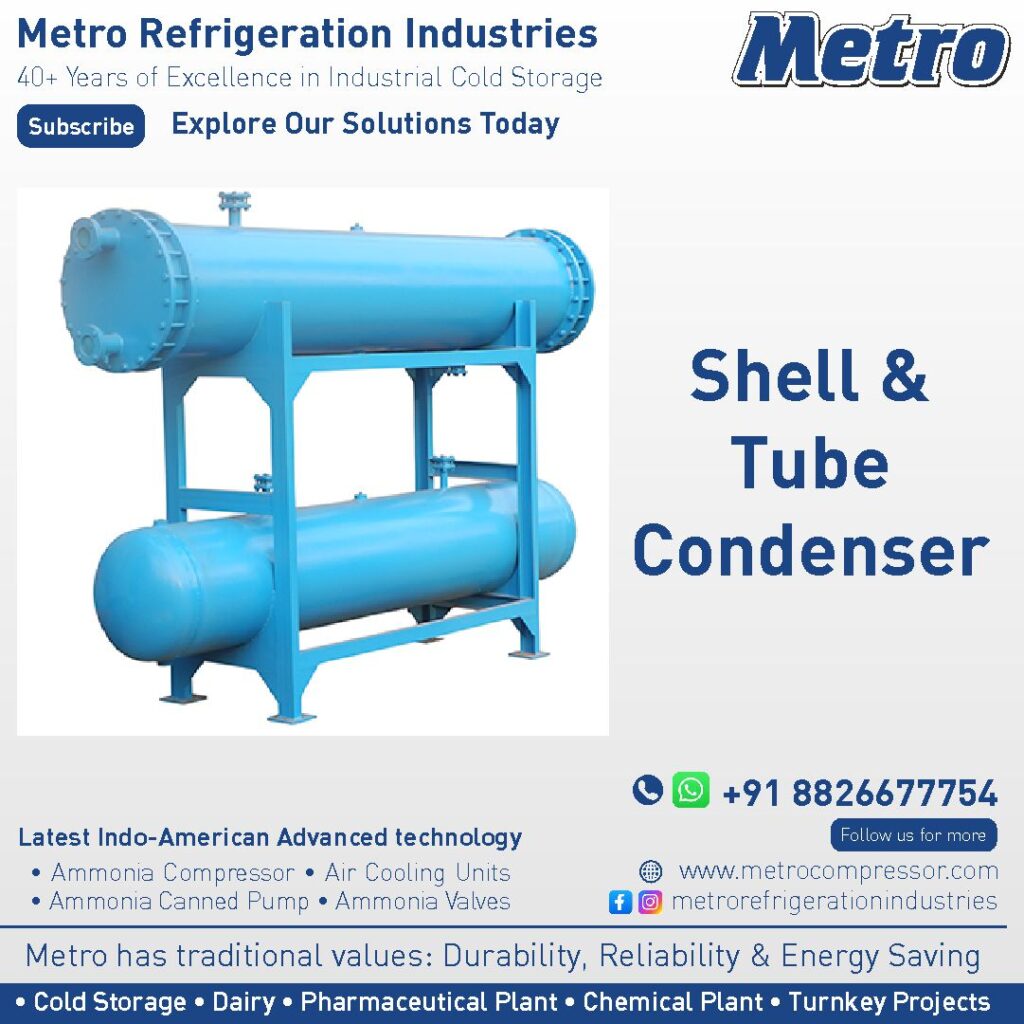
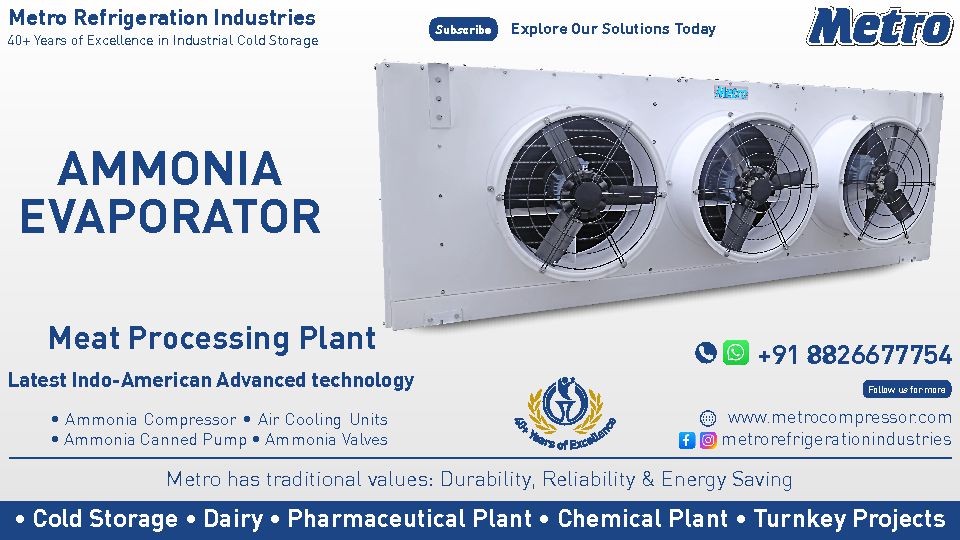
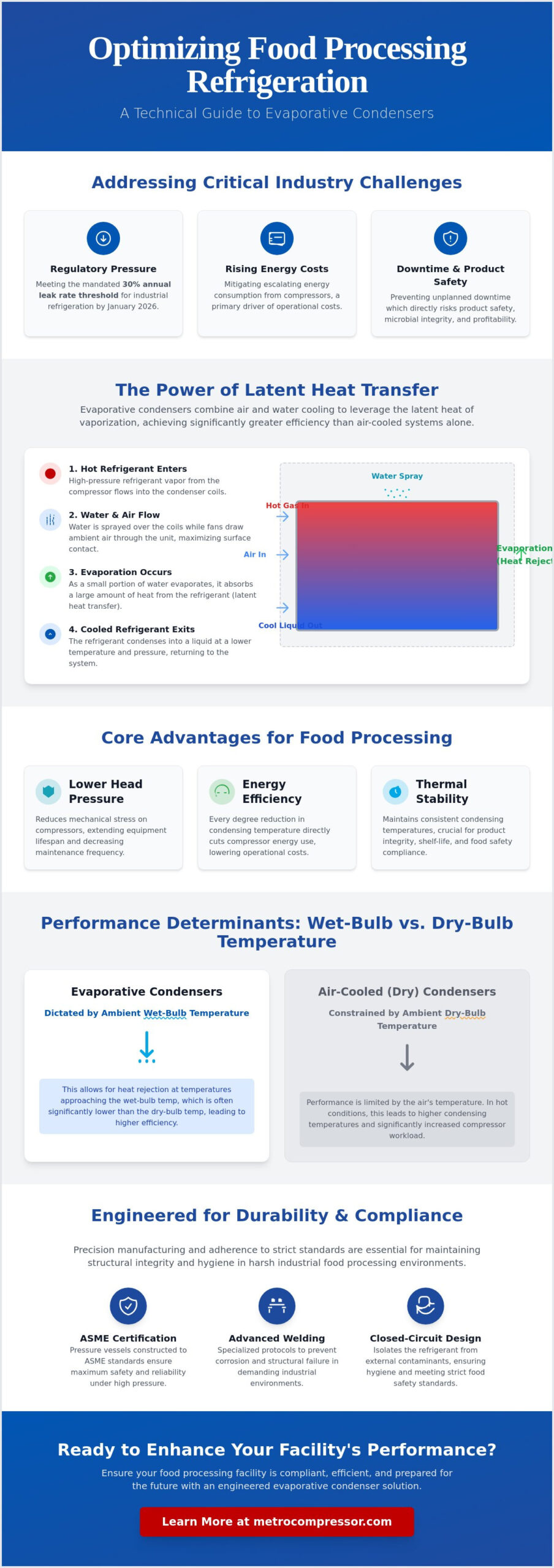
An evaporative condenser for food processing functions as a sophisticated hybrid of air-cooled and water-cooled technologies, engineered to reject heat from the refrigeration system by utilizing the latent heat of evaporation. By spraying water over the condensing coils while simultaneously drawing air through the unit, these systems leverage the principle of evaporative cooling to achieve lower condensing temperatures than conventional air-cooled alternatives. This thermodynamic advantage is essential for industrial facilities where the relationship between condensing temperature and compressor energy consumption is a primary driver of operational costs. Every degree of reduction in the condensing temperature correlates to a measurable decrease in the work required by the refrigeration compressors, leading to a more efficient and sustainable thermal cycle.

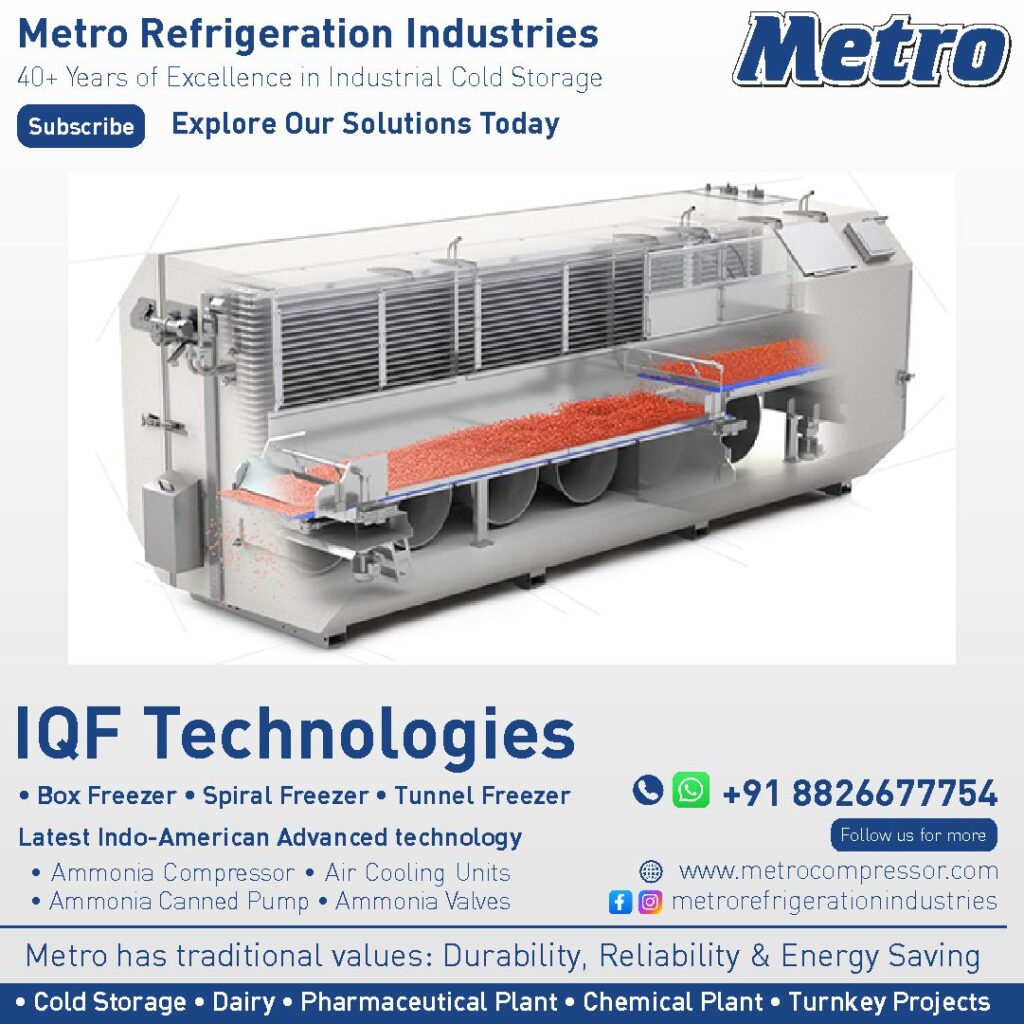
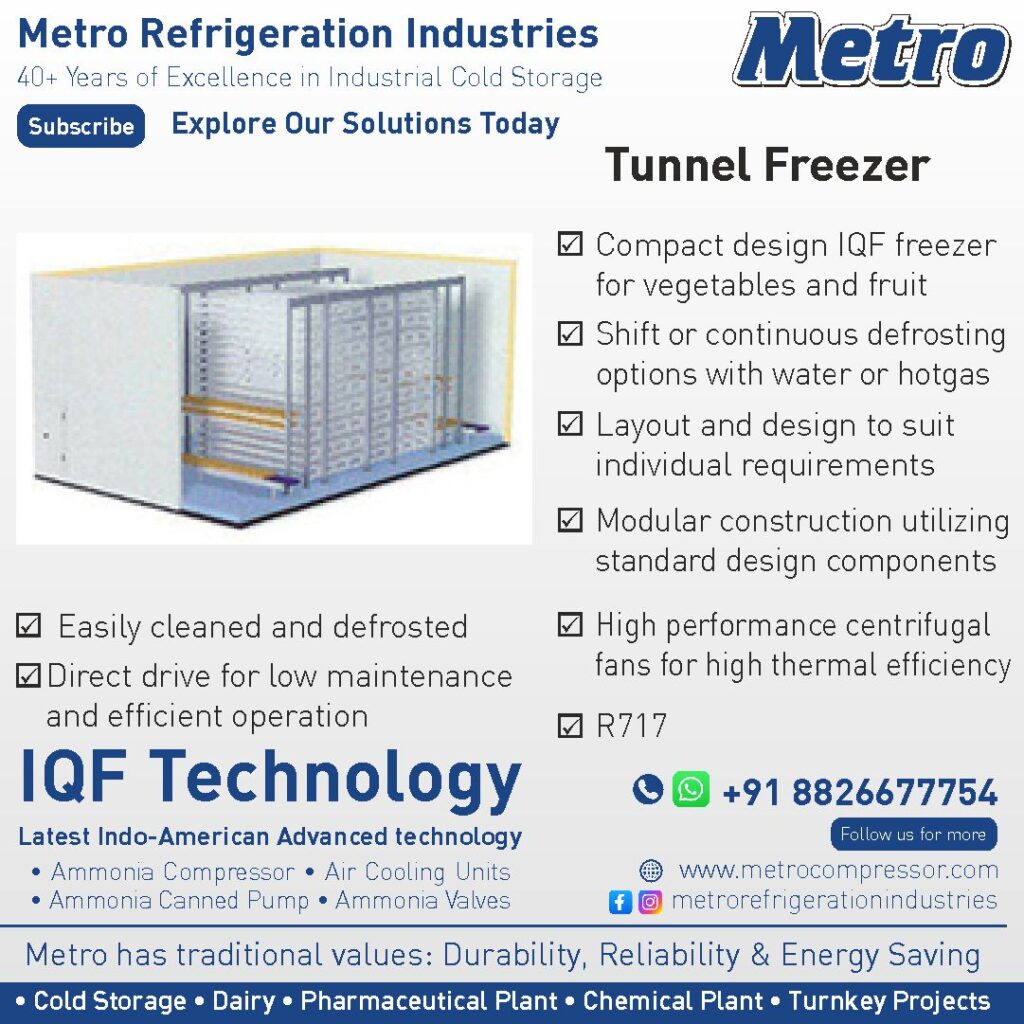
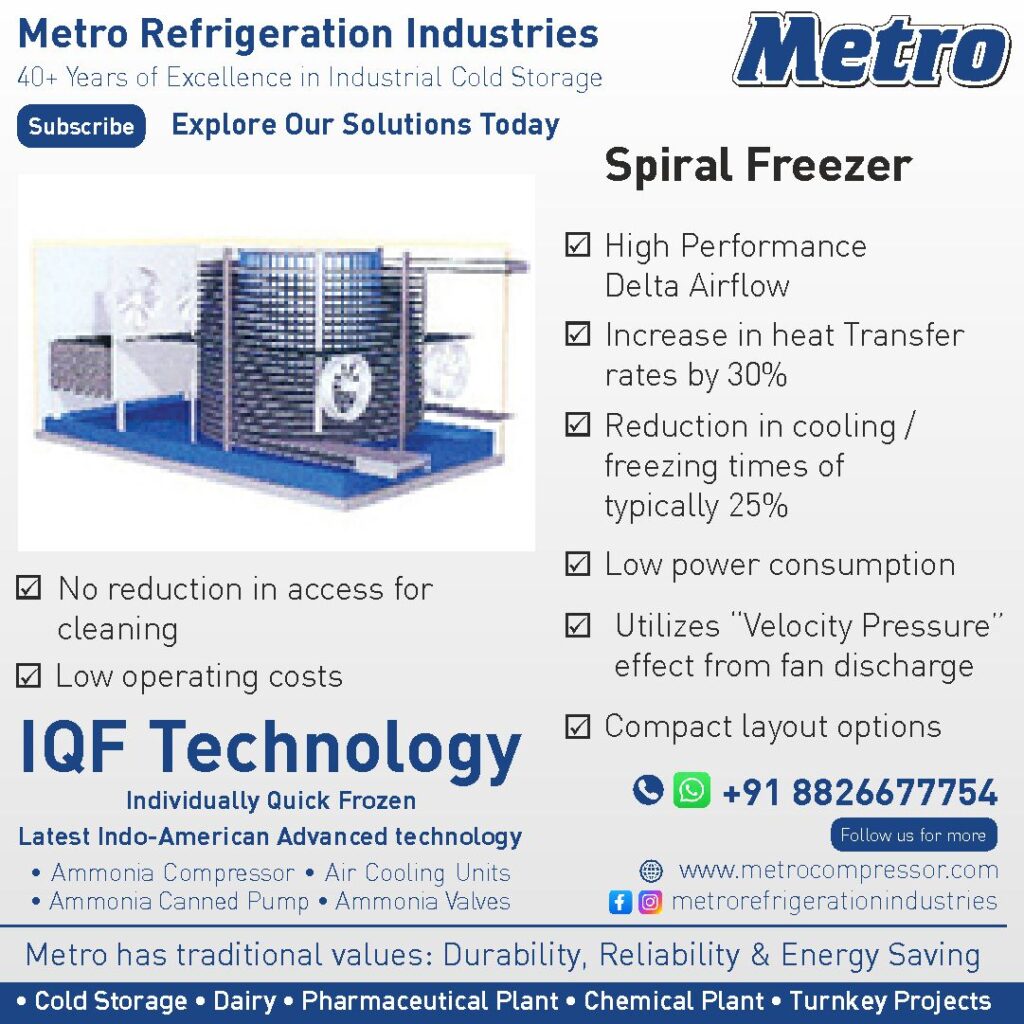
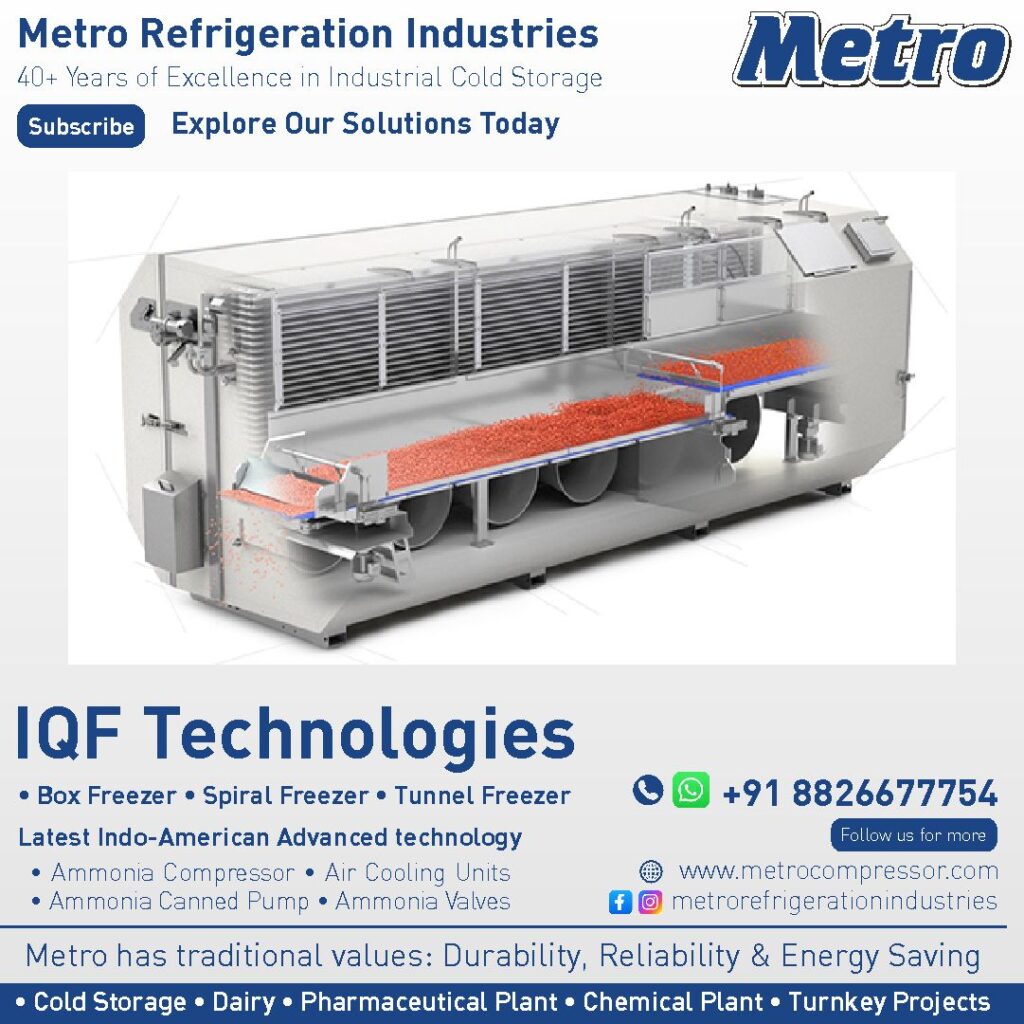
In high-demand environments like meat processing plants, dairy facilities, and IQF freezing lines, the requirement for precise temperature control is absolute. These sectors rely on consistent heat rejection to maintain the structural and microbial integrity of perishable goods. Because microbial safety is inextricably linked to thermal stability, the selection of an evaporative condenser for food processing becomes a strategic decision that impacts both the safety of the end consumer and the long-term durability of the mechanical infrastructure. These units are designed to operate under heavy-duty conditions, providing a reliable link between the internal refrigeration load and the external environment.

Maintaining Continuous Thermal Throughput

Industrial food production often involves high-volume production cycles that generate significant peak thermal loads. An evaporative condenser must be capable of handling these surges without allowing head pressure to fluctuate beyond safe operational limits. Maintaining stable head pressure is vital for the longevity of the entire system, as it prevents excessive mechanical stress on compressor components and reduces the frequency of maintenance intervals. Furthermore, the integration of redundant cooling loops within the condenser configuration minimizes the risk of total system failure, ensuring that production remains continuous even during peak summer ambient conditions when thermal rejection is most challenging.

Food Safety and Regulatory Compliance

Modern engineering standards for food-grade refrigeration prioritize a closed-circuit design to isolate the refrigerant from potential external contaminants. This architectural choice is critical for meeting strict hygiene standards, as it prevents the process fluid from being exposed to the atmosphere or untreated water sources. By ensuring temperature consistency through advanced heat transfer dynamics, these systems facilitate shelf-life extension and help facilities comply with rigorous food safety regulations. The ability to maintain a steady, predictable cooling environment is the foundation of a successful food processing operation, where even minor thermal deviations can result in significant product loss or regulatory scrutiny.

Mechanical Principles and Heat Transfer Dynamics

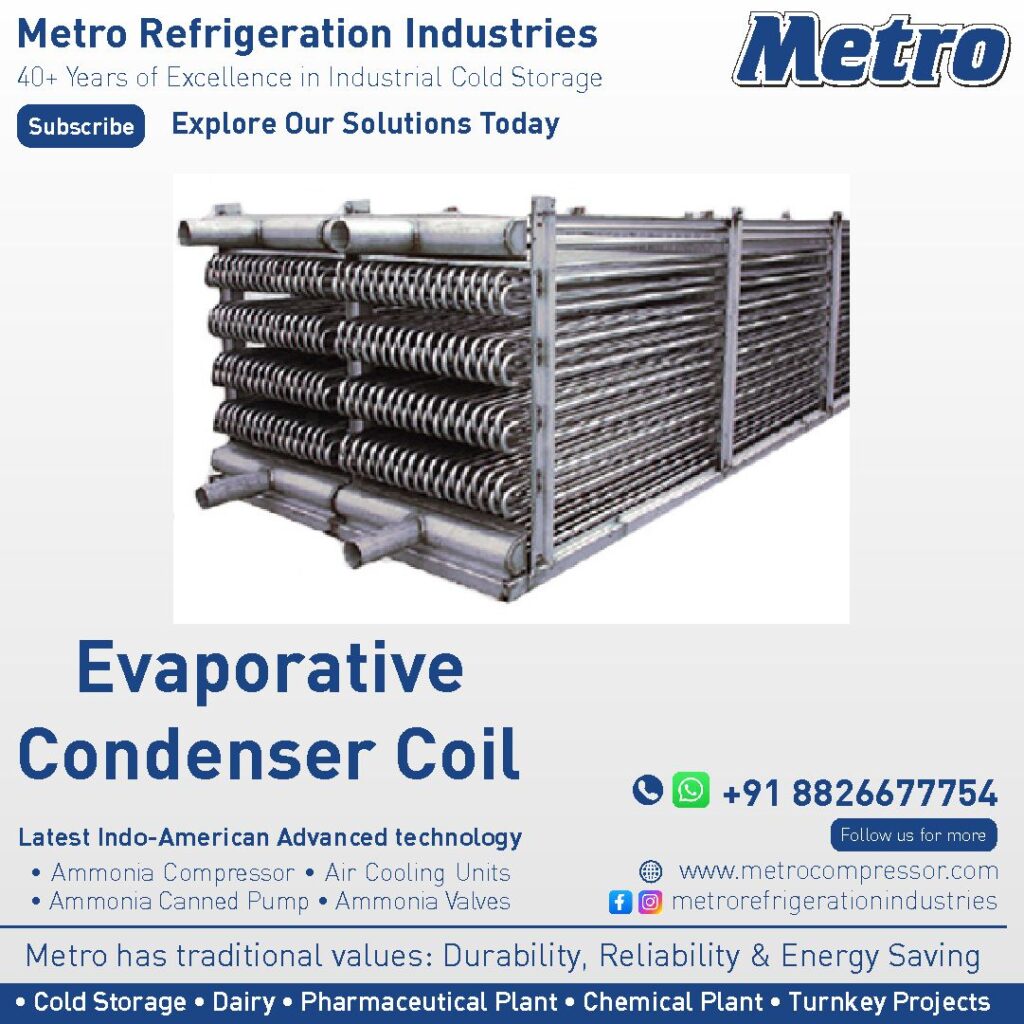
The operational efficiency of an evaporative condenser for food processing relies on the precise management of latent heat transfer. While air-cooled systems depend on sensible heat transfer, where temperature changes in the air stream drive cooling, evaporative systems utilize the energy absorbed during the phase change of water from liquid to vapor. This latent heat of vaporization allows for a significantly higher rate of heat rejection per pound of fluid moved. Fluid dynamics within the condenser coil assembly are engineered to maximize the air-to-water interface, ensuring that the falling water film remains in constant contact with the pressurized refrigerant vapor inside the tubes. This continuous wetting of the coil surface is what facilitates the rapid migration of heat from the internal refrigerant to the external environment.

Psychrometrics play a decisive role in determining the performance limits of these units. Unlike dry-cooled systems that are constrained by ambient dry-bulb temperatures, the capacity of an evaporative system is dictated by the ambient wet-bulb temperature. This allows the system to operate at condensing temperatures significantly closer to the ambient environment, providing a stable thermal baseline even during periods of extreme heat. By optimizing the air-to-water interface, engineers can maintain a consistent thermal gradient, which is essential for the stable operation of the entire refrigeration cycle.

The Physics of Latent Heat Transfer

The efficiency of water evaporation over traditional air cooling is rooted in the high energy density required for phase transitions. By calculating heat rejection capacity based on the total surface area of the coil assembly and the mass flow rate of the air, engineers design systems with a much smaller physical footprint than air-cooled counterparts. This reduction in size is particularly advantageous in food processing facilities where floor space is at a premium and structural loads must be carefully managed. It’s this focus on latent heat that reduces the required equipment footprint while simultaneously lowering the total energy consumption of the facility.

Ammonia Compatibility and Material Integrity

Ammonia remains the preferred refrigerant for large-scale food processing due to its superior thermodynamic properties and zero global warming potential. However, the use of ammonia requires strict adherence to OSHA safety standards to mitigate risks associated with toxicity and pressure. Material science is central to this effort, as the harsh environments found in processing plants demand the use of corrosion-resistant alloys and heavy-duty galvanized coatings. Ensuring structural integrity under high-pressure conditions is a matter of manufacturing rigor, where every weld and joint must be inspected for precision. If you’re evaluating the mechanical stability of your current refrigeration infrastructure, it’s beneficial to consult with experts who specialize in industrial refrigeration equipment to ensure long-term durability and safety.
Evaporative Condenser Technology for Food Processing: A 2026 Technical Guide

Evaluating Condenser Configurations for Industrial Efficiency

Selecting an evaporative condenser for food processing requires a meticulous evaluation of flow configurations to ensure the system aligns with the specific psychrometric constraints of the facility’s geographic location. The mechanical arrangement of air and water streams significantly impacts the unit’s thermal performance, footprint, and long-term serviceability. While some configurations prioritize maximum heat transfer density, others are designed to facilitate easier access for the rigorous cleaning protocols required in food-grade environments. Engineers must weigh these factors against the total cost of ownership, including both electrical consumption and water treatment requirements.

Counter-Flow vs. Cross-Flow Designs

In a counter-flow arrangement, air is drawn vertically upward through the coil as water sprays downward, creating a highly efficient heat exchange environment where the coldest air meets the coldest water. This configuration typically offers superior thermal efficiency and a smaller footprint, making it ideal for facilities with limited roof space or those operating in high-humidity regions. Conversely, cross-flow designs utilize a horizontal air stream that intersects the falling water. While cross-flow units may require more fan power to achieve similar rejection rates, they often provide superior access for coil inspection and nozzle maintenance. This accessibility is a critical factor in preventing scale buildup and maintaining the hygiene standards essential for food processing.

Water Conservation and Energy Optimization

Balancing water consumption with fan energy is a central challenge in modern condenser control and system optimization strategies. Implementing variable speed drives (VSD) on fan motors allows the system to modulate airflow based on real-time head pressure, preventing unnecessary energy expenditure during off-peak hours. In arid climates, adiabatic cooling sections can be integrated to pre-cool incoming air, reducing the reliance on continuous water evaporation. Effective water management also involves sophisticated blowdown controls that monitor mineral concentration, ensuring the system operates at peak efficiency while minimizing waste. By integrating these technologies, an evaporative condenser for food processing can achieve a sustainable balance between resource conservation and mechanical performance.

Space-saving designs are increasingly prioritized in compact processing facilities where every square foot must be utilized for production. By integrating high-efficiency heat transfer surfaces and optimized fan geometries, manufacturers can deliver the required cooling capacity without necessitating expansive structural modifications. This engineering precision ensures that the condensing unit integrates seamlessly with other critical components, such as industrial ammonia refrigeration compressors, to maintain a stable and reliable cold chain. Ultimately, the choice of configuration must be a data-driven decision that accounts for the specific operational load and environmental variables of the site.

Engineering Selection Criteria for Food and Beverage Facilities

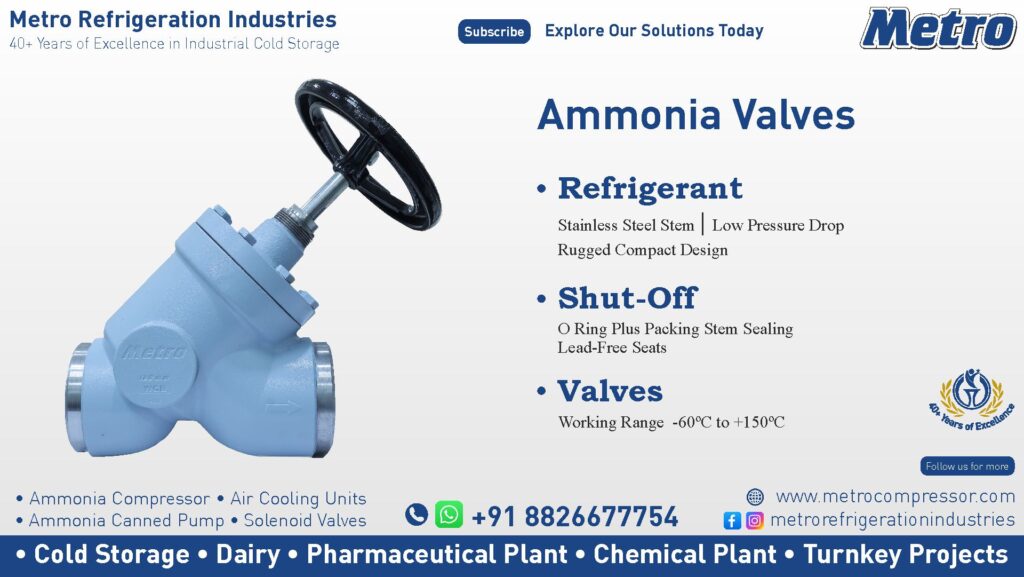
Calculating the Total Heat of Rejection (THR) represents the first critical step in the engineering selection process for any high-capacity facility. This value is not merely a reflection of the evaporator capacity; it must comprehensively account for the heat of compression generated by the industrial ammonia refrigeration compressors serving the production line. Precise load matching ensures the system doesn’t suffer from excessive head pressure during peak summer operations, which would otherwise lead to increased energy consumption and mechanical wear. By integrating high-quality ammonia valves for refrigeration, operators can achieve the granular pressure control necessary to maintain a stable thermal equilibrium across the entire refrigerant circuit.

Evaluating the total cost of ownership (TCO) over a 20 year lifecycle reveals that initial capital expenditure is often secondary to long-term energy and maintenance expenses. A robustly engineered evaporative condenser for food processing might require a higher upfront investment, but the resulting reduction in compressor work and the optimization of water treatment protocols typically yields a superior return on investment. Mechanical engineers must look beyond the purchase price to analyze the structural integrity and component accessibility that will define the unit’s operational life.

Load Matching for Fluctuating Processing Demands

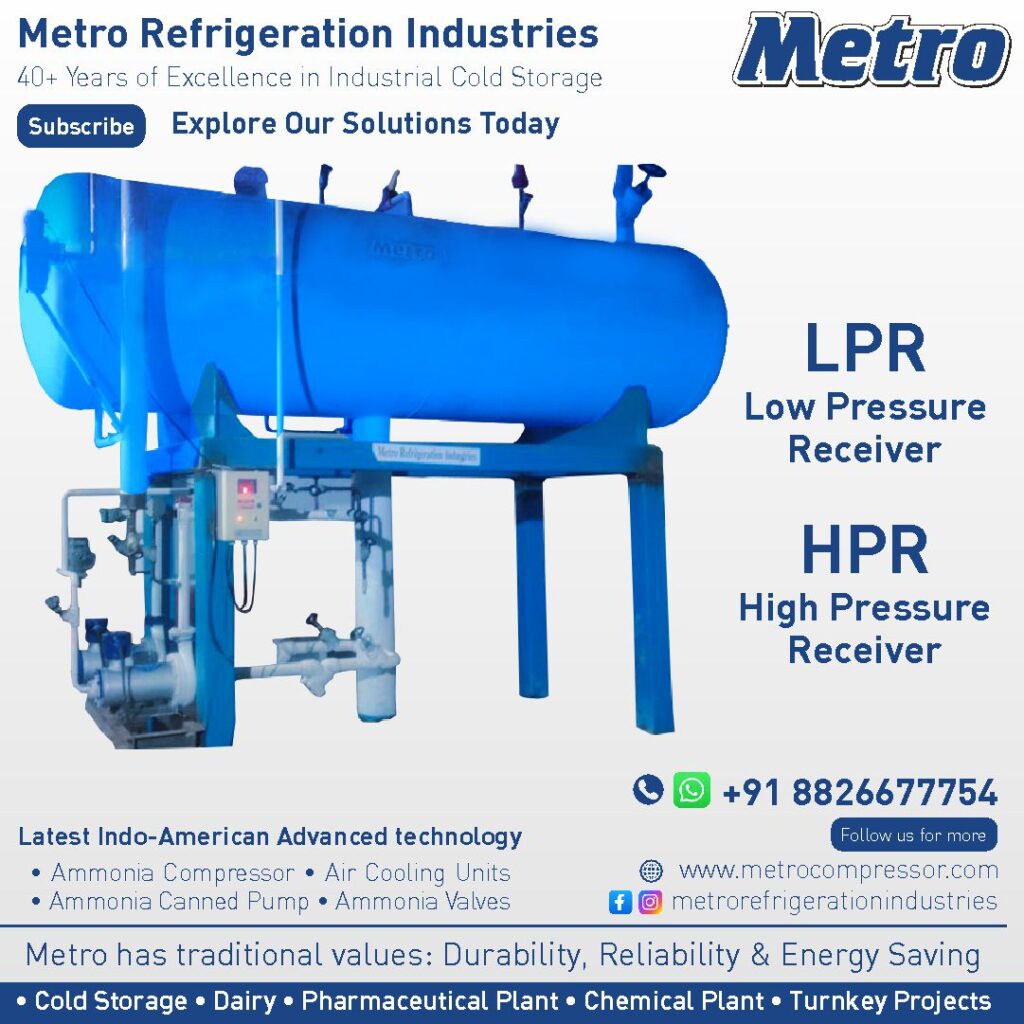
Food processing demands are rarely static, often fluctuating significantly based on seasonal harvests or shifting production schedules. Designing for these variations requires an approach that prioritizes partial load efficiency to avoid the energy penalties associated with over-cycling. Modular condenser units allow for incremental capacity control, enabling the system to match the actual thermal load with precision. Additionally, the strategic inclusion of refrigerant vessels provides the necessary surge volume to stabilize the system during rapid load changes, preventing liquid slugging and protecting the long-term functionality of the compressors.

Durability in Corrosive Environments

The corrosive nature of food processing environments, characterized by the frequent use of harsh cleaning chemicals and potential industrial pollutants, demands rigorous material selection. While galvanized steel offers a baseline level of protection, many modern facilities specify 304 or 316L stainless steel for condenser coils to ensure maximum longevity and compliance with the stricter leak repair mandates taking effect in 2026. Protective coatings can offer localized resistance, but the base material’s inherent properties remain the primary defense against structural degradation. In high-salinity or chemically aggressive areas, these material choices are essential for preventing unplanned downtime and maintaining the safety of the industrial refrigeration system.

To ensure your facility’s infrastructure meets these rigorous engineering standards, you can consult with our technical team regarding industrial refrigeration equipment to secure a solution tailored to your specific thermal requirements.

Precision Manufacturing Standards for Ammonia Refrigeration Systems

The structural integrity of an evaporative condenser for food processing is fundamentally determined by the precision of its manufacturing phase. In an industrial landscape where the 2026 EPA mandates enforce stricter leak detection and repair requirements for systems exceeding 15 pounds of HFCs, the necessity for leak-free operation has transitioned from an operational preference to a regulatory requirement. Achieving this level of reliability requires the utilization of ASME-certified pressure vessels and advanced robotic welding techniques. These processes ensure that every joint and seam can withstand the high-pressure environment of an ammonia-based thermal cycle without compromising the safety of the facility. Custom-engineered units provide a level of structural stability that generic, off-the-shelf models can’t match, as they’re built to the specific seismic and wind-load requirements of the installation site.

Advanced machining processes allow for the creation of heat exchange surfaces with exacting tolerances, which is essential for maintaining the thin-film evaporation necessary for peak performance. When a manufacturer prioritizes technical rigor over superficial market trends, the resulting equipment demonstrates superior resistance to the vibration and thermal cycling inherent in heavy-duty food production. This commitment to manufacturing standards ensures that the internal integrity of the machinery remains intact over a multi-decade service life, providing a stable foundation for the facility’s cold chain.

Rigorous Quality Assurance and Testing

Quality assurance protocols for industrial condensing units must be exhaustive and transparent to ensure long-term functionality. Every coil assembly undergoes rigorous hydrostatic and pneumatic testing to verify its integrity under pressures exceeding standard operational limits. Beyond pressure testing, technicians perform non-destructive testing (NDT), such as ultrasonic or radiographic inspections, to identify internal material flaws that could lead to premature failure. Ensuring perfect coil alignment is another critical step; even minor deviations can disrupt the uniform water distribution necessary for efficient evaporation. Comprehensive documentation and certification are provided for each unit, ensuring that the cooling infrastructure meets the highest industrial safety standards.

Integrating High-Performance Components

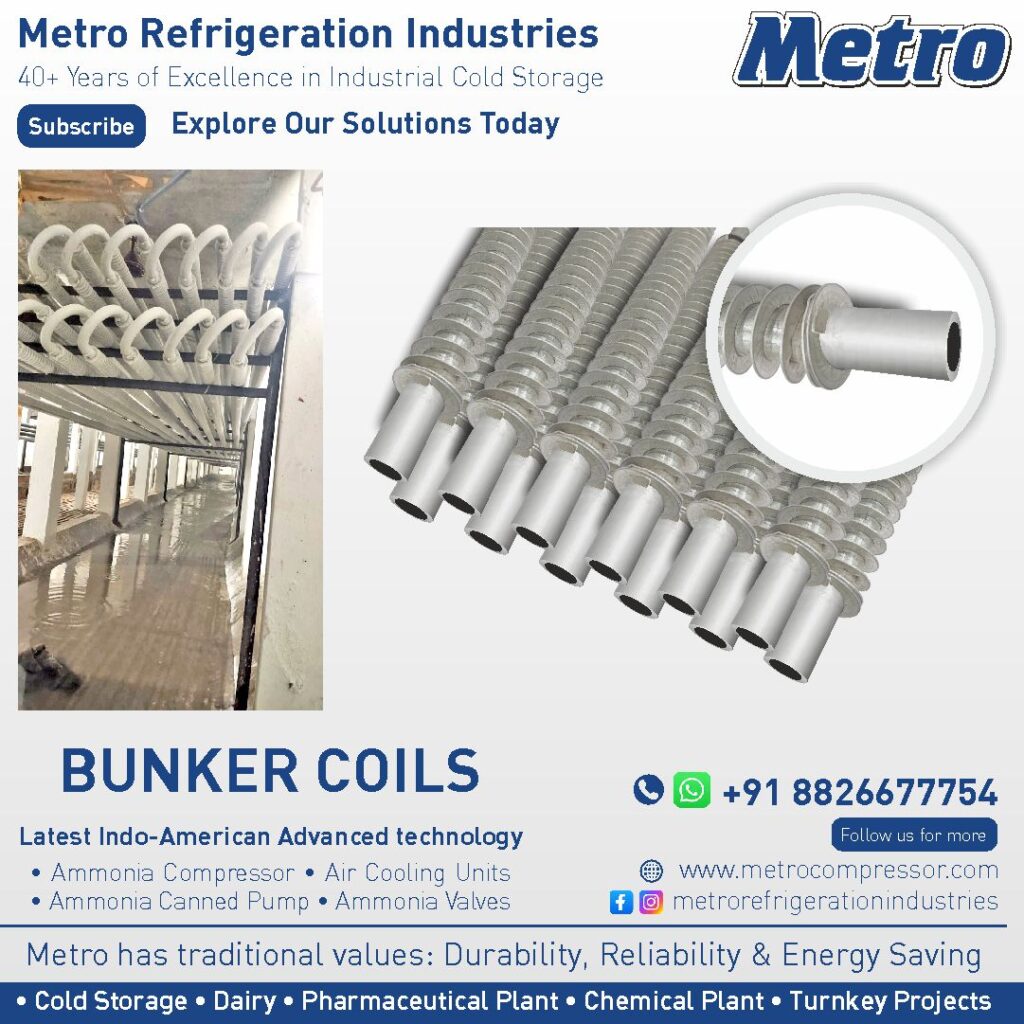
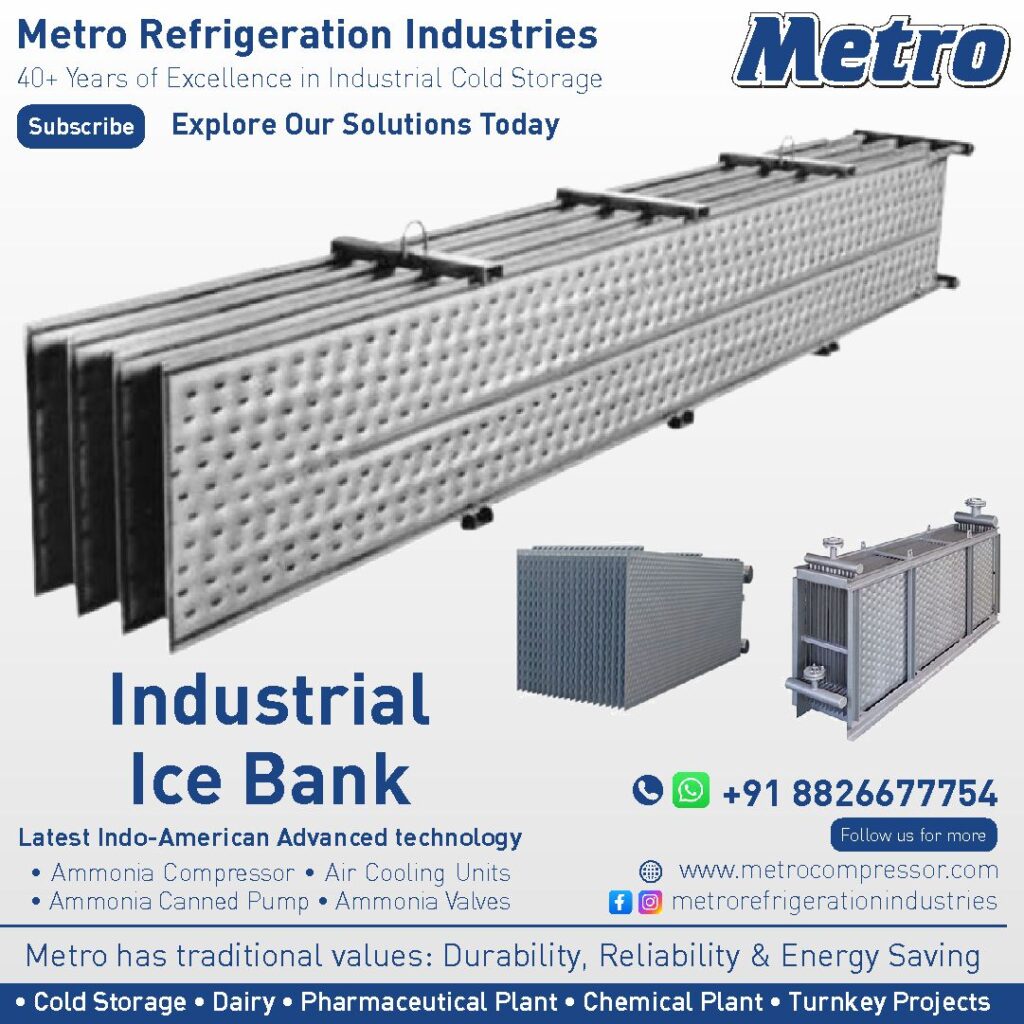
Maximizing the return on investment for a refrigeration plant requires a holistic view of how different components interact within the system. There is a profound synergy between high-efficiency evaporators and the condensing unit; an imbalance between these two can lead to compressor strain and reduced shelf life for processed goods. Utilizing laser welded pillow plates within the heat exchange assembly can significantly enhance heat transfer coefficients while reducing the total refrigerant charge required. By optimizing the entire refrigeration plant through the integration of these sophisticated components, operators can ensure long-term durability and peak thermal performance. This meticulous approach to manufacturing and component selection is what defines a reliable industrial partner in the food and beverage sector.

Securing Long-Term Thermal Stability in Industrial Food Processing

Adopting an advanced evaporative condenser for food processing represents a strategic commitment to mechanical rigor and operational continuity in an increasingly regulated environment. You’ve seen how the precise management of latent heat transfer and the selection of cross-flow or counter-flow configurations dictate the energy baseline and maintenance requirements of your facility. Efficiency starts with design. By prioritizing ASME-certified manufacturing standards and specialized ammonia refrigeration components, you ensure that your infrastructure remains compliant with 2026 leak detection mandates while achieving the structural integrity required for heavy-duty service. Our global industrial supply track record is built on the discipline of engineering precision. This is the only reliable path to long-term equipment durability and stable head pressure.

Ensuring your cooling infrastructure is prepared for future production demands requires a partner who understands the technical nuances of industrial refrigeration and the physics of heat rejection. Technical mastery matters. If you’re ready to optimize your facility’s thermal efficiency and protect your perishable assets through meticulous equipment selection, you should consult with our engineering team for high-performance refrigeration solutions. We’re here to help you navigate these complex technical transitions with stability.

Frequently Asked Questions

What is the primary advantage of an evaporative condenser for food processing?

The primary advantage is the ability to achieve lower condensing temperatures by utilizing the ambient wet-bulb temperature, which significantly reduces the electrical load on refrigeration compressors. This thermodynamic efficiency allows for more stable head pressure control, ensuring that the facility maintains consistent cooling even during periods of high thermal demand. By rejecting heat through evaporation rather than simple air-cooling, the system operates with a much higher heat transfer coefficient.

How does an evaporative condenser differ from a standard cooling tower?

An evaporative condenser combines the functions of a cooling tower and a heat exchanger by placing the refrigerant coils directly inside the air and water stream. In contrast, a cooling tower rejects heat from a secondary water loop, requiring additional pumps and an external heat exchanger to cool the refrigerant. This integrated design reduces mechanical complexity and eliminates the thermal losses associated with intermediate heat transfer cycles.

Is ammonia a safe refrigerant for use with evaporative condensers?

Ammonia is a safe and highly efficient refrigerant when the system is engineered according to ASME-certified pressure vessel standards and rigorous safety protocols. Its superior thermodynamic properties and zero global warming potential make it the industry standard for large-scale food processing. Proper installation of ammonia valves and leak detection systems ensures that the system remains secure and compliant with current industrial safety regulations.

What maintenance is required to prevent scale buildup in condensers?

Preventing scale buildup requires a disciplined water management strategy that includes consistent chemical treatment and the monitoring of cycles of concentration through controlled blowdown. Technicians must also perform regular inspections of the spray nozzles to ensure uniform water distribution across the coil surface. If mineral deposits are left unmanaged, they create an insulating layer that degrades heat transfer efficiency and increases compressor energy consumption.

How do wet-bulb temperatures affect the efficiency of food processing cooling?

The wet-bulb temperature dictates the theoretical limit of the cooling process, allowing the system to reject heat at a temperature significantly lower than the ambient dry-bulb temperature. This is particularly critical for an evaporative condenser for food processing operating in hot or arid climates, where dry-bulb temperatures can surge. By operating closer to the wet-bulb baseline, the system maintains a lower compression ratio and higher overall thermal efficiency throughout the day.

Can evaporative condensers be used in sub-freezing climates?

These units are fully compatible with sub-freezing environments provided they’re equipped with specialized freeze protection such as basin heaters or a remote sump configuration. A remote sump allows the water to drain into an indoor reservoir when the pumps are inactive, preventing the formation of ice within the unit’s internal piping. These engineering safeguards ensure the system remains operational and structurally sound during extreme winter conditions without risking damage to the coils.

What materials offer the best corrosion resistance for food processing environments?

Stainless steel, specifically 304 or 316L grades, offers the most robust resistance to the corrosive cleaning agents and high-salinity conditions found in many processing facilities. While hot-dipped galvanized steel is a common industrial choice, it may not provide the same long-term structural integrity in aggressive environments. Selecting the correct metallurgical profile is essential for preventing refrigerant leaks and ensuring the longevity of the heat exchange surfaces over a twenty-year lifecycle.

How does lowering condensing pressure affect compressor lifespan?

Lowering the condensing pressure reduces the mechanical work required by the compressor, which leads to lower internal operating temperatures and decreased wear on bearings and valves. By maintaining a lower head pressure, the system minimizes the thermal degradation of lubrication oils and reduces the frequency of unplanned maintenance intervals. This reduction in mechanical stress is a primary factor in extending the functional life of the entire refrigeration plant and preventing premature component failure.

Industrial Refrigeration Compressor Manufacturer Selection: A Technical Evaluation Framework

Industrial Refrigeration Compressor Manufacturer Selection: A Technical Evaluation Framework

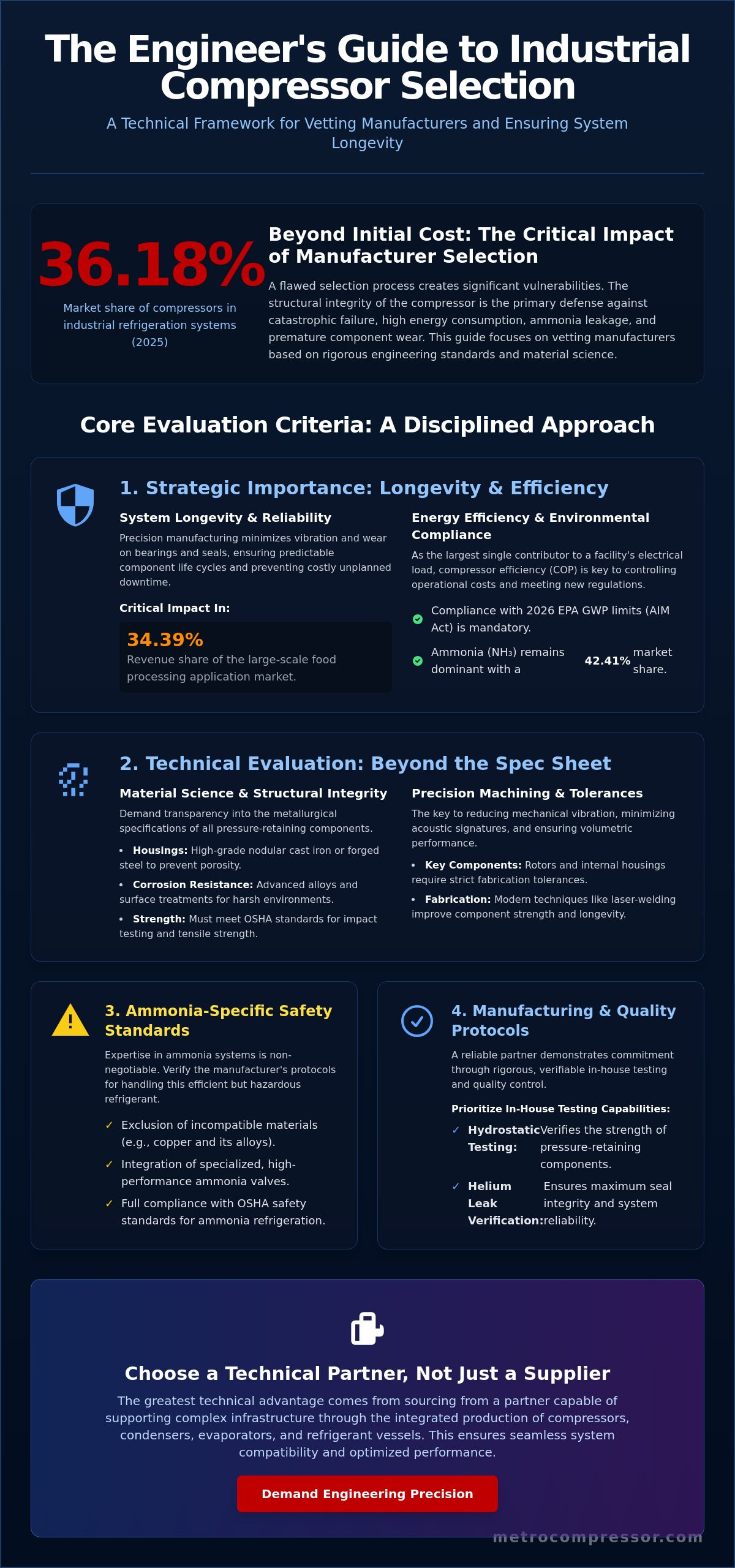
While compressors accounted for 36.18% of the industrial refrigeration system market share in 2025, their impact on operational longevity far outweighs their initial capital cost. Most facility engineers understand that a flawed industrial refrigeration compressor manufacturer selection process leads to more than just high energy consumption; it creates significant vulnerabilities regarding ammonia leakage and premature component wear. You’re likely aware that the structural integrity of these units is the primary defense against the catastrophic failure of complex industrial infrastructure.

This guide serves as a technical evaluation framework to assist you in vetting manufacturers based on rigorous engineering standards and material science. We’ll outline a reliable procurement checklist that focuses on metallurgical precision, advanced machining tolerances, and the strict safety protocols required for modern ammonia systems. By analyzing these critical benchmarks, you can ensure your chosen partner possesses the technical mastery necessary to support high-performance cooling requirements while maintaining compliance with 2026 environmental regulations.

Key Takeaways

  • Evaluate how a disciplined industrial refrigeration compressor manufacturer selection process directly influences long-term operational expenditure and system-wide energy efficiency.
  • Analyze metallurgical standards and precision machining tolerances to ensure the structural integrity and volumetric performance of pressure-retaining components.
  • Verify manufacturer expertise in ammonia-specific safety, focusing on the exclusion of incompatible materials and the integration of specialized ammonia valves.
  • Establish rigorous vetting protocols for manufacturing infrastructure, prioritizing in-house testing capabilities such as hydrostatic and helium leak verification for maximum reliability.
  • Understand the technical advantages of sourcing from a partner capable of supporting complex infrastructure through the integrated production of condensers, evaporators, and refrigerant vessels.

The Strategic Importance of Industrial Refrigeration Compressor Manufacturer Selection

The compressor serves as the primary mechanical heart of any heavy-duty cooling infrastructure, driving the continuous movement of refrigerant necessary to sustain critical thermal gradients. In large-scale industrial facilities, this component is responsible for maintaining the pressures required for the Vapor-compression refrigeration cycle to function effectively. A disciplined industrial refrigeration compressor manufacturer selection process is not merely a procurement task; it is a strategic decision that dictates the operational trajectory of a facility for decades. A manufacturer that prioritizes structural integrity and technical rigor ensures that the entire pressure system remains stable under fluctuating load conditions, positioning the business as a reliable partner rather than a simple hardware vendor.

Impact on System Longevity and Reliability

Mechanical reliability is directly proportional to the precision of the manufacturing process and the quality of the raw materials utilized. In sectors like large-scale food processing, which accounted for a 34.39% revenue share of the application market in 2025, the financial impact of unplanned downtime is often catastrophic. Engineering precision in the fabrication of rotors and internal housings reduces mechanical vibration and minimizes acoustic signatures. This technical discipline prevents the accelerated wear of bearings and seals, ensuring that component wear cycles remain predictable. By adhering to strict manufacturing tolerances, a manufacturer provides the stability required to avoid the premature failure of complex industrial infrastructure.

Energy Efficiency and Environmental Responsibility

Because compressors accounted for 36.18% of the industrial refrigeration system market share in 2025, they represent the largest single contributor to a facility’s electrical load. A manufacturer’s commitment to optimizing the Coefficient of Performance (COP) is essential for controlling long-term operational expenditure. As of January 1, 2026, the EPA has implemented new GWP limits under the AIM Act, making the transition to natural refrigerants a regulatory necessity. Ammonia continues to be a dominant refrigerant, holding a 42.41% market share due to its superior thermodynamic properties. A technically proficient manufacturer understands how to maximize these efficiencies through sophisticated machining and the integration of high-performance ammonia valves, ensuring the system remains both compliant and cost-effective in high-capacity applications.

Ultimately, the value of a technical partnership outweighs the benefits of a low-cost hardware transaction. A manufacturer that provides transparency into their engineering standards and quality protocols allows for the verification of safety compliance before the equipment is even installed. This level of detail-oriented production is what separates a standard supplier from an authoritative expert in industrial cooling.

Technical Evaluation Criteria: Beyond the Spec Sheet

A sophisticated industrial refrigeration compressor manufacturer selection process demands a deep dive into the metallurgical specifications of pressure-retaining housings and internal rotating assemblies. While standard spec sheets provide nominal capacity data, they often omit the granular details of material science that dictate how a unit performs under the thermal stresses of continuous operation. Superior manufacturing relies on high-grade nodular cast iron or forged steel for compressor housings to prevent porosity and ensure structural stability under high-pressure loads. For systems utilizing natural refrigerants, adhering to OSHA safety standards for ammonia refrigeration is non-negotiable; this involves verifying that all pressure-retaining components meet strict impact testing and tensile strength requirements.

Material Science and Structural Integrity

The choice of alloys and the application of surface treatments are critical for corrosion resistance in harsh industrial environments. Laser-welded components are increasingly utilized for their ability to maintain airtight seals in high-pressure environments without the thermal distortion associated with traditional welding. The integration of pillow plate technology in modern heat exchange systems allows for more efficient thermal transfer, which reduces the overall load on the compressor. Evaluating these technical nuances ensures that your industrial cooling infrastructure remains resilient against premature mechanical fatigue and structural degradation.

Advanced Machining and Assembly Standards

Precision machining is the foundation of volumetric efficiency. CNC manufacturing of rotors and pistons must achieve tolerances measured in microns to minimize gas bypass and internal friction. High-speed rotary components require dynamic balancing to eliminate mechanical vibration, which otherwise leads to bearing failure and acoustic pollution. The assembly environment itself must be a controlled space; maintaining low humidity and high cleanliness prevents internal contamination that can degrade lubrication quality.

A meticulous manufacturer will also provide verification of seal integrity and shaft alignment protocols, ensuring that the unit is ready for the rigors of heavy-duty service as part of a comprehensive industrial refrigeration compressor manufacturer selection strategy. Proper lubrication system design, featuring optimized oil return and cooling paths, remains the final safeguard against component wear. These internal standards are what distinguish an engineered solution from a generic commodity.

Industrial Refrigeration Compressor Manufacturer Selection: A Technical Evaluation Framework

Ammonia-Specific Considerations and Safety Standards

Ammonia remains the industry standard for high-capacity cooling due to its superior thermodynamic properties, yet its chemical reactivity requires a specialized approach to material science. A successful industrial refrigeration compressor manufacturer selection process must prioritize the absolute exclusion of copper and brass, as these materials experience rapid corrosion when exposed to ammonia. Manufacturers must instead utilize high-grade carbon steel or stainless steel for all wetted parts, including the internal components of refrigerant vessels and piping. This commitment to material compatibility is a primary requirement for compliance with OSHA ammonia refrigeration safety standards, which govern the design and operation of these high-pressure systems.

Ammonia Valve Integration and Control

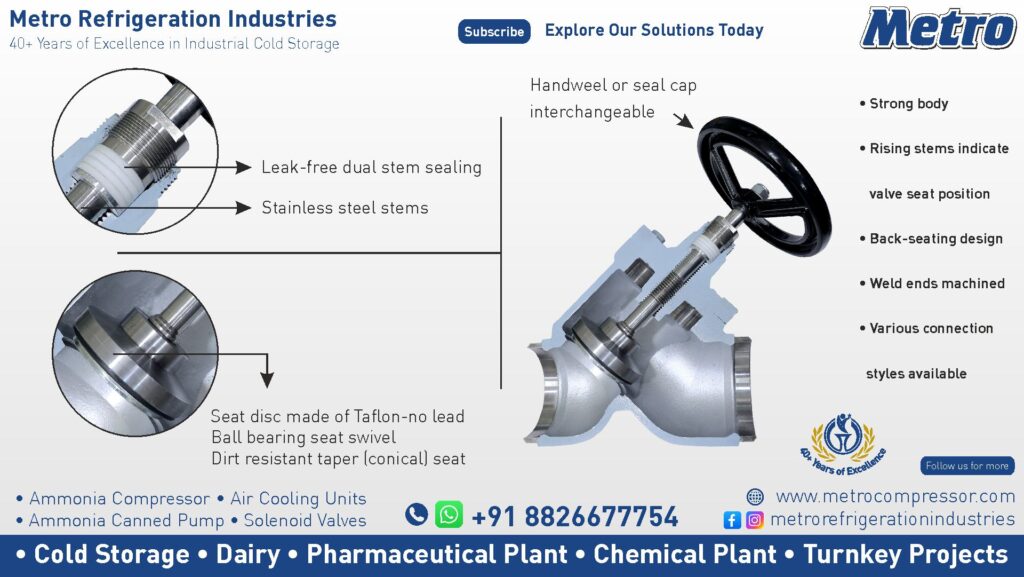
The integration of specialized ammonia valves is a critical factor in maintaining system stability. These valves must provide reliable shutoff and precise pressure regulation to prevent the accumulation of liquid refrigerant in the compressor suction line. Choosing a partner who manufactures their own ammonia-ready hardware ensures that the valve stations are optimized for the specific flow characteristics of the compressor. This technical synergy reduces unnecessary pressure drops and enhances the overall efficiency of the vapor-compression cycle. It is also essential to evaluate how these valves are tested for leak containment, as the safety of the facility depends on the integrity of every seal and gasket. Manufacturers who maintain control over their hardware production can guarantee that their ammonia valves meet the same metallurgical standards as the compressor itself.

Vessel Design and Refrigerant Management

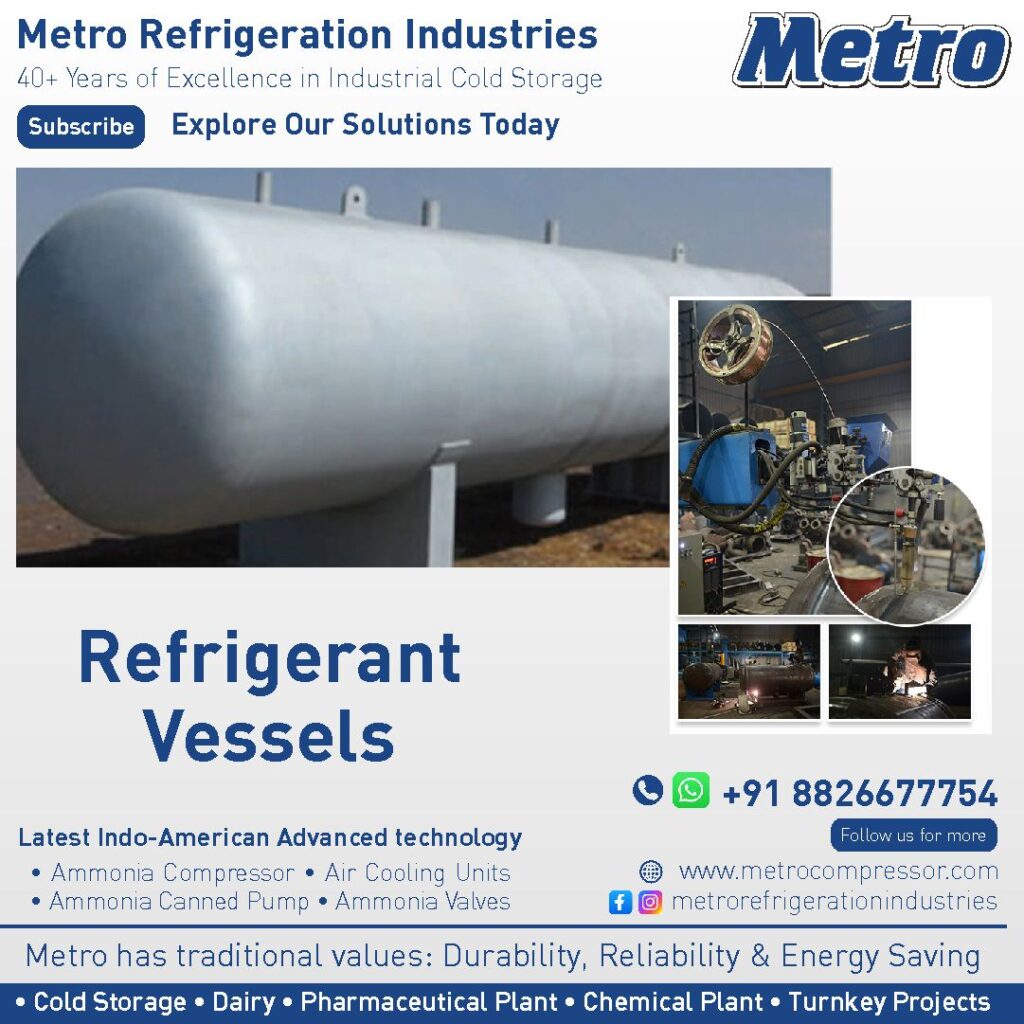
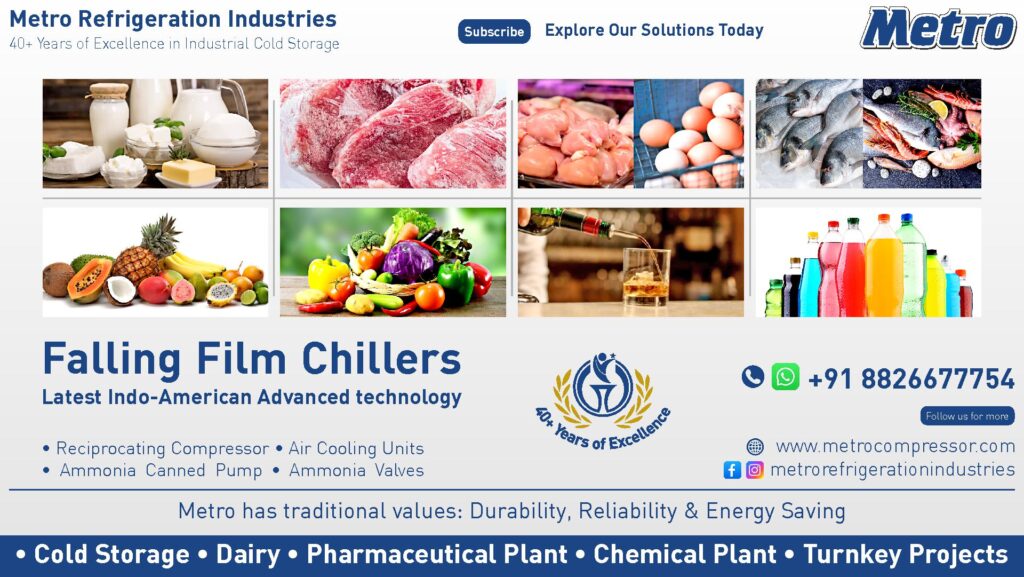
Effective liquid management relies on the structural integrity of refrigerant vessels and accumulators. These components must be designed to handle the surge volumes associated with large-scale industrial loads. Advanced designs, such as falling film chillers, allow for a significant reduction in the total ammonia charge, which lowers the potential risk during a leak event. Manufacturers should provide documentation regarding the hydrostatic testing and material traceability of their evaporative condensers and evaporators. By ensuring that these vessels are manufactured to the same rigorous standards as the compressor, engineers can prevent the stress corrosion cracking that often leads to premature system failure. Evaluating these safety-critical components is a fundamental step in a comprehensive industrial refrigeration compressor manufacturer selection strategy that prioritizes long-term facility safety and operational discipline.
Assessing Manufacturing Infrastructure and Quality Protocols

A comprehensive industrial refrigeration compressor manufacturer selection framework requires a rigorous audit of the physical infrastructure where these units are fabricated. It’s not enough to review a finished product; an engineer must understand the lifecycle of quality assurance that precedes assembly. Sophisticated manufacturers invest heavily in in-house testing capabilities, including performance benches that simulate real-world load conditions and hydrostatic chambers for pressure-retaining components. Helium leak testing represents the gold standard for ensuring system tightness, as it detects microscopic pathways that traditional bubble tests would overlook. This level of technical transparency provides the security required for high-risk industrial environments where ammonia containment is paramount.

Traceability remains a cornerstone of industrial reliability. Meticulous manufacturers maintain detailed records of material origins, ensuring that every forged rotor and cast housing has a documented metallurgical history. This prevents the introduction of counterfeit or substandard alloys that could lead to catastrophic failure under stress. Compliance with international pressure vessel codes, such as those established by ASME, serves as a baseline certification that confirms the manufacturer’s commitment to global engineering standards. Furthermore, a manufacturer’s investment in Research and Development (R&D) indicates a forward-thinking approach to cooling technology, ensuring that their equipment remains compatible with evolving efficiency mandates and refrigerant regulations.

The Quality Assurance (QA) Audit Process

The verification of structural integrity begins with non-destructive testing (NDT) for all critical welds on the compressor housing and associated refrigerant vessels. These reports, which include X-ray or ultrasonic data, confirm the absence of internal slag or voids that could compromise the system under pressure. Precision measurement tools must undergo frequent calibration to maintain the micron-level tolerances required for high-speed components. A final Factory Acceptance Test (FAT) serves as the ultimate assurance of quality; the unit is operated under controlled conditions to verify that all performance benchmarks and safety parameters are met before it leaves the facility.

After-Sales Engineering and Technical Support

The value of a manufacturer is often defined by their responsiveness after the initial hardware transaction is completed. Technical documentation must be exhaustive, providing detailed spare parts lists and maintenance manuals that facilitate long-term reliability and minimize system downtime. Manufacturer-led training for on-site operators is essential to ensure that the complex machinery is handled according to engineering specifications. When complex troubleshooting is required, the availability of a technically proficient engineering support team is the difference between a minor adjustment and prolonged system failure. For those seeking a partner committed to these rigorous standards, you can review our engineering and manufacturing protocols to see how precision is maintained throughout the production lifecycle.
The Metro Compressor Approach: Engineering Precision in Industrial Cooling

Metro Compressor stands as a veteran manufacturer dedicated to the internal integrity and long-term functionality of heavy-duty machinery. When conducting an industrial refrigeration compressor manufacturer selection audit, engineers often find that fragmented supply chains introduce hidden risks through component incompatibility. We mitigate these variables by maintaining total control over the manufacturing lifecycle of our ammonia refrigeration compressors. This disciplined approach ensures that every unit leaving our facility adheres to the same stringent metallurgical and machining standards discussed throughout this technical evaluation framework. We don’t just supply hardware; we provide the engineering stability required to support the world’s most demanding cooling applications.

Comprehensive Industrial Cooling Solutions

We manufacture a full suite of hardware designed to operate as a cohesive and reliable pressure system. Our integrated production capabilities include:

  • High-performance Ammonia valves designed for precise pressure regulation and leak containment.
  • Refrigerant Vessels and Evaporators manufactured with full material traceability and rigorous hydrostatic testing.
  • Evaporative Condensers and Pillow Plates that maximize thermal transfer efficiency in harsh environments.
  • Falling Film Chillers engineered specifically to optimize ammonia charge reduction and enhance facility safety.

By sourcing these critical components from a single engineering entity, facility operators avoid the technical discrepancies common with third-party hardware. This unified model ensures that the performance benchmarks of the heat exchangers and vessels are perfectly aligned with the compressor’s volumetric capacity.

Partnering with Metro Compressor

Our identity is defined by a commitment to high-level industrial standards and a grounded, professional address. We support large-scale applications in the food processing sector, providing durable IQF systems and Industrial Ice Banks that sustain rigorous production schedules. These systems rely on our technical mastery of material science to resist the mechanical fatigue associated with high-speed operations. We prioritize substance and exhaustive testing over superficial industry trends, ensuring that our global clients receive infrastructure built for longevity and structural durability. If you’re designing a new facility or upgrading existing cooling infrastructure, we invite you to contact our engineering team for specialized refrigeration consultation to discuss how our manufacturing rigor can enhance your operational reliability.

Securing Long-Term Performance Through Technical Mastery

Successful industrial refrigeration compressor manufacturer selection requires a meticulous audit of metallurgical standards and in-house testing protocols. It’s essential to verify that pressure-retaining components meet strict impact testing requirements while ensuring that all wetted parts are compatible with natural refrigerants like ammonia. By prioritizing technical mastery over superficial market trends, facility operators can secure the structural integrity of their entire cooling infrastructure for decades of reliable service. This disciplined approach to procurement prevents the mechanical vulnerabilities that lead to unplanned downtime and excessive energy consumption.

As a specialized manufacturer of ammonia compressors and high-performance valves, Metro Compressor maintains a disciplined production cycle that includes the in-house fabrication of refrigerant vessels and falling film chillers. Our role as a global supplier of evaporative condensers and IQF systems allows us to support complex industrial projects with a unified engineering approach that eliminates component incompatibility. This technical synergy ensures that every piece of hardware operates at peak volumetric efficiency within your facility.

Consult with Metro Compressor Engineers for Your Next Industrial Cooling Project to ensure your system meets the highest safety and efficiency standards. We look forward to supporting your commitment to industrial excellence and engineering precision.

Frequently Asked Questions

What are the most critical factors when selecting an industrial refrigeration compressor manufacturer?

The most critical factors in a successful industrial refrigeration compressor manufacturer selection process include the manufacturer’s metallurgical standards, precision machining capabilities, and the rigor of their in-house quality assurance protocols. Engineers must prioritize structural integrity and material traceability to ensure the equipment survives the high-pressure demands of heavy-duty industrial infrastructure. A manufacturer’s ability to provide detailed engineering documentation and technical support is equally vital for long-term operational stability.

Why is ammonia the preferred refrigerant for large-scale industrial applications?

Ammonia is preferred for large-scale applications due to its superior thermodynamic properties and its status as a natural refrigerant with a Global Warming Potential (GWP) of zero. It held a 42.41% market share in 2025 because it offers a higher coefficient of performance (COP) compared to synthetic alternatives. This efficiency makes it the most cost-effective choice for high-capacity food processing and cold storage facilities that must comply with 2026 environmental regulations.

How do I verify the manufacturing quality of an industrial compressor?

Verifying manufacturing quality involves reviewing non-destructive testing (NDT) reports for critical welds and confirming that CNC machining achieves micron-level tolerances for rotors and housings. You should also evaluate the final factory acceptance test (FAT) procedures to ensure the unit meets all performance benchmarks before shipment. A transparent manufacturer will provide access to their inspection lifecycle, from initial material sourcing to final hydrostatic and helium leak testing.

What is the role of a falling film chiller in an ammonia refrigeration system?

A falling film chiller functions as a high-efficiency heat exchanger that allows for a significant reduction in the total ammonia charge within a system. By distributing refrigerant in a thin film over the heat exchange surface, it optimizes thermal transfer while enhancing facility safety through lower refrigerant volumes. This technology is particularly valuable in industrial settings where reducing the risk of a large-scale leak is a primary safety objective.

How does the design of ammonia valves impact system safety and efficiency?

The design of ammonia valves is central to system safety as these components provide critical shutoff and precise pressure regulation. Utilizing specialized, ammonia-ready valves reduces internal pressure drops, which directly improves the volumetric efficiency of the compressor. Properly engineered valves also prevent dangerous liquid slugging, ensuring that the refrigeration cycle remains stable and that the system complies with OSHA safety standards.

What certifications should I look for in an industrial refrigeration equipment manufacturer?

You should look for manufacturers that adhere to international standards such as the ASME Boiler and Pressure Vessel Code and maintain ISO certifications for quality management. Compliance with OSHA safety standards for ammonia refrigeration is also a non-negotiable requirement for ensuring legal and operational safety. These certifications serve as a baseline verification of the manufacturer’s commitment to rigorous engineering and safety protocols.

How can I optimize the energy efficiency of my industrial refrigeration plant?

Optimizing energy efficiency requires the integration of variable speed drives (VSD) and the use of high-performance components like evaporative condensers and pillow plates. These technologies allow the system to adjust to partial-load conditions while maintaining a high coefficient of performance, which reduces long-term operational expenditure. Regular maintenance of the compressor’s internal tolerances also ensures that volumetric efficiency doesn’t degrade over time.

What is the importance of refrigerant vessels and accumulators in system design?

Refrigerant vessels and accumulators are essential for managing liquid surges and ensuring that only dry vapor enters the compressor suction line. Their structural integrity and proper sizing prevent mechanical damage from liquid carryover, which is a primary cause of premature compressor wear. These vessels must be manufactured to the same rigorous standards as the compressor to maintain the integrity of the high-pressure system.

Industrial Ammonia Refrigeration Compressors: Engineering Precision and Performance

Industrial Ammonia Refrigeration Compressors: Engineering Precision and Performance

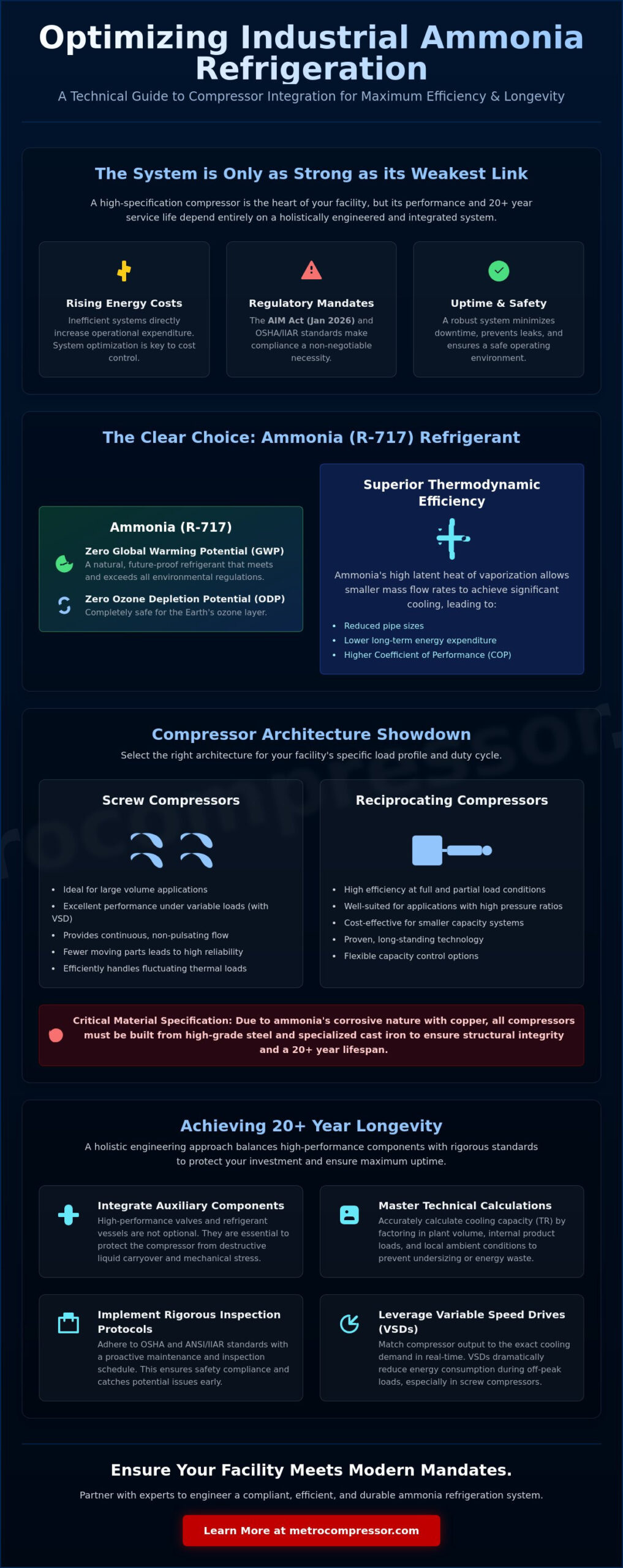
The long-term viability of a large-scale cooling plant often hinges on a single decision that many operators overlook: the assumption that a high-spec compressor can compensate for a poorly integrated system. While industrial ammonia refrigeration compressors serve as the mechanical heart of the facility, their ability to deliver thermodynamic efficiency and maintain a twenty-year service life depends entirely on the structural integrity of the surrounding components. You likely recognize that rising energy costs and the stringent Global Warming Potential limits introduced by the January 2026 AIM Act revisions have made system optimization a regulatory necessity rather than a choice.

This technical guide provides a detailed analysis of how to specify and integrate high-performance ammonia compressors to achieve maximum uptime and safety compliance. We will examine the specific mechanical requirements of reciprocating and screw models, evaluate the impact of variable speed drives on energy consumption, and outline the rigorous inspection protocols required by OSHA and ANSI/IIAR standards. By focusing on meticulous manufacturing standards and sophisticated infrastructure, you can ensure your facility meets modern environmental mandates while minimizing the risk of costly maintenance downtime.

Key Takeaways

  • Identify the mechanical distinctions between screw and reciprocating compressor architectures to ensure the selected unit aligns with your facility’s specific load requirements and operational duty cycles.
  • Evaluate the thermodynamic efficiency of industrial ammonia refrigeration compressors compared to synthetic alternatives to maximize your Coefficient of Performance and reduce long-term energy expenditure.
  • Master the technical calculations for cooling capacity (TR) by factoring in plant volume, internal product loads, and the impact of local ambient conditions on system sizing.
  • Extend equipment service life by integrating auxiliary components such as high-performance ammonia valves and refrigerant vessels that protect the compressor from liquid carryover and mechanical stress.
  • Implement a holistic engineering approach that balances regulatory compliance with structural integrity to achieve a target system longevity exceeding twenty years.

The Critical Role of Ammonia Refrigeration Compressors in Industrial Infrastructure

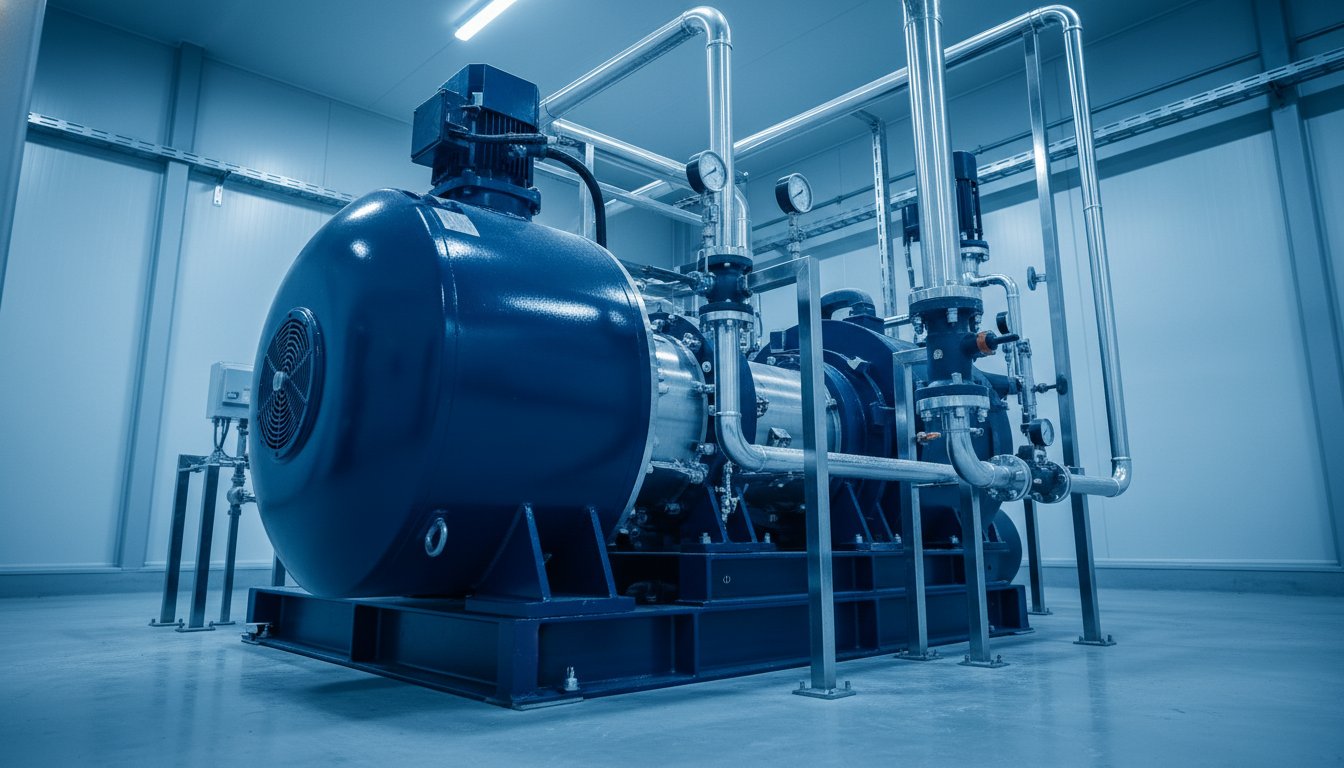
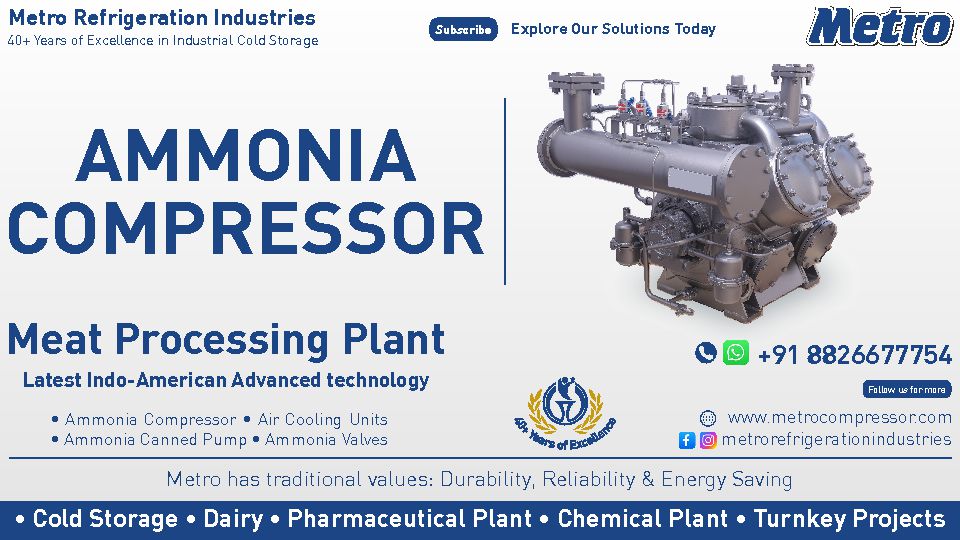
Industrial ammonia refrigeration compressors act as the primary mechanical drivers within the vapor-compression cycle, converting electrical energy into the pressure differentials required for continuous heat transfer. Ammonia, designated as R-717, is a natural refrigerant characterized by zero Ozone Depletion Potential (ODP) and zero Global Warming Potential (GWP). Its high latent heat of vaporization means that smaller mass flow rates can achieve significant cooling capacities, which directly translates to reduced pipe sizes and lower operational costs for large-scale facilities. While the refrigerant provides the thermal medium, the compressor determines the overall plant energy efficiency through its management of compression ratios. A well-engineered system maintains these ratios within optimal ranges to prevent excessive heat build-up and mechanical wear.

Thermodynamic Principles of Ammonia Compression

The efficiency of an industrial system is heavily influenced by its compression ratio, which is the ratio of discharge pressure to suction pressure. Because ammonia has a high heat of compression, discharge temperatures often reach levels that would degrade standard lubricants or damage internal seals in lesser equipment. This physical reality necessitates the use of specialized materials and integrated cooling mechanisms within the compressor housing to maintain thermal stability. Understanding the Thermodynamic Efficiency and the Case for Ammonia-Based Cooling requires a deep dive into how these compressors manage the transition from low-pressure vapor to high-pressure gas without losing energy to friction or heat leakage. Precise control over these thermal transitions is what separates a standard unit from a high-performance industrial machine.

Industrial Applications: From Cold Storage to Food Processing

In modern food production, industrial ammonia refrigeration compressors are indispensable for powering IQF (Individually Quick Frozen) systems, where rapid temperature drops are required to preserve product texture and safety. Large-scale dairy and meat processing plants often face fluctuating thermal loads; the compressor must respond precisely to these changes to prevent energy waste. Transitioning from synthetic HFCs to ammonia systems provides a clear path toward sustainability while offering superior heat transfer coefficients. This transition isn’t just about environmental compliance. It’s about securing a system that delivers reliable cooling for decades under the most demanding industrial conditions.

Engineering precision is non-negotiable when dealing with R-717. Because ammonia is corrosive to copper and its alloys, all internal components must be manufactured from high-grade steel or specialized cast iron. Rigorous machining tolerances ensure that clearances remain consistent even under the extreme pressure of a heavy-duty cooling cycle. These standards are what guarantee the structural integrity of the hardware, preventing leaks and ensuring that the compressor remains the steadfast heart of the facility infrastructure.

Engineering Specifications: Screw vs. Reciprocating Compressor Architecture

Selecting the appropriate mechanical architecture for industrial ammonia refrigeration compressors requires a technical evaluation of the facility’s load profile and intended operational lifespan. While both screw and reciprocating designs facilitate the vapor-compression cycle, their internal engineering solves different thermodynamic challenges. Material science plays a decisive role in this selection. Because ammonia (R-717) is chemically incompatible with copper, these compressors are manufactured using specialized ferrous alloys, such as high-strength cast iron and forged steel, to ensure long-term structural integrity. Precision machining of rotor profiles and cylinder linings is not merely a manufacturing preference but a necessity for maintaining the tight tolerances required for efficient compression. When selecting industrial ammonia refrigeration compressors for a new installation, engineers must balance the high-volume throughput of screw models against the superior part-load efficiency of reciprocating designs. If you’re currently specifying hardware for a cold storage project, reviewing the technical data for industrial refrigeration compressors can provide the clarity needed for a 20-year investment. This grounded approach to equipment selection prioritizes substance and long-term functionality over superficial trends.

Screw Compressors: Design for High-Volume Reliability

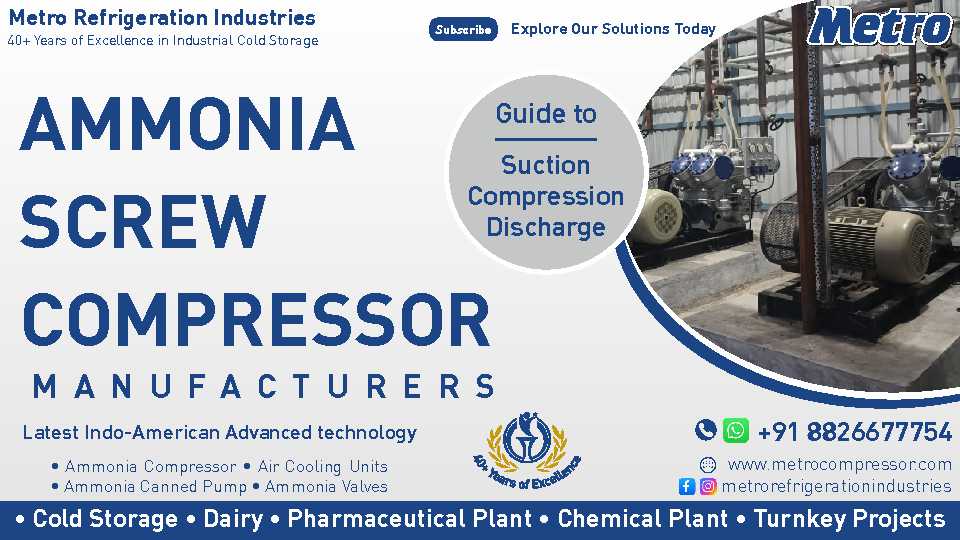
Screw compressors are designed for continuous, high-capacity cooling where uptime is the primary performance metric. These units utilize intermeshing helical rotors to reduce the volume of ammonia gas. Precision in rotor profiles is critical; even micron-level deviations can lead to internal bypass. To manage high discharge temperatures, these systems employ oil-injection cooling. This oil doesn’t just lubricate; it seals rotor clearances and absorbs compression heat. For energy modulation, modern screw units use slide valve capacity control to match plant loads without the efficiency losses of suction throttling.

Reciprocating Compressors: Precision in Pulsating Loads

Reciprocating compressors are ideal for smaller-scale applications or facilities with variable cooling demands. Their architecture relies on a crankshaft-driven piston arrangement that delivers high volumetric efficiency at high pressure ratios. Engineering focus centers on valve plate design to prevent liquid slugging, which can cause catastrophic mechanical failure. Adhering to standards like Holistic System Integration: Beyond the Standalone Compressor ensures these components remain compliant. Heavy-duty crankshafts and precision-honed cylinder linings ensure these machines withstand pulsating loads for decades.
Industrial Ammonia Refrigeration Compressors: Engineering Precision and Performance

Thermodynamic Efficiency and the Case for Ammonia-Based Cooling

The selection of a refrigerant for large-scale cooling is a decision that dictates the operational economy of a facility for decades. Ammonia (R-717) consistently outperforms synthetic HFC and HFO alternatives in terms of the Coefficient of Performance (COP), often providing efficiency gains between 3% and 10% depending on the specific application and ambient conditions. These gains are a direct result of ammonia’s superior thermodynamic properties, which reduce the mechanical workload on industrial ammonia refrigeration compressors. While the initial capital investment for an ammonia system may be higher due to the requirement for stainless steel or high-grade iron components, the total cost of ownership (TCO) over a 20-year lifecycle is significantly lower. This reduction is driven by lower annual energy expenditures and the minimal cost of the refrigerant itself compared to increasingly expensive and regulated synthetic gases.

Heat Transfer Efficiency and Power Consumption

Ammonia’s high latent heat of vaporization allows for exceptionally efficient heat exchange within the evaporators and condensers, which minimizes the pressure lift required from the compressor. By optimizing compression stages and utilizing economizers in screw compressor circuits, engineers can drastically reduce operational expenses (OPEX). Because of its high thermal capacity, ammonia requires less mass flow than synthetic refrigerants to achieve the same cooling capacity. This reduced mass flow translates to lower parasitic power losses and allows for more compact piping infrastructure without sacrificing thermal performance. When industrial ammonia refrigeration compressors operate within these optimized parameters, the resulting energy profile supports both environmental sustainability and bottom-line profitability.

Safety Engineering and Leak Prevention

Engineering for safety is an integral part of the thermodynamic design, requiring a disciplined approach to refrigerant containment and pressure management. For facilities prioritizing long-term stability, Selecting High-Capacity Compressors for Industrial Applications involves a rigorous assessment of both thermodynamic performance and the safety protocols required to manage a high-pressure anhydrous ammonia system. High-performance Ammonia valves and relief systems are essential for isolating sections of the plant during maintenance and preventing over-pressurization. Furthermore, the integration of sophisticated oil separators is vital for maintaining ammonia purity, as oil carryover can coat heat transfer surfaces and degrade the system’s COP. Properly specified Refrigerant Vessels and accumulators act as the final line of defense, protecting the compressor from liquid slugging while ensuring the loop remains sealed and secure under all load conditions.

The transition to ammonia isn’t merely a response to regulatory pressure; it’s a strategic engineering move toward technical mastery. By focusing on the internal integrity of the machinery and the precision of the supporting infrastructure, industrial operators can secure a cooling solution that remains efficient and compliant well into the 2040s. Meticulous testing and the use of heavy-duty materials ensure that the system’s longevity matches the durability of the facility it supports.

Selecting High-Capacity Compressors for Industrial Applications

The process of selecting industrial ammonia refrigeration compressors begins with a rigorous quantification of the plant’s total thermal load, expressed in Tons of Refrigeration (TR). This calculation must account for the specific heat of the product, the enthalpy change required during phase transitions, and the latent heat gains from facility infiltration. Engineers must also evaluate local ambient conditions, as the design wet-bulb temperature directly influences the condensing pressure and, consequently, the compressor’s power consumption. Relying on a single, oversized unit often introduces unnecessary risk; instead, a multi-compressor configuration offers essential redundancy for mission-critical cooling while allowing for precise capacity staging. A disciplined specification process ensures that every component, from the compressor to the supporting Ammonia valves, is sized to handle peak summer loads without compromising system longevity. If you require technical assistance with load calculations or equipment selection, you can consult our engineering team for specialized industrial refrigeration equipment solutions.

Sizing for IQF and Food Processing

In facilities utilizing IQF (Individually Quick Frozen) systems, the compressor must be sized to manage rapid temperature pull-downs and high-velocity airflow loads. These systems often experience fluctuating thermal demands between batch processing and continuous flow, requiring compressors with sophisticated capacity modulation. To improve overall efficiency, Falling Film Chillers are frequently integrated into secondary cooling loops to provide consistent chilled water temperatures, reducing the direct load on the primary ammonia circuit. This integration ensures that the industrial ammonia refrigeration compressors operate within their most efficient performance envelopes even during peak production cycles.

Integration with Evaporative Condensers

The synergy between the compressor and the Evaporative Condenser is a primary determinant of a plant’s energy profile. High condensing pressures, often caused by inadequate condenser sizing or high ambient humidity, force the compressor to work harder, which increases electrical draw and accelerates mechanical wear. By optimizing the head pressure through precise condenser-compressor pairing, operators can maintain lower discharge temperatures and protect the structural integrity of the internal valves and seals. The design must account for the local wet-bulb temperature to ensure the condenser can reject the total heat of compression effectively under all seasonal variations.

A comprehensive specification checklist for heavy-duty hardware should include:

  • Verification of design suction and discharge pressures across all operating modes.
  • Calculated volumetric efficiency at peak and part-load conditions.
  • Oil management and separation standards to prevent downstream fouling.
  • Material certification for all pressure-retaining components to ensure ammonia compatibility.
  • Compatibility with variable speed drives (VFDs) for precise load matching.

Holistic System Integration: Beyond the Standalone Compressor

The long-term functionality of industrial ammonia refrigeration compressors depends on a manufactured ecosystem where every component is engineered to withstand the unique chemical and thermal demands of R-717. A standalone compressor, regardless of its internal precision, cannot maintain system integrity if the surrounding infrastructure fails to regulate flow or manage liquid-vapor separation. Achieving a 20-year service life requires a disciplined approach to integration, ensuring that auxiliary components like Ammonia valves, Refrigerant Vessels, and Evaporators operate in perfect synchronization with the mechanical driver. This holistic strategy prevents the premature wear associated with erratic load swings and ensures the facility remains compliant with safety and environmental regulations.

The Importance of Specialized Ammonia Valves

Standard valves manufactured from copper-based alloys are entirely unsuitable for ammonia environments because the refrigerant causes rapid chemical degradation and catastrophic seal failure. High-performance Ammonia valves must be fabricated from carbon steel or specialized stainless steel to prevent corrosion and ensure precise flow modulation. This precision is vital for maintaining stable suction pressures and preventing the mechanical stress that occurs when compressors are forced to compensate for inconsistent refrigerant flow. Every valve component within the high-pressure loop must undergo rigorous pressure testing to verify its structural integrity and leak-proof performance under extreme operating conditions.
Optimizing the Cooling Loop with Integrated Hardware

The integration of Refrigerant Vessels and suction accumulators provides a critical safety buffer, protecting industrial ammonia refrigeration compressors from liquid carryover. Liquid slugging, even in small volumes, can cause instantaneous damage to compressor rotor profiles or reciprocating valve plates, leading to expensive downtime and significant safety risks. By incorporating surge drums and liquid separators, engineers ensure that only dry vapor enters the compressor inlet. For facilities requiring high-efficiency heat exchange, the use of Pillow Plates and Falling Film Chillers offers superior thermal transfer rates while minimizing the total refrigerant charge. These components, combined with Industrial Ice Banks for peak-load management, create a robust cooling loop that balances thermodynamic performance with operational safety.

Metro Compressor provides these integrated industrial refrigeration solutions by matching technical mastery with a commitment to high-level manufacturing standards. Sourcing your entire cooling infrastructure, from IQF systems to Evaporative Condensers, from a single engineering partner ensures that every connection and control logic is optimized for the specific needs of your facility. This approach moves beyond the purchase of individual parts; it establishes a stable, high-performance infrastructure designed for technical reliability and long-term compliance. By focusing on the internal integrity of the entire system, we help industrial operators achieve superior cooling performance with a focus on durability and precision.

Securing Long-Term Performance through Engineering Precision

The transition toward sustainable cooling infrastructure requires a disciplined focus on the internal integrity of the entire refrigeration loop. Success in large-scale industrial cooling isn’t defined by the compressor alone; it’s the product of the synergy between industrial ammonia refrigeration compressors and the specialized vessels and valves that protect them. By prioritizing meticulous manufacturing standards and exact machining tolerances, operators can achieve the thermodynamic efficiency required to meet modern environmental mandates while ensuring decades of reliable service.

As a specialized manufacturer of ammonia-ready cooling hardware and a global supplier of high-durability refrigerant vessels, Metro Compressor remains a steadfast partner in heavy-duty industrial sectors. Our engineering precision focuses on long-term industrial reliability to help you maintain a competitive edge through technical mastery and stable infrastructure. Consult with our engineering team for high-performance refrigeration solutions to begin optimizing your facility for future-proof reliability. We look forward to supporting your facility’s technical evolution.
Frequently Asked Questions

Why is ammonia preferred over synthetic refrigerants for industrial compressors?

Ammonia remains the superior choice for large-scale cooling due to its exceptional thermodynamic properties and zero environmental impact, as it possesses both zero Global Warming Potential and zero Ozone Depletion Potential. Its high latent heat of vaporization allows industrial ammonia refrigeration compressors to achieve greater cooling capacities with lower mass flow rates than synthetic HFCs. This efficiency directly translates to reduced operational energy costs and ensures long-term compliance with increasingly stringent environmental regulations.

What is the expected lifespan of a heavy-duty industrial ammonia compressor?

A properly specified and maintained heavy-duty industrial compressor typically achieves a service life exceeding 20 years. This longevity is contingent upon the use of high-grade ferrous materials and adherence to rigorous maintenance schedules that prevent mechanical fatigue. Ensuring the structural integrity of the entire cooling loop, including the integration of high-performance ammonia valves, is essential for reaching this multi-decade operational milestone.

How does a screw compressor differ from a reciprocating compressor in ammonia systems?

Screw compressors utilize intermeshing helical rotors to manage continuous, high-capacity cooling loads with minimal vibration and high reliability. In contrast, reciprocating compressors employ a piston-and-cylinder architecture that excels in smaller-scale applications or facilities with highly variable thermal demands. While screw units are favored for their high-volume reliability, reciprocating models often provide superior volumetric efficiency during part-load operations where the plant’s cooling requirements fluctuate.

What are the essential safety features for an ammonia refrigeration compressor?

Essential safety infrastructure includes high-pressure relief valves, sophisticated oil separators, and automated emergency cutout switches that respond to deviations in temperature or pressure. Modern systems also integrate vibration sensors and liquid level controllers within refrigerant vessels to prevent liquid slugging. These features ensure the mechanical heart of the plant remains protected from catastrophic failure while maintaining compliance with OSHA and IIAR safety standards.
How often should industrial ammonia refrigeration maintenance be performed?

Routine inspections of oil levels, filter integrity, and seal conditions should occur on a monthly or quarterly basis depending on the facility’s specific duty cycle. Major mechanical overhauls are typically scheduled based on accumulated operating hours, often ranging from 25,000 to 50,000 hours for screw architectures. Consistent monitoring of ammonia purity and valve performance is critical to preventing the gradual degradation of the system’s Coefficient of Performance.
Can ammonia compressors be integrated with existing napelemes (solar) or green energy systems?

Ammonia compressors are highly compatible with renewable energy sources like solar (napelemes) systems when equipped with Variable Frequency Drives (VFDs) to manage power fluctuations. The inherent efficiency of ammonia reduces the total electrical load, making it easier for green energy arrays to meet the plant’s peak demand. Integrating an industrial ice bank can also allow for thermal energy storage during periods of high solar production, further optimizing the facility’s energy profile.

What role do ammonia valves play in compressor safety and efficiency?

Ammonia valves serve as the primary control mechanism for refrigerant flow, ensuring that the compressor receives a stable supply of dry vapor at the correct suction pressure. High-performance valves also facilitate the isolation of components during maintenance and prevent backflow that could lead to mechanical stress. Their precision directly influences the system’s ability to maintain optimal compression ratios and prevents energy waste through internal leakage.

How do I calculate the cooling capacity needed for an industrial food processing plant?

Calculating required capacity involves determining the total heat load by accounting for product mass flow, specific heat, and the required temperature drop. Engineers must also factor in latent heat gains from facility infiltration, lighting, and personnel, alongside the heat of compression. This total value, expressed in Tons of Refrigeration (TR), dictates the sizing of industrial ammonia refrigeration compressors and the necessary capacity of the evaporative condenser to ensure the system handles peak production loads.

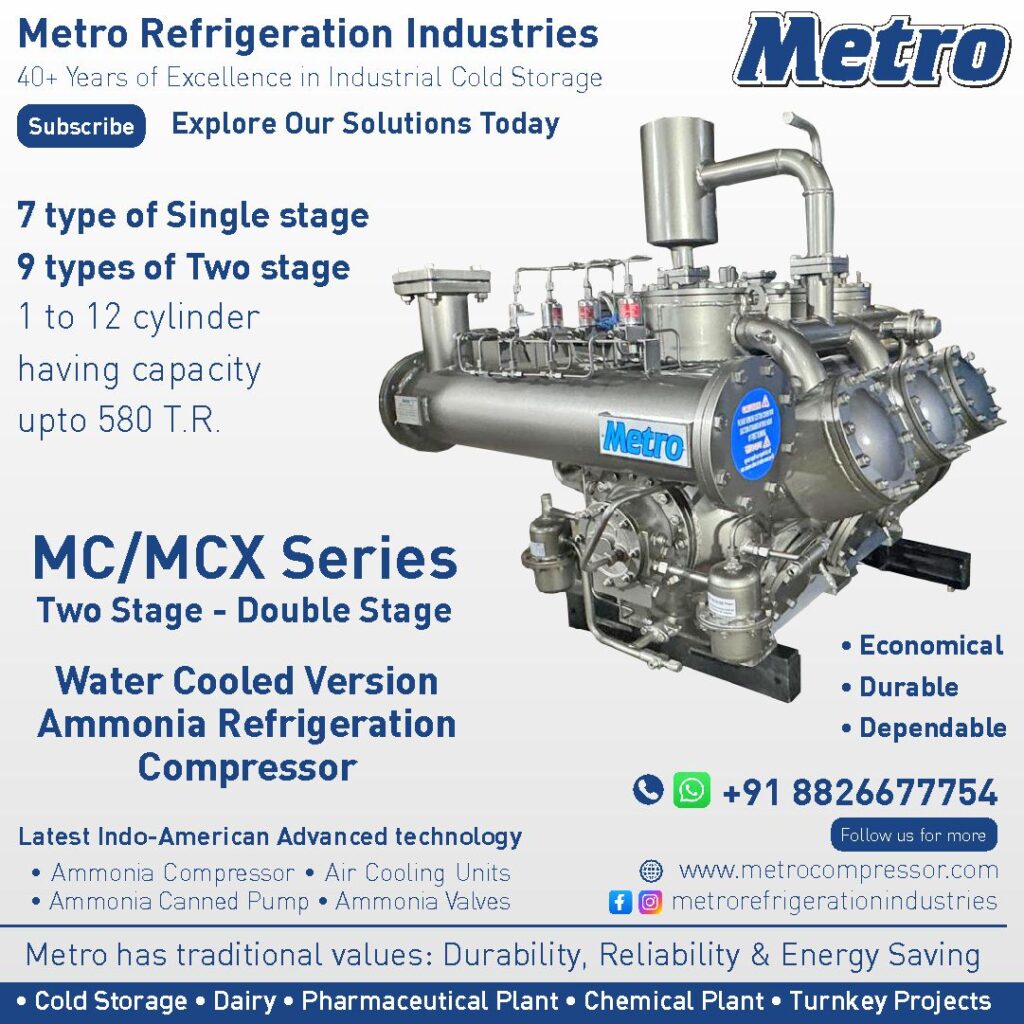
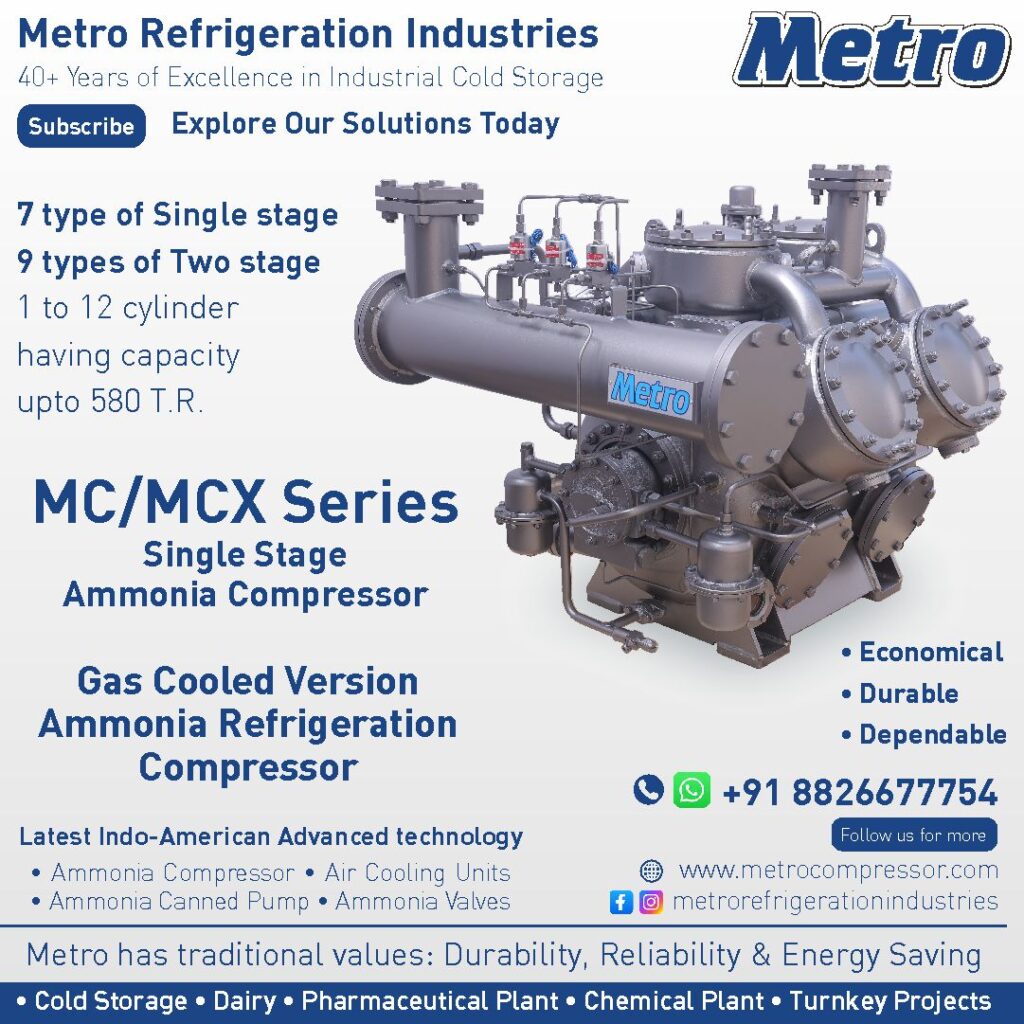
Ammonia Compressor: Working Principle, Functions, Types, Uses & Efficiency

Ammonia Compressor for Industrial Refrigeration – High-Efficiency Ammonia Refrigeration Compressors & Systems for Cold Storage, Dairy, Food Processing, Meat, Frozen Food, Fruits & Vegetables | Top Industrial Refrigeration Compressor Manufacturer & Reliable Supplier

Ammonia-based refrigeration systems form the backbone of modern industrial cooling infrastructure. Widely used in cold storage, dairy plants, meat processing, fisheries, food processing, pharmaceutical, and chemical industries, these systems deliver high energy efficiency, long service life, and environmental sustainability.

Modern industrial compressors, especially reciprocating compressors and screw compressors using ammonia (NH₃ / R717), are engineered to operate reliably under heavy-duty conditions while maintaining the best COP (Coefficient of Performance).


What Is an Ammonia Compressor?

An ammonia-based refrigeration unit is designed to compress low-pressure NH₃ vapor into a high-pressure state, allowing heat to be rejected efficiently through the condenser and enabling continuous industrial cooling.

Ammonia compressors are classified as industrial compressors due to their ability to:

  • Handle large refrigeration loads

  • Operate continuously

  • Deliver high efficiency with low operating cost


Ammonia Compressor Working Principle (Gas-Cooled & Water-Cooled Systems)

The working principle of ammonia-based refrigeration equipment follows the vapour compression cycle, a widely used method in industrial cooling applications, and it works efficiently in both:

  • Gas cooled technology

  • Water cooled technology

Step-by-Step Working Principle:

  1. Suction Stage
    Low-pressure ammonia vapor from the evaporator enters the compressor.

  2. Compression Stage
    The reciprocating compressor compresses NH₃ vapor, increasing its pressure and temperature.

  3. Discharge Stage

    High-pressure NH₃ gas is discharged toward the condenser.

  4. Condensation (Gas-Cooled / Water-Cooled)

  • In water cooled technology, heat is removed using cooling water

  • In gas cooled technology, heat is rejected using ambient air or gas coolers

  1. Expansion & Evaporation
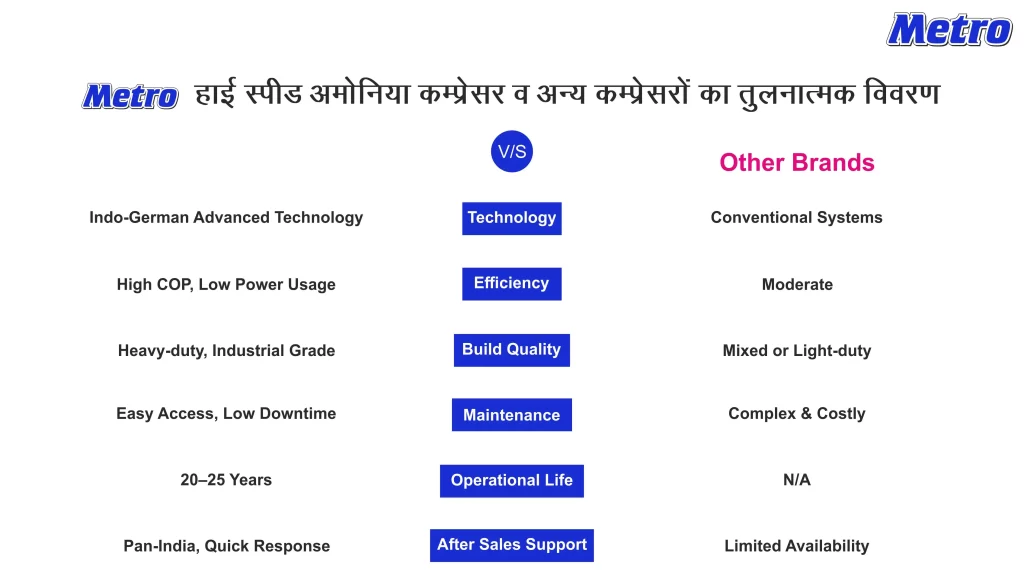
    Liquid ammonia expands and absorbs heat again, repeating the cycle.Metro high speed ammonia compressor vs other brands showing high COP, industrial build quality, low maintenance refrigeration compressor comparison


Functions of an Ammonia Refrigeration Compressor

The primary functions of ammonia-driven refrigeration systems include :

  • Efficient vapor compression

  • Continuous refrigerant circulation

  • Supporting stable cooling capacity

  • Reducing power consumption per TR

  • Ensuring long-term reliability in industrial applications

A well-designed industrial ammonia compressor ensures low breakdowns and consistent temperature control.

Metro ammonia reciprocating compressor technical comparison showing gas cooled technology, frost resistance, heavy duty industrial design
Technical comparison of Metro ammonia reciprocating compressor versus other industrial compressors, showing superior design, reliability, and continuous operation.

Types of Ammonia Compressors Used in Industry

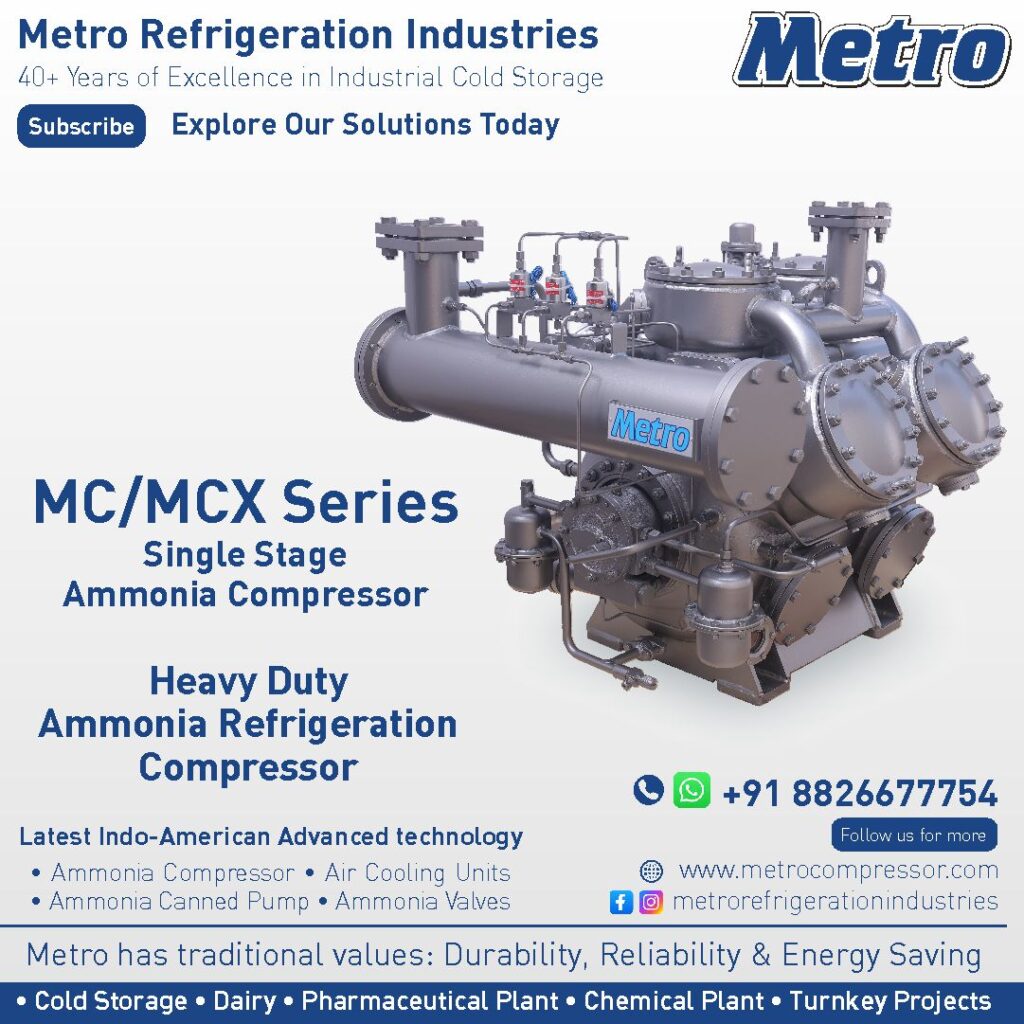
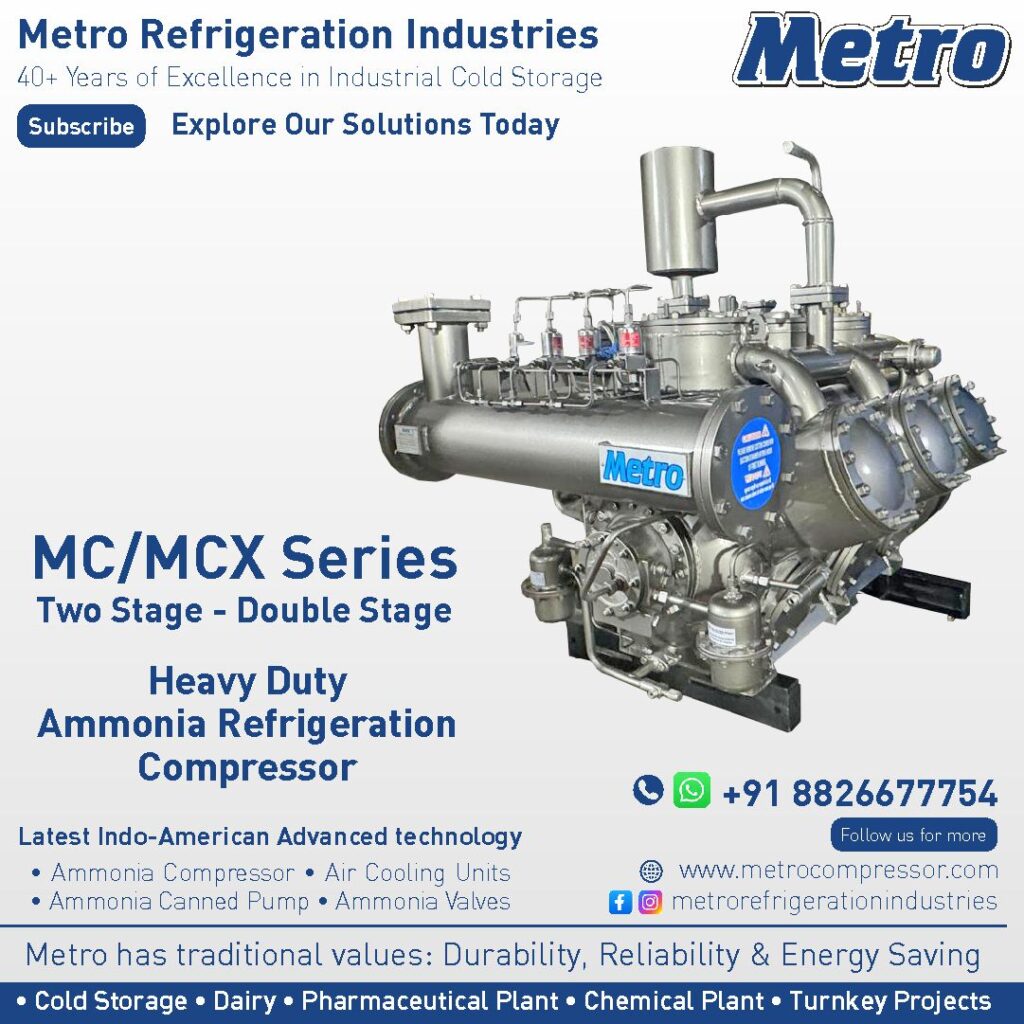
1. Reciprocating Ammonia Compressor

The reciprocating compression system is one of the most trusted solutions for heavy-duty industrial refrigeration applications.

Key Features:

  • Piston and cylinder mechanism

  • Suitable for small to large cold storages

  • Works reliably even under partial load

  • High pressure ratio


2. Screw Compressor

Used for very large capacities with continuous operation.


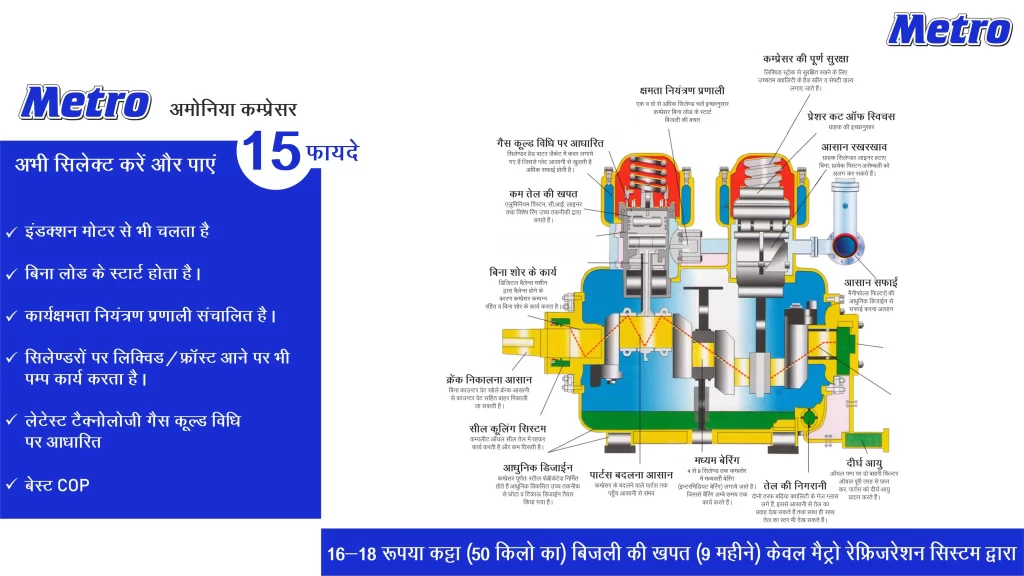
Metro Ammonia Compressor – 15 Key Benefits

Below are the major benefits of the Metro Ammonia Compressor, translated and professionally explained from the provided image:

Metro Ammonia Compressor – Key Advantages

  1. Can operate with induction motor

  2. Starts without load, reducing electrical stress

  3. Advanced capacity control system for precise cooling

  4. Best COP (Coefficient of Performance)

  5. Operates even if liquid/frost enters cylinders

  6. Based on latest gas-cooled technology

  7. Low oil consumption, reducing operating cost

  8. Noise-free and vibration-free operation

  9. Easy crankshaft removal, simplifying maintenance

  10. Advanced seal cooling system for longer seal life

  11. Medium-speed design ensures durability and stability

  12. Easy piston replacement, reducing downtime

  13. Continuous oil monitoring system

  14. Long service life with heavy-duty construction

  15. Easy cleaning and maintenance-friendly design

These benefits make the Metro ammonia compressor a highly reliable industrial refrigeration compressor for long-term use in cold storage and processing plants.

Metro ammonia compressor 15 benefits diagram showing reciprocating industrial refrigeration compressor with gas cooled technology
Cutaway diagram of Metro ammonia reciprocating compressor with 15 major benefits including high efficiency, gas cooled technology, low oil consumption, and best COP.

Uses & Applications of Ammonia Compressors

Ammonia compressors are widely used in:

  • Cold storage warehouses

  • CA cold storage projects

  • Dairy & milk chilling plants

  • Fisheries & seafood processing

  • Meat & poultry processing

  • Pharmaceutical cold rooms

  • Ice plants & beverage industries

These applications demand high-efficiency refrigeration compressors with low running cost and long operational life.

Natural refrigerant–based industrial cooling solutions are increasingly preferred due to rising energy costs and stricter environmental regulations. Systems operating on ammonia (R717) provide excellent thermodynamic performance, making them ideal for large-scale refrigeration where continuous operation and reliability are essential.

With proper engineering, safety controls, and maintenance practices, these solutions ensure long-term operational stability while supporting sustainable cold-chain infrastructure across agriculture, food processing, and pharmaceutical sectors.


Efficiency of Ammonia Compressors

Why Ammonia Compressors Deliver the Best Efficiency

  • High latent heat of NH₃

  • Lower power consumption per TR

  • Excellent heat transfer properties

  • Ideal for both water cooled and gas cooled technology

  • Reduced total lifecycle cost

Compared to synthetic refrigerants, ammonia-based industrial cooling systems consistently deliver higher COP, lower energy consumption per TR, and faster return on investment.


Ammonia Compressor vs Other Refrigeration Compressors

Parameter Ammonia Compressor Conventional Refrigeration Compressor
Energy Efficiency Very High Medium
Operating Cost Low High
Environmental Impact Zero GWP High GWP
Industrial Suitability Excellent Limited


Metro high speed ammonia compressor features showing Indo German technology, industrial refrigeration compressor design, long life performance
Key features of Metro high speed ammonia compressors manufactured using Indo-German technology for cold storage and industrial refrigeration systems.

Complete Product Line

Our advanced product line includes:

Meat Processing Plant Refrigeration Equipment | Precise Temperature Control
Ensure precise temperature control in meat processing with advanced refrigeration equipment, preserving product safety and quality.

Ammonia Compressor: Backbone of Industrial Ammonia Refrigeration System

Our Nh3 refrigeration compressor are designed to deliver unmatched performance, ensuring reliability and efficiency across a wide range of applications. The range includes:

Efficient beef processing plant for large-scale production
High-volume beef processing plants designed for large-scale production, featuring state-of-the-art machinery and precision controls.


Beef processing plant refrigeration systems for safe meat storage
Efficient refrigeration systems in beef processing plants ensure safe storage and maintain product quality from processing to distribution.
  • MC Series (Water Cooled Nh3 Compressor): Ideal for industries requiring consistent cooling under extreme conditions.
High-capacity chicken processing plant for large-scale production
Large-scale chicken processing plants equipped with scalable solutions to meet high demand for poultry products.
  • MCX Series (Gas Cooled Nh3 Compressor): Designed for energy-efficient operation in diverse environments.

Comprehensive Range of Nh3 Compressor

Chicken processing plant refrigeration for maintaining meat freshness
Refrigeration systems in chicken processing plants preserve freshness and safety from processing to storage.
  • Single Stage Ammonia Compressor: Available in 7 types, featuring 1 to 12 cylinders with capacities up to 580 T.R. These refrigeration compressor are perfect for moderate refrigeration requirements.
Fisheries plant with advanced processing and packaging systems
Modern fisheries plants with advanced processing, packaging, and storage systems for high-quality fish products.
  • Two Stage Ammonia Compressor (Compound Version): Available in 9 types, featuring 1 to 12 cylinders with capacities up to 580 T.R. Engineered for applications requiring precise temperature control at low and ultra-low temperatures.

Additional Equipment and Solutions

Fisheries plant for sustainable fish processing and packaging
Sustainable fisheries plants focus on eco-friendly solutions for fish processing, reducing environmental impact while maintaining high product quality.
  • Evaporative Condenser: Engineered for maximum heat transfer and reduced energy consumption in refrigeration systems.
Fisheries plant with advanced cold storage for preserving fish freshness
Cold storage systems in fisheries plants preserve the freshness and quality of fish, extending shelf life and ensuring safe distribution.
  • Air Cooling Units: SS and AL Series durable and efficient cooling solutions, including stainless steel and aluminum options.
Fish cold storage facility with temperature-controlled storage for preserving fish quality
Fish cold storage facilities maintain optimal temperature conditions to preserve the freshness, texture, and quality of fish products.
Cold storage for fish products ensuring safe transport and longer shelf life
Cold storage systems for fish products ensure safe transport and extended shelf life, maintaining product quality from processing to retail.
Fish cold storage with advanced refrigeration systems for maintaining fish freshness
Efficient refrigeration systems in fish cold storage facilities ensure the preservation of fish quality, freshness, and safety.
  • Ammonia Valves: Precision-engineered valves for safe and efficient ammonia flow control.
Beef processing refrigeration plant with advanced cooling systems for safe meat preservation
Advanced refrigeration systems in beef processing plants ensure safe storage and optimal preservation of meat products.
Energy-efficient beef processing refrigeration plant for reducing operational costs
Energy-efficient refrigeration solutions for beef processing plants help lower costs while maintaining product quality and safety.
Industrial-grade refrigeration for large-scale beef processing plants
Industrial-grade refrigeration systems designed for high-capacity beef processing plants to ensure consistent cooling.
Leading chicken processing refrigeration manufacturer with advanced cooling technology
Top manufacturers of chicken processing refrigeration systems offering advanced cooling technology for optimal poultry preservation.
  • IQF Technology: Advanced freezing technology to preserve food quality and extend shelf life.
Chicken processing refrigeration systems for maintaining freshness and safety
Refrigeration systems for chicken processing are designed to maintain freshness and ensure product safety during storage.
  • Industrial Ice Bank: Dependable ice storage systems for industrial cooling needs.
  • Pillow Plates: Effective heat exchange solutions for refrigeration and industrial applications.
  • Axial Fans: Improve airflow and cooling performance with durable axial fans.
Energy-efficient refrigeration systems for chicken processing facilities
Energy-efficient refrigeration solutions for chicken processing facilities help reduce costs while preserving product quality.
  • Shell & Tube Condensers: Robust condensers designed for high-capacity industrial refrigeration.
  • Ammonia Compressor Components: Ensure optimal operation with precision-engineered ammonia refrigeration compressor components.
Screw Compressor Ammonia Refrigeration Manufacturers: Top manufacturers of screw compressors for ammonia refrigeration systems.
Screw Compressor Ammonia Refrigeration Manufacturers: Get high quality ammonia refrigeration screw compressors from industry leaders.
  • Ammonia Screw Compressors : An ammonia screw compressor is a high-efficiency refrigeration solution widely used in industrial cooling applications. It provides continuous, energy-efficient operation for ammonia-based refrigeration systems in cold storage, dairy, meat processing, pharmaceuticals, and chemical industries.
  • High Efficiency – Optimized for energy savings and continuous operation
    Industrial Applications – Ideal for cold storage, food processing & pharma
    Advanced Technology – Uses precision-engineered screw rotors for reliability
    Low Maintenance – Fewer moving parts reduce wear and tear
    Eco-Friendly – Ammonia as a refrigerant offers sustainable cooling
Efficient refrigeration systems for meat processing plants to maintain quality
Refrigeration systems in meat processing plants play a vital role in maintaining quality and preventing spoilage.

Why Choose Metro Refrigeration Industries?

Experience: Over 40 years of expertise in designing and manufacturing meat processing plant solutions.

Global Presence: Serving clients in India and over 30 countries worldwide, including Australia, UAE, Jordan, Turkey, Yemen, Thailand, Sri Lanka, and Nepal.

Cutting-Edge Indo-American Technology: Ensures superior energy efficiency and performance.

Prestigious Clientele: Trusted by Amul, Adani, Namaste India, Patanjali, and more.

Complete Product Line: Comprehensive range of equipment tailored for cold storage, including ammonia compressor, refrigeration evaporator, evaporative condenser, air cooling units, ammonia evaporator coils, ammonia valves, and more.

Best Cold Storage System Equipment and Machineries: Designed for reliability, energy efficiency, and precise temperature control.

Cost-Effective Solutions: Delivering low energy consumption and precise temperature control.

Industrial-grade refrigeration equipment for meat processing plants
Industrial-grade refrigeration equipment ensures consistent cooling and safe storage in meat processing facilities.

Optimizing Your Cold Storage with Metro Refrigeration

At Metro Refrigeration Industries, we understand the importance of having a reliable and efficient cold storage system. We offer custom cold storage design and can guide you through the cold storage operation to ensure optimal performance. Our engineers are skilled in the optimization of your cold storage system, ensuring it operates at peak efficiency.

Our cold storage plant designs incorporate advanced technology that helps in refrigerated unit optimization, resulting in lower operational costs and improved product quality.

Energy-saving refrigeration systems for meat processing plants
Energy-saving refrigeration systems in meat processing plants reduce costs while preserving freshness and quality.

Partner with Metro Refrigeration Industries for Turnkey Cold Storage Solutions

Metro Refrigeration Industries offers industry-leading expertise and technology for all your industrial ammonia refrigeration needs. Whether it’s agriculture, dairy, or industrial refrigeration, we deliver customized, energy-efficient, and cost-effective solutions. Contact us today to explore how our expertise can support your business growth.

Get in touch with us for cost-effective and reliable refrigeration solutions and join the leading names in the industry who trust Metro Refrigeration Industries.


Conclusion

A high-quality ammonia compressor, especially a reciprocating industrial compressor using gas cooled or water cooled technology, is the smartest choice for industries that demand efficiency, durability, and sustainability.

With advanced design, 15 proven benefits, and excellent COP, modern ammonia compressors are shaping the future of India’s cold chain, reducing food wastage, saving energy, and supporting national economic growth.

Contact Metro Refrigeration Industries

To explore our products and solutions for your refrigeration unit, get in touch:

Location: D-35, Meerut Road Industrial Area, Ghaziabad, Uttar Pradesh – 201 003, INDIA

Email: sales@metrorpl.com

Phone: +91-120-2712176, 2752030, 2757568, 2757269, 2713759

Customer Care: +91 88266 77754

Website: www.metrocompressor.com

Explore more related blogs:

Meat Processing Plant

We specialize in manufacturing cutting-edge refrigeration solutions for meat processing plants, catering to beef, chicken, cattle, seafood, fish, prawns, crabs, and frozen chicken. Our advanced systems CA cold Storage, IQF Freezer, IQF Machine, ensure precise temperature control, freshness, and quality preservation. Trusted by industries for energy efficiency and durability, we provide comprehensive solutions tailored to meet diverse processing needs.

Onion Cold Storage


Air Cooling Units


Cold Storage Business Guide


Ammonia Refrigeration System


Screw Compressor Ammonia Refrigeration


CA Cold Storage


Controlled Atmosphere Cold Storage


Apple Cold Storage


CA Cold Storage Chambers


IQF Technology


Individual Quick Frozen Technology


Blast Freezers


Blast Chillers

Curd Blast Rooms

Curd Incubation Room

Curd Incubation Chamber

Dairy Processing Plant


Dairy Plant


Cold Storage Explained

Ammonia Evaporator

Air Cooling Evaporators

Evaporators

Evaporative Condenser

Cooling Coils

Ammonia Cooling Coils

Ammonia Evaporative Condenser

Ammonia Air Cooling Units


Blast Freezer

Brine Chiller: Types, Working Principle & Top Refrigeration Manufacturers

Understanding the Brine Chiller Systems, Ammonia Brine Refrigeration, Brine Chiller Plants, Brine Refrigeration Systems & Centrifugal Brine Chillers: Brine Chillers & Cooling Systems Efficiency, Applications & Industry Benefits.

Brine Chiller: Industrial grade brine chiller for efficient temperature management.
Brine Chiller: Get the best industrial brine chillers designed for high efficiency cooling applications.

Introduction to Brine in Refrigeration

Brine, a solution of water and salt (commonly sodium chloride or calcium chloride), plays a crucial role in refrigeration systems. It serves as a secondary refrigerant, transferring heat efficiently while remaining non-volatile. But what is brine in refrigeration systems, and why is brine used in refrigeration? Brine solutions are ideal for achieving and maintaining low temperatures, making them indispensable in industrial applications. They are especially effective in systems that require consistent, extremely low temperatures over extended periods.

Centrifugal Chiller Manufacturers: Trusted centrifugal chiller manufacturers providing energy efficient cooling solutions.
Centrifugal Chiller Manufacturers: Our centrifugal chillers are designed for maximum efficiency and durability in industrial applications.

Brine Chillers: Overview and Applications

Brine chillers, also known as centrifugal chillers and plate chillers are specialized refrigeration systems designed to cool brine solutions. These systems are widely used in industries like chemical processing, food and beverage production, pharmaceuticals, and dairy. Brine chillers cater to a wide temperature range, making them versatile for both moderate and extremely low-temperature applications. Whether you need a low temperature brine chiller or an extremely low temperature brine chiller, these systems ensure precision cooling for various processes.

Some common applications of brine chiller systems include:

At Metro Refrigeration Industries, we provide end-to-end solutions for these applications, leveraging advanced technology and decades of expertise.

Brine Chiller Plant: Industrial brine chiller plant designed for large scale refrigeration needs.
Brine chiller plant solutions deliver efficient and cost effective cooling for industrial applications.

Types of Brine Chillers

Centrifugal Chillers

Centrifugal chillers use a high speed impeller to compress the refrigerant, making them efficient for large scale brine cooling system applications. They are suitable for environments requiring significant cooling capacity and consistent performance. Centrifugal refrigeration systems are commonly utilized in industries requiring reliable and high capacity cooling solutions.

Plate Chillers

Plate chillers are compact and efficient, using thin metal plates to transfer heat between the chiller brine and refrigerant. They are ideal for applications requiring quick cooling and a small footprint.

Screw Chillers

Screw chillers use rotary screw compressors to achieve efficient cooling. These systems are highly reliable and versatile, capable of handling varying cooling loads with ease.

Brine chillers can also be classified based on their cooling configurations:

Brine Solution for Cooling: High quality brine solution for industrial cooling and refrigeration applications.
Brine Solutions for Cooling: Optimize your cooling process with our high performance brine solutions.

How Does a Brine Chiller Work?

To understand how does a brine chiller work, we must delve into their core components and principles. A brine chiller refrigeration system typically consists of the following:

  • Evaporator: The refrigerant absorbs heat from the brine solution, causing it to cool.
  • Compressor: The refrigerant is compressed, raising its pressure and temperature.
  • Condenser: Heat from the refrigerant is released into the atmosphere or another cooling medium.
  • Expansion Valve: The refrigerant is expanded, lowering its pressure and temperature, ready to absorb heat again.

The brine chiller cooling system cycle is a continuous loop that ensures consistent cooling. Brine water chillers can achieve precise temperature control, making them suitable for critical industrial applications. Metro Refrigeration Industries offers robust systems designed for efficiency and reliability.

Ammonia Brine Refrigeration: Industrial ammonia brine refrigeration system for energy efficient cooling.
Ammonia Brine Refrigeration: Efficient ammonia brine refrigeration systems for optimal temperature control in industrial applications.

Brine and Its Role in Cooling Systems

Brine is an antifreeze solution that can be cooled far below the freezing point of water. It is used in brine refrigeration systems to achieve and maintain sub-zero temperatures. The brine solution’s salt content prevents freezing, ensuring efficient heat transfer even at extremely low temperatures. This property makes brine indispensable for various industrial applications requiring precision cooling.

Brine Chiller Manufacturers: Leading brine chiller manufacturer providing high performance cooling solutions.
Brine Chiller Manufacturers: Reliable and energy-efficient brine chillers from the leading manufacturers in industrial refrigeration.

Brine Refrigeration System vs. Water Chillers

While both brine chillers and water chillers serve similar purposes, their operational mechanisms and applications differ:

  • Water Chillers: Limited to temperatures above freezing (0°C).
  • Brine Chillers: Designed for sub-zero temperatures, leveraging brine’s antifreeze properties.

This distinction makes brine cooling systems indispensable for industries requiring ultra-low temperatures, such as cold storage and chemical processing. Metro Refrigeration Industries, a leading brine chiller manufacturer, ensures superior performance in both categories.


Industrial Applications of Brine Chillers

  1. Ammonia Brine Refrigeration: Ammonia, as a primary refrigerant, is commonly paired with brine in industrial refrigeration systems. Ammonia brine refrigeration is highly efficient, environmentally friendly, and cost-effective.
  2. Thermic Fluid Systems: In thermic fluid heat exchangers, brine serves as a secondary cooling medium, enhancing heat transfer efficiency in critical industrial processes.
  3. Brine Solution for Cooling: Brine’s unique properties make it suitable for chilling in food processing, breweries, and meat storage facilities.

Metro Refrigeration Industries provides customized solutions for these applications, ensuring optimal performance and energy savings.

Complete Product Line

Our advanced product line includes:

Meat Processing Plant Refrigeration Equipment | Precise Temperature Control
Ensure precise temperature control in meat processing with advanced refrigeration equipment, preserving product safety and quality.

Ammonia Compressor: Backbone of Industrial Ammonia Refrigeration System

Our Nh3 refrigeration compressor are designed to deliver unmatched performance, ensuring reliability and efficiency across a wide range of applications. The range includes:

Efficient beef processing plant for large-scale production
High-volume beef processing plants designed for large-scale production, featuring state-of-the-art machinery and precision controls.


Beef processing plant refrigeration systems for safe meat storage
Efficient refrigeration systems in beef processing plants ensure safe storage and maintain product quality from processing to distribution.
  • MC Series (Water Cooled Nh3 Compressor): Ideal for industries requiring consistent cooling under extreme conditions.
High-capacity chicken processing plant for large-scale production
Large-scale chicken processing plants equipped with scalable solutions to meet high demand for poultry products.
  • MCX Series (Gas Cooled Nh3 Compressor): Designed for energy-efficient operation in diverse environments.

Comprehensive Range of Nh3 Compressor

Chicken processing plant refrigeration for maintaining meat freshness
Refrigeration systems in chicken processing plants preserve freshness and safety from processing to storage.
  • Single Stage Ammonia Compressor: Available in 7 types, featuring 1 to 12 cylinders with capacities up to 580 T.R. These refrigeration compressor are perfect for moderate refrigeration requirements.
Fisheries plant with advanced processing and packaging systems
Modern fisheries plants with advanced processing, packaging, and storage systems for high-quality fish products.
  • Two Stage Ammonia Compressor (Compound Version): Available in 9 types, featuring 1 to 12 cylinders with capacities up to 580 T.R. Engineered for applications requiring precise temperature control at low and ultra-low temperatures.

Additional Equipment and Solutions

Fisheries plant for sustainable fish processing and packaging
Sustainable fisheries plants focus on eco-friendly solutions for fish processing, reducing environmental impact while maintaining high product quality.
  • Evaporative Condenser: Engineered for maximum heat transfer and reduced energy consumption in refrigeration systems.
Fisheries plant with advanced cold storage for preserving fish freshness
Cold storage systems in fisheries plants preserve the freshness and quality of fish, extending shelf life and ensuring safe distribution.
  • Air Cooling Units: SS and AL Series durable and efficient cooling solutions, including stainless steel and aluminum options.
Fish cold storage facility with temperature-controlled storage for preserving fish quality
Fish cold storage facilities maintain optimal temperature conditions to preserve the freshness, texture, and quality of fish products.
Cold storage for fish products ensuring safe transport and longer shelf life
Cold storage systems for fish products ensure safe transport and extended shelf life, maintaining product quality from processing to retail.
Fish cold storage with advanced refrigeration systems for maintaining fish freshness
Efficient refrigeration systems in fish cold storage facilities ensure the preservation of fish quality, freshness, and safety.
  • Ammonia Valves: Precision-engineered valves for safe and efficient ammonia flow control.
Beef processing refrigeration plant with advanced cooling systems for safe meat preservation
Advanced refrigeration systems in beef processing plants ensure safe storage and optimal preservation of meat products.
Energy-efficient beef processing refrigeration plant for reducing operational costs
Energy-efficient refrigeration solutions for beef processing plants help lower costs while maintaining product quality and safety.
Industrial-grade refrigeration for large-scale beef processing plants
Industrial-grade refrigeration systems designed for high-capacity beef processing plants to ensure consistent cooling.
Leading chicken processing refrigeration manufacturer with advanced cooling technology
Top manufacturers of chicken processing refrigeration systems offering advanced cooling technology for optimal poultry preservation.
  • IQF Technology: Advanced freezing technology to preserve food quality and extend shelf life.
Chicken processing refrigeration systems for maintaining freshness and safety
Refrigeration systems for chicken processing are designed to maintain freshness and ensure product safety during storage.
  • Industrial Ice Bank: Dependable ice storage systems for industrial cooling needs.
  • Pillow Plates: Effective heat exchange solutions for refrigeration and industrial applications.
  • Axial Fans: Improve airflow and cooling performance with durable axial fans.
Energy-efficient refrigeration systems for chicken processing facilities
Energy-efficient refrigeration solutions for chicken processing facilities help reduce costs while preserving product quality.
  • Shell & Tube Condensers: Robust condensers designed for high-capacity industrial refrigeration.
  • Ammonia Compressor Components: Ensure optimal operation with precision-engineered ammonia refrigeration compressor components.
Screw Compressor Ammonia Refrigeration Manufacturers: Top manufacturers of screw compressors for ammonia refrigeration systems.
Screw Compressor Ammonia Refrigeration Manufacturers: Get high quality ammonia refrigeration screw compressors from industry leaders.
  • Ammonia Screw Compressors : An ammonia screw compressor is a high-efficiency refrigeration solution widely used in industrial cooling applications. It provides continuous, energy-efficient operation for ammonia-based refrigeration systems in cold storage, dairy, meat processing, pharmaceuticals, and chemical industries.
  • High Efficiency – Optimized for energy savings and continuous operation
    Industrial Applications – Ideal for cold storage, food processing & pharma
    Advanced Technology – Uses precision-engineered screw rotors for reliability
    Low Maintenance – Fewer moving parts reduce wear and tear
    Eco-Friendly – Ammonia as a refrigerant offers sustainable cooling
Efficient refrigeration systems for meat processing plants to maintain quality
Refrigeration systems in meat processing plants play a vital role in maintaining quality and preventing spoilage.

Why Choose Metro Refrigeration Industries?

Experience: Over 40 years of expertise in designing and manufacturing meat processing plant solutions.

Global Presence: Serving clients in India and over 30 countries worldwide, including Australia, UAE, Jordan, Turkey, Yemen, Thailand, Sri Lanka, and Nepal.

Cutting-Edge Indo-American Technology: Ensures superior energy efficiency and performance.

Prestigious Clientele: Trusted by Amul, Adani, Namaste India, Patanjali, and more.

Complete Product Line: Comprehensive range of equipment tailored for cold storage, including ammonia compressor, refrigeration evaporator, evaporative condenser, air cooling units, ammonia evaporator coils, ammonia valves, and more.

Best Cold Storage System Equipment and Machineries: Designed for reliability, energy efficiency, and precise temperature control.

Cost-Effective Solutions: Delivering low energy consumption and precise temperature control.

Industrial-grade refrigeration equipment for meat processing plants
Industrial-grade refrigeration equipment ensures consistent cooling and safe storage in meat processing facilities.

Optimizing Your Cold Storage with Metro Refrigeration

At Metro Refrigeration Industries, we understand the importance of having a reliable and efficient cold storage system. We offer custom cold storage design and can guide you through the cold storage operation to ensure optimal performance. Our engineers are skilled in the optimization of your cold storage system, ensuring it operates at peak efficiency.

Our cold storage plant designs incorporate advanced technology that helps in refrigerated unit optimization, resulting in lower operational costs and improved product quality.

Energy-saving refrigeration systems for meat processing plants
Energy-saving refrigeration systems in meat processing plants reduce costs while preserving freshness and quality.

Partner with Metro Refrigeration Industries for Turnkey Cold Storage Solutions

Metro Refrigeration Industries offers industry-leading expertise and technology for all your industrial ammonia refrigeration needs. Whether it’s agriculture, dairy, or industrial refrigeration, we deliver customized, energy-efficient, and cost-effective solutions. Contact us today to explore how our expertise can support your business growth.

Get in touch with us for cost-effective and reliable refrigeration solutions and join the leading names in the industry who trust Metro Refrigeration Industries.

Conclusion

Brine chillers are indispensable in industrial refrigeration, offering unmatched efficiency, precision, and versatility. Whether you are exploring how does a brine refrigeration system work, looking for a brine solution for cooling, or seeking the best brine chiller manufacturers in India, understanding the fundamentals and applications of these systems is crucial.

Metro Refrigeration Industries, with our advanced technology, comprehensive product line, and client-centric approach, remains a trusted partner for all your refrigeration needs. Explore our range of brine chillers today to experience the perfect balance of innovation, performance, and affordability.

Brine Chiller System: Efficient brine chiller system for industrial cooling and refrigeration.
Brine chiller system manufacturers ensures energy efficient cooling for various industrial processes.

Contact Metro Refrigeration Industries

To explore our products and solutions for your refrigeration unit, get in touch:

Location: D-35, Meerut Road Industrial Area, Ghaziabad, Uttar Pradesh – 201 003, INDIA

Email: sales@metrorpl.com

Phone: +91-120-2712176, 2752030, 2757568, 2757269, 2713759

Customer Care: +91 88266 77754

Website: www.metrocompressor.com

Explore more related blogs:

Meat Processing Plant

We specialize in manufacturing cutting-edge refrigeration solutions for meat processing plants, catering to beef, chicken, cattle, seafood, fish, prawns, crabs, and frozen chicken. Our advanced systems CA cold Storage, IQF Freezer, IQF Machine, ensure precise temperature control, freshness, and quality preservation. Trusted by industries for energy efficiency and durability, we provide comprehensive solutions tailored to meet diverse processing needs.

Onion Cold Storage


Air Cooling Units


Cold Storage Business Guide


Ammonia Refrigeration System


Screw Compressor Ammonia Refrigeration


CA Cold Storage


Controlled Atmosphere Cold Storage


Apple Cold Storage


CA Cold Storage Chambers


IQF Technology


Individual Quick Frozen Technology


Blast Freezers


Blast Chillers

Curd Blast Rooms

Curd Incubation Room

Curd Incubation Chamber

Dairy Processing Plant


Dairy Plant


Cold Storage Explained

Ammonia Evaporator

Air Cooling Evaporators

Evaporators

Evaporative Condenser

Cooling Coils

Ammonia Cooling Coils

Ammonia Evaporative Condenser

Ammonia Air Cooling Units


Blast Freezer

Ammonia Screw Compressor: Guide to Diagram, Technology, Uses and Benefits

Screw Compressor Ammonia Refrigeration: Best Nh3 Screw Compressors for Industrial Refrigeration

Ammonia Screw Compressor: High performance ammonia screw compressor for industrial refrigeration systems.
Nh3 Screw Compressor: Enhance your Nh3 refrigeration efficiency with a reliable Nh3 screw compressor.

When it comes to industrial refrigeration, Nh3 screw compressors are a cornerstone technology, known for their efficiency, reliability, and ability to handle large refrigeration loads. Whether you’re a business owner or involved in Nh3 refrigeration systems design, understanding the ins and outs of ammonia screw compressors is crucial for optimizing your cold storage solutions.

In this blog, we will dive deep into the Nh3 screw compressor operation, working principles, and various components that make these compressors the best choice for industrial refrigeration needs. We will also explore their advantages over other compressor types, like reciprocating ammonia compressors, and examine how you can incorporate these advanced systems into your refrigeration setup. As one of India’s top Nh3 screw compressor manufacturers, Metro Refrigeration Industries offers top-notch Nh3 screw compressors for industrial refrigeration applications worldwide. Let’s explore everything you need to know!

What is an Ammonia Screw Compressor?

An Nh3 screw compressor is a rotary compressor designed to efficiently compress Nh3 gas for refrigeration systems. Its design utilizes two interlocking helical rotors to compress refrigerant, which provides smoother and quieter operation compared to other types of compressors. The Nh3 screw compressor is widely used in industrial refrigeration applications, especially in cold storage, food processing, brine chiller refrigeration, brine refrigeration system, brine chiller system and chemical plants, where precise temperature control and efficiency are critical.

Working Principle of an Nh3 Screw Compressor

The ammonia screw compressor working principle revolves around the action of the rotors. As the screw compressor ammonia refrigeration system operates, the rotors mesh together, creating a sealed volume where nh3 gas is drawn in, compressed, and then discharged. This process leads to efficient compression, minimal vibration, and the ability to handle high discharge pressures and temperatures.

How Does an Ammonia Screw Compressor Work?

  1. Suction: Nh3 gas is drawn into the compressor through the suction port.
  2. Compression: The interlocking rotors move the gas along the rotor housing, compressing it as it travels.
  3. Discharge: The compressed Nh3 gas is then expelled through the discharge port into the system.

Thanks to the continuous action of the screws, the screw compressor for ammonia ensures a smooth and efficient operation with minimal energy consumption.

Screw Compressor Ammonia Refrigeration: Industrial grade screw compressor for ammonia refrigeration systems.
Screw Compressor Nh3 Refrigeration: Optimize your refrigeration system with a high performance screw compressor.

Ammonia Screw Compressor: Key Features and Benefits

The Nh3 screw compressor offers several advantages over traditional compressor technologies, including:

  • Energy Efficiency: The screw design of these compressors allows for smoother operation and less mechanical loss, reducing energy consumption.
  • High Capacity: They can handle higher refrigerant flows and are perfect for large industrial refrigeration systems.
  • Minimal Vibration: Compared to reciprocating Nh3 compressors, rotary screw ammonia compressors produce less vibration and noise.
  • Lower Maintenance Costs: Their simple design and fewer moving parts reduce wear and tear, leading to less frequent maintenance.

Ammonia Screw Compressor Types

  1. Single Screw Ammonia Compressor: A highly efficient compressor that features a single rotor, designed to handle high discharge pressures and temperatures with minimal energy loss.
  2. Twin-Screw Ammonia Compressor: The most common design, offering higher efficiency and better performance for medium to large industrial refrigeration systems.
  3. Rotary Screw Ammonia Compressor: Known for its reliability and compact design, this type is ideal for continuous industrial use.

Nh3 Screw Compressor Applications

Nh3 screw compressors are widely used across various sectors, including:

Screw Compressor for Ammonia System: Heavy duty screw compressor for ammonia based refrigeration systems.
Screw Compressor for Nh3 System: Get superior cooling performance with Nh3 screw compressor technology.

Nh3 Screw Compressor vs Reciprocating Ammonia Compressor

While both types of compressors serve the same purpose—compressing refrigerants—Nh3 screw compressors outperform reciprocating ammonia compressors in many areas. Here’s a quick comparison:

Components of an Nh3 Screw Compressor System

  1. Nh3 Screw Compressor Oil Separator: Ensures that the oil used to lubricate the compressor is separated from the refrigerant to maintain system efficiency and prevent contamination.
  2. Nh3 Screw Compressor Economizer: An energy saving device that recovers and reuses waste heat from the compressor, improving overall system efficiency.
  3. High Discharge Temperature Management: Some models, such as Nh3 screw compressors with high discharge temperature, come with advanced features to handle the heat generated during compression, ensuring optimal performance.
Ammonia Screw Compressor Supplier: Trusted supplier of high quality ammonia screw compressors.
Nh3 Screw Compressor Supplier: Find the best Nh3 screw compressors from a reliable supplier.

Choosing the Right Nh3 Screw Compressor Manufacturer

When selecting an Nh3 screw compressor manufacturer, it’s essential to consider the following factors:

At Metro Refrigeration Industries, we stand as one of the leading manufacturers of Nh3 screw compressors. With years of expertise, we provide reliable, energy-efficient solutions that cater to various industries. Our complete product line includes ammonia screw compressors, rotary screw ammonia compressors, screw refrigeration compressor units, ammonia refrigeration compressor, cold storage equipment & machineries, cold room setup, meat processing plant, dairy plant, milk processing unit, milk chillers, dairy refrigeration machinery, milk refrigeration plant, pharma & chemical plant and much more. We are committed to providing cost effective solutions with precise temperature control and reduced energy consumption.

Ammonia Screw Compressor Manufacturers: Top ammonia screw compressor manufacturers for industrial refrigeration.
Nh3 Screw Compressor Manufacturers: Get high performance Nh3 screw compressors from top manufacturers.

Complete Product Line

Our advanced product line includes:

Meat Processing Plant Refrigeration Equipment | Precise Temperature Control
Ensure precise temperature control in meat processing with advanced refrigeration equipment, preserving product safety and quality.

Ammonia Compressor: Backbone of Industrial Ammonia Refrigeration System

Our Nh3 refrigeration compressor are designed to deliver unmatched performance, ensuring reliability and efficiency across a wide range of applications. The range includes:

Efficient beef processing plant for large-scale production
High-volume beef processing plants designed for large-scale production, featuring state-of-the-art machinery and precision controls.


Beef processing plant refrigeration systems for safe meat storage
Efficient refrigeration systems in beef processing plants ensure safe storage and maintain product quality from processing to distribution.
  • MC Series (Water Cooled Nh3 Compressor): Ideal for industries requiring consistent cooling under extreme conditions.
High-capacity chicken processing plant for large-scale production
Large-scale chicken processing plants equipped with scalable solutions to meet high demand for poultry products.
  • MCX Series (Gas Cooled Nh3 Compressor): Designed for energy-efficient operation in diverse environments.

Comprehensive Range of Nh3 Compressor

Chicken processing plant refrigeration for maintaining meat freshness
Refrigeration systems in chicken processing plants preserve freshness and safety from processing to storage.
  • Single Stage Ammonia Compressor: Available in 7 types, featuring 1 to 12 cylinders with capacities up to 580 T.R. These refrigeration compressor are perfect for moderate refrigeration requirements.
Fisheries plant with advanced processing and packaging systems
Modern fisheries plants with advanced processing, packaging, and storage systems for high-quality fish products.
  • Two Stage Ammonia Compressor (Compound Version): Available in 9 types, featuring 1 to 12 cylinders with capacities up to 580 T.R. Engineered for applications requiring precise temperature control at low and ultra-low temperatures.

Additional Equipment and Solutions

Fisheries plant for sustainable fish processing and packaging
Sustainable fisheries plants focus on eco-friendly solutions for fish processing, reducing environmental impact while maintaining high product quality.
  • Evaporative Condenser: Engineered for maximum heat transfer and reduced energy consumption in refrigeration systems.
Fisheries plant with advanced cold storage for preserving fish freshness
Cold storage systems in fisheries plants preserve the freshness and quality of fish, extending shelf life and ensuring safe distribution.
  • Air Cooling Units: SS and AL Series durable and efficient cooling solutions, including stainless steel and aluminum options.
Fish cold storage facility with temperature-controlled storage for preserving fish quality
Fish cold storage facilities maintain optimal temperature conditions to preserve the freshness, texture, and quality of fish products.
Cold storage for fish products ensuring safe transport and longer shelf life
Cold storage systems for fish products ensure safe transport and extended shelf life, maintaining product quality from processing to retail.
Fish cold storage with advanced refrigeration systems for maintaining fish freshness
Efficient refrigeration systems in fish cold storage facilities ensure the preservation of fish quality, freshness, and safety.
  • Ammonia Valves: Precision-engineered valves for safe and efficient ammonia flow control.
Beef processing refrigeration plant with advanced cooling systems for safe meat preservation
Advanced refrigeration systems in beef processing plants ensure safe storage and optimal preservation of meat products.
Energy-efficient beef processing refrigeration plant for reducing operational costs
Energy-efficient refrigeration solutions for beef processing plants help lower costs while maintaining product quality and safety.
Industrial-grade refrigeration for large-scale beef processing plants
Industrial-grade refrigeration systems designed for high-capacity beef processing plants to ensure consistent cooling.
Leading chicken processing refrigeration manufacturer with advanced cooling technology
Top manufacturers of chicken processing refrigeration systems offering advanced cooling technology for optimal poultry preservation.
  • IQF Technology: Advanced freezing technology to preserve food quality and extend shelf life.
Chicken processing refrigeration systems for maintaining freshness and safety
Refrigeration systems for chicken processing are designed to maintain freshness and ensure product safety during storage.
  • Industrial Ice Bank: Dependable ice storage systems for industrial cooling needs.
  • Pillow Plates: Effective heat exchange solutions for refrigeration and industrial applications.
  • Axial Fans: Improve airflow and cooling performance with durable axial fans.
Energy-efficient refrigeration systems for chicken processing facilities
Energy-efficient refrigeration solutions for chicken processing facilities help reduce costs while preserving product quality.
  • Shell & Tube Condensers: Robust condensers designed for high-capacity industrial refrigeration.
  • Ammonia Compressor Components: Ensure optimal operation with precision-engineered ammonia refrigeration compressor components.
Screw Compressor Ammonia Refrigeration: Industrial grade screw compressor for ammonia refrigeration systems.
Screw Compressor Ammonia Refrigeration: Optimize your refrigeration system with a high performance screw compressor.
  • Brine Chillers: Discover high performance ammonia brine refrigeration systems from leading brine chiller manufacturers. Our brine chiller plants, brine cooling systems, and brine refrigeration solutions ensure energy efficient industrial cooling. We also specialize in ammonia screw compressors and shell & tube condensers, delivering cost effective and reliable cooling solutions for various industries.
Brine Chiller Plant: Industrial brine chiller plant designed for large scale refrigeration needs.
Brine chiller plant solutions deliver efficient and cost effective cooling for industrial applications.
    • Ammonia Compressor Components: Ensure optimal operation with precision-engineered ammonia refrigeration compressor components.
Efficient refrigeration systems for meat processing plants to maintain quality
Refrigeration systems in meat processing plants play a vital role in maintaining quality and preventing spoilage.

Why Choose Metro Refrigeration Industries?

Experience: Over 40 years of expertise in designing and manufacturing meat processing plant solutions.

Global Presence: Serving clients in India and over 30 countries worldwide, including Australia, UAE, Jordan, Turkey, Yemen, Thailand, Sri Lanka, and Nepal.

Cutting-Edge Indo-American Technology: Ensures superior energy efficiency and performance.

Prestigious Clientele: Trusted by Amul, Adani, Namaste India, Patanjali, and more.

Complete Product Line: Comprehensive range of equipment tailored for cold storage, including ammonia compressor, refrigeration evaporator, evaporative condenser, air cooling units, ammonia evaporator coils, ammonia valves, and more.

Best Cold Storage System Equipment and Machineries: Designed for reliability, energy efficiency, and precise temperature control.

Cost-Effective Solutions: Delivering low energy consumption and precise temperature control.

Industrial-grade refrigeration equipment for meat processing plants
Industrial-grade refrigeration equipment ensures consistent cooling and safe storage in meat processing facilities.

Optimizing Your Cold Storage with Metro Refrigeration

At Metro Refrigeration Industries, we understand the importance of having a reliable and efficient cold storage system. We offer custom cold storage design and can guide you through the cold storage operation to ensure optimal performance. Our engineers are skilled in the optimization of your cold storage system, ensuring it operates at peak efficiency.

Our cold storage plant designs incorporate advanced technology that helps in refrigerated unit optimization, resulting in lower operational costs and improved product quality.

Energy-saving refrigeration systems for meat processing plants
Energy-saving refrigeration systems in meat processing plants reduce costs while preserving freshness and quality.

Partner with Metro Refrigeration Industries for Turnkey Cold Storage Solutions

Metro Refrigeration Industries offers industry-leading expertise and technology for all your industrial ammonia refrigeration needs. Whether it’s agriculture, dairy, or industrial refrigeration, we deliver customized, energy-efficient, and cost-effective solutions. Contact us today to explore how our expertise can support your business growth.

Get in touch with us for cost-effective and reliable refrigeration solutions and join the leading names in the industry who trust Metro Refrigeration Industries.

Conclusion

In conclusion, ammonia screw compressors offer exceptional performance for industrial refrigeration systems. They provide a reliable, energy-efficient solution that reduces maintenance and operational costs. Whether you’re setting up a new cold storage facility or upgrading an existing one, screw compressors for ammonia refrigeration are the best choice for sustainable and cost-effective solutions.

For the highest quality ammonia screw compressors, trust Metro Refrigeration Industries, your go-to partner in delivering cutting-edge refrigeration technologies.

The Ultimate Guide to Screw Compressors:Top Manufacturers and Technologies Leading Manufacturers, Working Principles, and Applications

Screw compressors are an essential component in various industrial applications, offering unmatched efficiency and reliability. From ammonia screw compressor manufacturers to energy-efficient industrial screw compressors, selecting the right solution is crucial for optimizing performance. This guide explores the latest trends, technologies, and leading global screw compressor manufacturers, with a special focus on Metro Refrigeration Industries, a top name in refrigeration and industrial compressor solutionsa crucial component in industrial applications, offering high efficiency, durability, and performance across various sectors. As leading screw compressor manufacturers, we specialize in providing top-tier solutions, including ammonia screw compressor, industrial screw compressor, and refrigeration screw compressor technologies.

Contact Metro Refrigeration Industries

To explore our products and solutions for your refrigeration unit, get in touch:

Location: D-35, Meerut Road Industrial Area, Ghaziabad, Uttar Pradesh – 201 003, INDIA

Email: sales@metrorpl.com

Phone: +91-120-2712176, 2752030, 2757568, 2757269, 2713759

Customer Care: +91 88266 77754

Website: www.metrocompressor.com

Explore more related blogs:

Meat Processing Plant

We specialize in manufacturing cutting-edge refrigeration solutions for meat processing plants, catering to beef, chicken, cattle, seafood, fish, prawns, crabs, and frozen chicken. Our advanced systems CA cold Storage, IQF Freezer, IQF Machine, ensure precise temperature control, freshness, and quality preservation. Trusted by industries for energy efficiency and durability, we provide comprehensive solutions tailored to meet diverse processing needs.

Onion Cold Storage


Air Cooling Units

Cold Storage Business Guide


Ammonia Refrigeration System


CA Cold Storage


Brine Chiller


Controlled Atmosphere Cold Storage


Apple Cold Storage


Brine Chiller Refrigeration


CA Cold Storage Chambers


IQF Technology


Individual Quick Frozen Technology


Blast Freezers


Blast Chillers


Brine Refrigeration System

Curd Blast Rooms

Curd Incubation Room

Curd Incubation Chamber

Dairy Processing Plant


Dairy Plant


Cold Storage Explained

Ammonia Evaporator

Air Cooling Evaporators

Evaporators

Evaporative Condenser

Cooling Coils

Ammonia Cooling Coils

Ammonia Evaporative Condenser

Ammonia Air Cooling Units


Blast Freezer

Ice Bank: Chiller, Milk Cooler & Ice Thermal Energy Storage Guide by Metro

Ice Bank Tank, Milk Cooler, Chiller System, Ice Bank Refrigeration System & Cooling Solutions for Industrial Ice Bank System and Ice Thermal Energy Storage

Ice Bank Manufacturers: ice Bank Cooling Systems for Every Industry
We specialize in manufacturing custom ice bank systems that cater to the specific cooling needs of your industry.


Metro Refrigeration Industries, with over 40 years of expertise, is a global leader in industrial refrigeration solutions. Leveraging cutting-edge Indo-American advanced technology, we design and manufacture state-of-the-art ice bank refrigeration solutions and ice storage cooling systems that cater to diverse industrial and commercial cooling needs. Our national and international reach, coupled with a comprehensive product line including ice bank chiller systems, ice bank milk coolers, and various Ice Bank Tank Types ensures that we provide high performance, cost effective solutions for industries worldwide. As leading ice bank tank manufacturers, we specialize in blast freezer, ice building tanks, brine chiller system, brine refrigeration system, brine chiller refrigeration, and refrigeration evaporator, ice bank tanks in dairy applications, delivering innovative and energy efficient refrigeration solutions for ammonia screw compressor, milk cooling, food preservation, and industrial processing.

Working Principles of Ice Bank Systems

The working principle operates by circulating a coolant, such as ammonia, through a network of pipes to form a thick layer of ice. This stored ice is then melted during peak hours to provide cooling. The working principle ensures maximum energy savings and consistent performance.

Working Principle of Ice Bank Chillers

Working Principle work by using a heat exchanger to transfer heat from water to a refrigerant, such as ammonia, creating ice that stores thermal energy. This energy is used later for cooling, ensuring efficiency and reliability in applications such as breweries and dairies.

Ice Bank Tank Manufacturers: Ice bank tanks designed for efficient cooling and energy conservation.
Our ice bank tanks are engineered for efficiency, providing reliable cooling while minimizing energy consumption.

Understanding Ice Thermal Energy Storage Systems

Ice thermal storage systems are designed to efficiently store energy in the form of ice during off-peak hours and release it during peak demand. These systems, including ice thermal storage tanks, chilled water storage systems, and thermal storage tanks for chilled water systems, play a critical role in reducing energy consumption, lowering costs, and optimizing refrigeration efficiency.

Ice Thermal Energy Storage Product Line

At Metro Refrigeration Industries, we specialize in manufacturing and supplying a wide range of products that meet the unique demands of various industries:

  1. Ice Thermal Energy Storage Tanks
    Thermal energy storage tanks are designed to ensure optimal cooling for industrial and commercial applications. They are ideal for storing chilled water and ice, significantly reducing energy costs.
  2. Ice Bank Systems
    Ice bank cooling systems provide efficient refrigeration for applications such as dairies, breweries, and cold storage facilities. These systems include IBT tanks, which are known for their high cooling capacity and durability.
  3. Thermal Storage and Ice Banking Systems
    Our ice banking systems and thermal storage utilize innovative technology to store energy as ice, ensuring reliable and consistent cooling for industrial refrigeration applications.
  4. Ice Bank Milk Coolers and Beer Chillers
    Designed for the dairy plant and beverage industries, our IBT milk coolers and beer chillers provide superior performance and energy efficiency. IBT milk coolers are essential in the dairy industry, helping to maintain optimal temperatures and ensuring milk freshness while minimizing energy consumption.
  5. Ammonia Based Ice Bank Refrigeration
    Metro’s ammonia based ice bank energy storage systems combine eco-friendliness with exceptional efficiency, making them a preferred choice for sustainable refrigeration solutions.
  6. Ice Building Tanks
    Our IBT tanks are designed for applications requiring large-scale ice storage. These tanks facilitate consistent and controlled ice formation, ensuring optimal energy utilization in industrial cooling systems.
  7. Ice Bank Tanks for Dairy Applications
    IBT tanks in dairy operations are critical for cooling milk efficiently before storage or transport. These tanks provide reliable, cost-effective cooling, ensuring the highest product quality and safety.
  8. Ice Bank Tank Manufacturers
    As one of the top ice bank tank manufacturers, Metro Refrigeration Industries delivers industry-leading products designed to meet the highest efficiency, durability, and sustainability standards.
Ice Bank Refrigeration Manufacturers: dvanced ice bank refrigeration systems for industrial use and energy savings.
Enhance your refrigeration efficiency with our ice bank refrigeration systems, offering optimal temperature control and energy savings.

Key Features and Benefits of Ice Thermal Storage Systems

  • Energy Efficiency: Ice thermal energy storage systems store energy during off-peak hours, reducing operational costs.
  • Advanced Technology: Incorporating Indo-American innovations for superior performance.
  • Customizable Designs: Tailored solutions to meet the specific needs of industries.
  • Sustainability: Eco-friendly refrigerants like ammonia ensure environmental compliance.
  • Durability: Built with high-quality materials for long-term reliability.

Applications of Ice Thermal Energy Storage Solutions

Ice thermal storage systems are suitable for a wide range of industries:

  1. Cold Storage Facilities: Efficient cooling for fruits, vegetables, and pharmaceuticals.
  2. Dairies and Breweries: Reliable milk and beer chilling with IBT systems.
  3. Industrial Processes: Temperature control for manufacturing and processing units.
  4. Commercial Buildings: Energy-efficient cooling for large office spaces and malls.
Ice Bank System Manufacturers: Innovative ice bank systems for industrial refrigeration and cooling.
Our ice bank systems offer innovative solutions for maintaining optimal temperature conditions in various industries.

Differences Between Ice Thermal Storage System and Industrial Ice Bank System

Both ice thermal energy storage and ice bank refrigeration systems function by storing cooling energy in the form of ice. While they share the same core concept, the term “ice bank” is more commonly associated with commercial applications, where the stored ice helps cool buildings during peak electricity demand by circulating chilled water. Due to their similar operation, these terms are often considered interchangeable. Read below the major differences.

1. Purpose and Application:

  • Ice Thermal Storage System: Designed primarily for energy optimization by storing thermal energy as ice during off-peak hours and using it for cooling during peak demand. It’s used in large-scale facilities such as commercial buildings, malls, and industrial plants with high cooling needs.
  • Industrial Ice Bank System: Specifically tailored for process cooling in industries like dairies, breweries, and cold storage. It focuses on efficient cooling rather than energy load shifting.

2. Cooling Mechanism:

  • Ice Thermal Storage System: Utilizes thermal storage tanks to maintain chilled water or ice. Energy stored in the form of ice is melted later to cool air or water.
  • Industrial Ice Bank System: Relies on the direct freezing of water around a heat exchanger, creating an “ice bank” for immediate cooling needs during high-demand periods.

3. Working Principle:

4. Industries Served:

  • Ice Thermal Storage System: Ideal for energy efficiency in HVAC systems, commercial infrastructure, and centralized cooling for urban spaces.
  • Industrial Ice Bank System: Focused on industries with specific cooling demands like milk chilling, beer production, food processing, and cold storage.

5. Technology and Efficiency:

  • Ice Thermal Storage System: Integrates advanced systems for energy load management, using sensors and controls to optimize usage.
  • Industrial Ice Bank System: Prioritizes robust design and high cooling capacity for industrial-grade reliability and efficiency.

6. Key Features:

  • Ice Thermal Storage System: Promotes cost savings through energy shifting, eco-friendly designs, and compatibility with renewable energy sources.
  • Industrial Ice Bank System: Features high cooling power, rapid recovery, and suitability for ammonia-based refrigeration systems.

7. Manufacturers and Expertise:
Metro Refrigeration Industries is a leader in both systems, offering:

For tailored solutions to match your industrial or commercial cooling needs, Metro Refrigeration Industries provides industrial ice bank systems using cutting-edge Indo-American technology. Contact us today to explore the right system for your requirements.

Ice Bank Chiller Manufacturers: Efficient ice bank chillers for industrial cooling and temperature regulation.
Our ice bank chillers are designed to provide superior temperature regulation for industries requiring reliable and efficient cooling.

Major Types of Ice Thermal Storage Systems and Industrial Ice Bank Systems

Both Ice Thermal Storage Systems and Industrial Ice Bank Systems are essential for energy-efficient cooling across industries. Here’s a breakdown of their major types:

Types of Ice Thermal Storage Systems

  1. Static Ice Thermal Storage Systems
    • Ice is stored in tanks and melted when cooling is required.
    • Used in chilled water storage systems and for applications requiring steady cooling over long durations.
  2. Dynamic Ice Thermal Storage Systems
    • Ice is formed on moving surfaces, such as coils or plates, allowing for rapid heat exchange.
    • Suitable for applications needing high cooling capacities.
  3. Encapsulated Ice Thermal Storage Systems
    • Ice is stored in spherical or modular capsules within water tanks.
    • Ideal for compact systems where space-saving is critical.
  4. Chilled Water Thermal Storage Tanks
    • Store chilled water for HVAC and industrial cooling applications.
    • Common in large-scale commercial projects for energy optimization.
Ice Bank Chiller System Manufacturers: Ice bank chiller system for consistent and reliable refrigeration needs.
ice bank chiller systems deliver optimal cooling performance, maintaining ideal conditions for various industries.

Types of Industrial Ice Bank Systems

  1. Coil-in-Tank Ice Bank Systems
    • Coolant circulates through coils submerged in a tank to freeze water into ice.
    • Used in milk chilling and beer cooling processes.
  2. Direct Contact Ice Bank Systems
    • Water comes into direct contact with the coolant for rapid ice formation.
    • Preferred in industries needing quick ice generation.
  3. Modular Ice Bank Systems
    • Composed of multiple interconnected tanks to meet varying cooling demands.
    • Ideal for scalable industrial cooling requirements.
  4. Ammonia-Based Ice Bank Systems
    • Utilize ammonia as a refrigerant for efficient and eco-friendly ice formation.
    • Common in large industrial setups and food processing plants.
  5. Buffer Tanks for Chilled Water Systems
    • Act as supplementary storage for chilled water, balancing demand fluctuations.
    • Support systems where consistent cooling is vital.
Ice Bank Tank Manufacturers: Ice bank refrigeration system by expert manufacturers for efficient cooling solutions.
Discover top-tier ice bank refrigeration systems designed for energy efficiency and superior cooling performance.

Ice Bank Tank Types in Industrial Ice Bank Systems

Industrial Ice Bank Systems are essential for efficient cooling in diverse applications like dairies, breweries, and food processing. They utilize ice bank tanks to store and manage cooling energy. The major types of IBT tanks include:

1. Coil-in-Tank Ice Bank Tanks

  • Design: Consist of cooling coils submerged in water.
  • Working Principle: The refrigerant circulates through the coils, freezing the surrounding water into ice. This ice is later used for cooling.
  • Applications: Widely used in industrial refrigeration, milk cooling, and food processing.
  • Benefits: High cooling efficiency, reliability, and ease of maintenance.

2. Direct Contact Ice Bank Tanks

  • Design: Water directly interacts with the refrigerant, freezing rapidly.
  • Working Principle: Heat is extracted from the water by direct contact with a cooling agent, forming ice quickly.
  • Applications: Suitable for applications requiring rapid ice formation, such as breweries and chemical processing plants.
  • Benefits: Faster cooling, compact design, and reduced operational time.

3. Modular Ice Bank Tanks

  • Design: Consist of interconnected tanks, offering flexibility in capacity expansion.
  • Working Principle: Operates as a collective unit where each tank freezes water separately, sharing the cooling load.
  • Applications: Ideal for industries with fluctuating cooling demands or future scalability requirements.
  • Benefits: Scalable, customizable, and cost-effective for large setups.

4. Ammonia-Based Ice Bank Tanks

  • Design: Use ammonia as the primary refrigerant for freezing.
  • Working Principle: Ammonia circulates through a network of pipes, freezing the water into ice efficiently.
  • Applications: Common in food processing plants, cold storage facilities, and large-scale industrial cooling.
  • Benefits: Environmentally friendly, energy-efficient, and highly durable.

5. Buffer Tanks for Chilled Water Systems

  • Design: Act as supplementary storage for chilled water in the cooling process.
  • Working Principle: Store chilled water during ice formation and supply it during peak demand.
  • Applications: Support systems where consistent cooling is critical, such as HVAC systems and data centers.
  • Benefits: Balances cooling loads, improves energy efficiency, and reduces wear on equipment.
Ice Bank Milk Cooler Manufacturers: Ice bank milk cooler system to preserve milk freshness and quality.
Our ice bank milk coolers ensure fresh milk preservation by maintaining the ideal temperature for extended shelf life.

Frequently Asked Questions

1. What is an Ice Thermal Energy Storage System?

An ice thermal energy storage system stores energy as ice during off-peak hours, providing cost-effective and efficient cooling solutions.

2. What is the cost of an Ice Bank System?

The cost of an ice bank system varies based on capacity and application. Contact Metro Refrigeration Industries for a customized quote.

Ice Bank Refrigeration System Manufacturers: Ice bank refrigeration system by expert manufacturers for efficient cooling solutions.
Discover top-tier ice bank refrigeration systems designed for energy efficiency and superior cooling performance.

3. What are the applications of Ice Bank Systems?

Applications include cold storage, dairies, breweries, and industrial processes.

4. How does an Ice Bank System work?

It uses a coolant to form ice, which is later melted to provide cooling during peak hours.

5. What is a Chilled Water Storage System?

A chilled water storage system stores cooled water in a thermal storage tank, enabling energy-efficient cooling during peak demand periods.

Ice Bank Cooling System Manufacturers: Efficient ice bank cooling system manufactured for industrial applications.
ice bank cooling systems provide unmatched cooling efficiency for diverse industrial needs, from food processing to pharmaceuticals.

6. What is an Ice Bank Chiller System?

An ice bank chiller system is a refrigeration setup that stores cooling energy in the form of ice, which is then used to chill water or other fluids when needed. This system consists of a bank ice formed around cooling coils submerged in a water tank. During off-peak hours, refrigeration units freeze water into ice, and during peak demand, the stored ice melts to provide cooling, significantly reducing energy costs and ensuring efficient temperature regulation in industries such as dairy, breweries, and HVAC systems.

7. How Does an Ice Bank Milk Cooler Work?

An ice bank milk cooler operates on the ice bank refrigeration principle, where ice is formed on submerged coils and later used to rapidly cool milk. The milk is stored in insulated tanks, and chilled water circulates around the milk storage area to maintain optimal temperatures. This system ensures fresh milk preservation by preventing bacterial growth, reducing energy consumption, and providing consistent cooling, making it an essential component in dairies and milk processing industries.

Ice Bank Cooler Manufacturers: Ice bank cooler for reliable, long term temperature regulation.
Experience reliable and long-lasting cooling solutions with our ice bank coolers, ideal for perishable goods storage.

8. What Are the Benefits of an Ice Bank Tank in Dairy?

An IBT tank in dairy facilities plays a crucial role in enhancing milk storage efficiency while ensuring cost-effective and sustainable cooling solutions.

  1. Energy Efficiency – Stores ice during off-peak hours and utilizes it for cooling, lowering electricity costs.
  2. Consistent Cooling – Ensures uniform milk cooling to maintain freshness and prevent spoilage.
  3. Rapid Cooling – Quickly reduces milk temperature after milking, meeting industry hygiene standards.
  4. Reduced Operational Costs – Optimized energy usage decreases overall refrigeration expenses.
  5. Reliable Performance – Provides uninterrupted cooling even during power fluctuations.
  6. Sustainability – Reduces carbon footprint with energy-efficient operations.
Ice Bank Chiller System Manufacturers: Ice bank chiller system for consistent and reliable refrigeration needs.
ice bank chiller systems deliver optimal cooling performance, maintaining ideal conditions for various industries.

Complete Product Line

Our advanced product line includes:

Meat Processing Plant Refrigeration Equipment | Precise Temperature Control
Ensure precise temperature control in meat processing with advanced refrigeration equipment, preserving product safety and quality.

Ammonia Compressor: Backbone of Industrial Ammonia Refrigeration System

Our ammonia refrigeration compressor are designed to deliver unmatched performance, ensuring reliability and efficiency across a wide range of applications. The range includes:

Efficient beef processing plant for large-scale production
High-volume beef processing plants designed for large-scale production, featuring state-of-the-art machinery and precision controls.


Beef processing plant refrigeration systems for safe meat storage
Efficient refrigeration systems in beef processing plants ensure safe storage and maintain product quality from processing to distribution.
  • MC Series (Water Cooled Ammonia Compressor): Ideal for industries requiring consistent cooling under extreme conditions.
High-capacity chicken processing plant for large-scale production
Large-scale chicken processing plants equipped with scalable solutions to meet high demand for poultry products.
  • MCX Series (Gas Cooled Ammonia Compressor): Designed for energy-efficient operation in diverse environments.

Comprehensive Range of Ammonia Compressor

Chicken processing plant refrigeration for maintaining meat freshness
Refrigeration systems in chicken processing plants preserve freshness and safety from processing to storage.
  • Single Stage Ammonia Compressor: Available in 7 types, featuring 1 to 12 cylinders with capacities up to 580 T.R. These refrigeration compressor are perfect for moderate refrigeration requirements.
Fisheries plant with advanced processing and packaging systems
Modern fisheries plants with advanced processing, packaging, and storage systems for high-quality fish products.
  • Two Stage Ammonia Compressor (Compound Version): Available in 9 types, featuring 1 to 12 cylinders with capacities up to 580 T.R. Engineered for applications requiring precise temperature control at low and ultra-low temperatures.

Additional Equipment and Solutions

Fisheries plant for sustainable fish processing and packaging
Sustainable fisheries plants focus on eco-friendly solutions for fish processing, reducing environmental impact while maintaining high product quality.
  • Evaporative Condenser: Engineered for maximum heat transfer and reduced energy consumption in refrigeration systems.
Fisheries plant with advanced cold storage for preserving fish freshness
Cold storage systems in fisheries plants preserve the freshness and quality of fish, extending shelf life and ensuring safe distribution.
  • Air Cooling Units: SS and AL Series durable and efficient cooling solutions, including stainless steel and aluminum options.
Fish cold storage facility with temperature-controlled storage for preserving fish quality
Fish cold storage facilities maintain optimal temperature conditions to preserve the freshness, texture, and quality of fish products.
Cold storage for fish products ensuring safe transport and longer shelf life
Cold storage systems for fish products ensure safe transport and extended shelf life, maintaining product quality from processing to retail.
Fish cold storage with advanced refrigeration systems for maintaining fish freshness
Efficient refrigeration systems in fish cold storage facilities ensure the preservation of fish quality, freshness, and safety.
  • Ammonia Valves: Precision-engineered valves for safe and efficient ammonia flow control.
Beef processing refrigeration plant with advanced cooling systems for safe meat preservation
Advanced refrigeration systems in beef processing plants ensure safe storage and optimal preservation of meat products.
Energy-efficient beef processing refrigeration plant for reducing operational costs
Energy-efficient refrigeration solutions for beef processing plants help lower costs while maintaining product quality and safety.
Industrial-grade refrigeration for large-scale beef processing plants
Industrial-grade refrigeration systems designed for high-capacity beef processing plants to ensure consistent cooling.
Leading chicken processing refrigeration manufacturer with advanced cooling technology
Top manufacturers of chicken processing refrigeration systems offering advanced cooling technology for optimal poultry preservation.
  • IQF Technology: Advanced freezing technology to preserve food quality and extend shelf life.
Chicken processing refrigeration systems for maintaining freshness and safety
Refrigeration systems for chicken processing are designed to maintain freshness and ensure product safety during storage.
  • Industrial Ice Bank: Dependable ice storage systems for industrial cooling needs.
  • Pillow Plates: Effective heat exchange solutions for refrigeration and industrial applications.
  • Axial Fans: Improve airflow and cooling performance with durable axial fans.
Energy-efficient refrigeration systems for chicken processing facilities
Energy-efficient refrigeration solutions for chicken processing facilities help reduce costs while preserving product quality.
  • Shell & Tube Condensers: Robust condensers designed for high-capacity industrial refrigeration.
  • Ammonia Compressor Components: Ensure optimal operation with precision-engineered ammonia refrigeration compressor components.
Screw Compressor Ammonia Refrigeration Manufacturers: Top manufacturers of screw compressors for ammonia refrigeration systems.
Screw Compressor Ammonia Refrigeration Manufacturers: Get high quality ammonia refrigeration screw compressors from industry leaders.
  • Ammonia Screw Compressors : An ammonia screw compressor is a high-efficiency refrigeration solution widely used in industrial cooling applications. It provides continuous, energy-efficient operation for ammonia-based refrigeration systems in cold storage, dairy, meat processing, pharmaceuticals, and chemical industries.
  • High Efficiency – Optimized for energy savings and continuous operation
    Industrial Applications – Ideal for cold storage, food processing & pharma
    Advanced Technology – Uses precision-engineered screw rotors for reliability
    Low Maintenance – Fewer moving parts reduce wear and tear
    Eco-Friendly – Ammonia as a refrigerant offers sustainable cooling
Efficient refrigeration systems for meat processing plants to maintain quality
Refrigeration systems in meat processing plants play a vital role in maintaining quality and preventing spoilage.

Why Choose Metro Refrigeration Industries?

Experience: Over 40 years of expertise in designing and manufacturing meat processing plant solutions.

Global Presence: Serving clients in India and over 30 countries worldwide, including Australia, UAE, Jordan, Turkey, Yemen, Thailand, Sri Lanka, and Nepal.

Cutting-Edge Indo-American Technology: Ensures superior energy efficiency and performance.

Prestigious Clientele: Trusted by Amul, Adani, Namaste India, Patanjali, and more.

Complete Product Line: Comprehensive range of equipment tailored for cold storage, including ammonia compressor, refrigeration evaporator, evaporative condenser, air cooling units, ammonia evaporator coils, ammonia valves, and more.

Best Cold Storage System Equipment and Machineries: Designed for reliability, energy efficiency, and precise temperature control.

Cost-Effective Solutions: Delivering low energy consumption and precise temperature control.

Industrial-grade refrigeration equipment for meat processing plants
Industrial-grade refrigeration equipment ensures consistent cooling and safe storage in meat processing facilities.

Optimizing Your Cold Storage with Metro Refrigeration

At Metro Refrigeration Industries, we understand the importance of having a reliable and efficient cold storage system. We offer custom cold storage design and can guide you through the cold storage operation to ensure optimal performance. Our engineers are skilled in the optimization of your cold storage system, ensuring it operates at peak efficiency.

Our cold storage plant designs incorporate advanced technology that helps in refrigerated unit optimization, resulting in lower operational costs and improved product quality.

Energy-saving refrigeration systems for meat processing plants
Energy-saving refrigeration systems in meat processing plants reduce costs while preserving freshness and quality.

Partner with Metro Refrigeration Industries for Turnkey Cold Storage Solutions

Metro Refrigeration Industries offers industry-leading expertise and technology for all your industrial ammonia refrigeration needs. Whether it’s agriculture, dairy, or industrial refrigeration, we deliver customized, energy-efficient, and cost-effective solutions. Contact us today to explore how our expertise can support your business growth.

Get in touch with us for cost-effective and reliable refrigeration solutions and join the leading names in the industry who trust Metro Refrigeration Industries.

Conclusion:

Metro Refrigeration Industries stands at the forefront of industrial refrigeration innovation, offering cutting-edge ice bank refrigeration and ice thermal storage systems. Our Indo-American advanced technology, energy-saving designs, and industry expertise make us the preferred choice for businesses seeking reliable, cost-effective, and sustainable cooling solutions. Whether for ice bank milk coolers, ice bank chiller systems, or ice bank tanks in dairy, our solutions ensure maximum efficiency and performance. As leading ice bank tank manufacturers, we specialize in ice building tanks and various Ice Bank Tank Types, delivering superior cooling for dairies, breweries, and industrial processes. Contact us today to optimize your cooling operations with our state-of-the-art ice bank solutions.

Contact Metro Refrigeration Industries

To explore our products and solutions for your refrigeration unit, get in touch:

Location: D-35, Meerut Road Industrial Area, Ghaziabad, Uttar Pradesh – 201 003, INDIA

Email: sales@metrorpl.com

Phone: +91-120-2712176, 2752030, 2757568, 2757269, 2713759

Customer Care: +91 88266 77754

Website: www.metrocompressor.com

Explore more related blogs:

Meat Processing Plant

We specialize in manufacturing cutting-edge refrigeration solutions for meat processing plants, catering to beef, chicken, cattle, seafood, fish, prawns, crabs, and frozen chicken. Our advanced systems CA cold Storage, IQF Freezer, IQF Machine, ensure precise temperature control, freshness, and quality preservation. Trusted by industries for energy efficiency and durability, we provide comprehensive solutions tailored to meet diverse processing needs.

Onion Cold Storage


Air Cooling Units

Cold Storage Business Guide


Ammonia Refrigeration System


CA Cold Storage


Brine Chiller


Controlled Atmosphere Cold Storage


Apple Cold Storage


Brine Chiller Refrigeration


CA Cold Storage Chambers


IQF Technology


Individual Quick Frozen Technology


Blast Freezers


Blast Chillers


Brine Refrigeration System

Curd Blast Rooms

Curd Incubation Room

Curd Incubation Chamber

Dairy Processing Plant


Dairy Plant


Cold Storage Explained

Ammonia Evaporator

Air Cooling Evaporators

Evaporators

Evaporative Condenser

Cooling Coils

Ammonia Cooling Coils

Ammonia Evaporative Condenser

Ammonia Air Cooling Units


Blast Freezer

Blast Chillers, Freezers, Curd Incubation Chambers & Cold Rooms by Metro

Comprehensive Guide to Blast Rooms, Curd Blast Rooms, Blast Freezers & Curd Cold Rooms by Metro Refrigeration Industries

Dahi incubator by Metro Refrigeration for efficient yogurt fermentation with precision temperature control.
Achieve consistent and high quality yogurt with advanced dahi incubator.

Metro Refrigeration Industries, a global leader with Indo-American technology, provides advanced solutions for ammonia refrigeration systems tailored for ammonia screw compressor, curd blast rooms, curd cold rooms, blast freezers, and blast chillers. Serving industries like brine chiller refrigeration, brine refrigeration system, brine chiller system, dairy, meat processing, seafood, and pharmaceuticals, we are trusted by prestigious clients like Amul, Adani, Patanjali, and Namaste India, with operations spanning 30+ countries worldwide, including Australia, Turkey, UAE, Jordan, Egypt, Iran, Iraq, Dubai, Yemen, Oman, Sri Lanka, and Nepal. As one of the best manufacturers like Metro Refrigeration Industries, we ensure exceptional quality and energy efficiency.

What is a Blast Room?

A blast room is a specialized cooling chamber designed for rapid cooling and freezing of products. By utilizing ammonia refrigeration systems, blast rooms ensure efficient and uniform cooling, making them ideal for industries where temperature control is critical.

Blast Room Meaning

A blast room meaning lies in its ability to cool or freeze products rapidly, often in bulk, while maintaining product quality and extending shelf life.

Blast Freezers: Blast freezers by Metro Refrigeration for fast cooling and reliable storage.
Fast cooling solutions with efficient and durable blast freezers.

Blast Room Uses and Applications

  • Curd Blast Room Use: Ideal for rapidly cooling curd and yogurt in bulk, maintaining their texture and taste.
  • Meat Processing: Efficient cooling for meats like chicken and fish to prevent spoilage.
  • Seafood Industry: Used for freezing prawns, crabs, and fish to maintain freshness.
  • Bakery: Rapid cooling of freshly baked goods.

Advantages of Blast Rooms

Types of Blast Rooms

  1. Curd Blast Room: Designed for cooling curd, yogurt, and other dairy products.
  2. Seafood Blast Room: Ideal for fish, prawns, and lobsters.
  3. Meat Blast Room: Tailored for freezing poultry, beef, and other meats.
  4. Bakery Blast Room: Ensures quick cooling of cakes and bread.

As one of the top manufacturers like Metro Refrigeration Industries, we provide these solutions with precision and reliability.

Curd Incubator: Curd incubator with advanced temperature control for dairy product manufacturing.
Reliable curd incubator designed for efficient and consistent curd production.

What is a Curd Blast Room?

A curd blast room is a highly specialized cooling chamber for dairy products. With ammonia refrigeration systems at its core, it ensures precise curd blast room temperature control for optimal cooling.

Curd Blast Room Applications

  • Cooling large batches of curd or yogurt.
  • Extending shelf life for dairy products.
  • Maintaining freshness during storage and transport.

Advantages of Curd Blast Rooms

As one of the leading manufacturers like Metro Refrigeration Industries, we bring unparalleled innovation to the table.

Blast Freezing: Blast freezing technology for rapid cooling and preservation of perishable items.
Preserve freshness and quality with state-of-the-art blast freezing technology.

What is a Blast Freezer?

A blast freezer is a highly efficient freezing solution designed for rapid temperature reduction. Common in the dairy, seafood, and meat industries, blast freezers and chillers play a vital role in preserving product quality.

Blast Freezer Types

  1. Industrial Blast Freezer: Designed for large-scale freezing operations.
  2. Spiral Blast Freezer: Efficient for continuous freezing processes.
  3. Portable Blast Freezer: Compact and ideal for small businesses.

Blast Freezer Applications

Advantages of Blast Freezers

  • Speed: Reduces freezing times significantly.
  • Versatility: Ideal for ice cream blast freezers, meat, and seafood.
  • Cost-Efficient: Ammonia refrigeration systems ensure low energy consumption.

As part of the top 10 manufacturers in India like Metro Refrigeration Industries, we ensure high-quality products and solutions.

Curd Incubation Room: Curd incubation room by Metro Refrigeration for large-scale dairy production.
Optimize your dairy production with customized curd incubation rooms.

What is a Blast Chiller?

A blast chiller rapidly cools food or perishable items to safe storage temperatures, making it essential for commercial kitchens and food processing industries.

Blast Chiller Uses and Applications

Advantages of Blast Chillers

  • Efficiency: Reduces bacterial growth by rapid cooling.
  • Customizable Options: Includes blast chiller freezer and chill blaster refrigerators.
  • Energy Savings: Designed with ammonia refrigeration systems for optimal performance.

As a top leading manufacturer in the world like Metro Refrigeration Industries, our products meet global standards.

What is a Curd Incubation Room?

A curd incubation room is a controlled environment designed for the fermentation of curd and yogurt. These rooms maintain consistent temperature and humidity levels to ensure proper bacterial activity, critical for achieving the desired texture, taste, and quality of curd.

Curd Incubation Chamber: Curd incubation chamber with energy-efficient design for dairy products.
Enhance curd production efficiency with advanced dahi incubation chambers.

How Does a Curd Incubation Chamber Work?

  • Temperature Control: Maintains an ideal range for bacterial growth, crucial for the fermentation process.
  • Humidity Regulation: Prevents drying out of the curd during incubation.
  • Energy Efficiency: Uses ammonia refrigeration systems for precise control with minimal energy consumption.
  • Integrated Equipment: Includes curd cold room machines, curd cold room ventilation systems, and curd incubation equipment for seamless operation.

For reliable solutions from the best manufacturers like Metro Refrigeration Industries, trust our advanced systems.

Blast Chiller: Blast chiller for rapid cooling of hot food to safe temperatures.
Blast chillers ensure rapid cooling to maintain food safety and quality.

Complete Product Line by Metro Refrigeration Industries

We provide a comprehensive range of products to meet your refrigeration needs:

Blast Chillers: High performance blast chillers for rapid cooling and food safety.
Ensure food safety and preserve freshness with advanced blast chillers.

Complete Product Line

Our advanced product line includes:

Meat Processing Plant Refrigeration Equipment | Precise Temperature Control
Ensure precise temperature control in meat processing with advanced refrigeration equipment, preserving product safety and quality.

Ammonia Compressors: Backbone of Industrial Ammonia Refrigeration System

Our ammonia refrigeration compressors are designed to deliver unmatched performance, ensuring reliability and efficiency across a wide range of applications. The range includes:

Efficient beef processing plant for large-scale production
High-volume beef processing plants designed for large-scale production, featuring state-of-the-art machinery and precision controls.


Beef processing plant refrigeration systems for safe meat storage
Efficient refrigeration systems in beef processing plants ensure safe storage and maintain product quality from processing to distribution.
High-capacity chicken processing plant for large-scale production
Large-scale chicken processing plants equipped with scalable solutions to meet high demand for poultry products.

Complete Product Line

Our advanced product line includes:

Meat Processing Plant Refrigeration Equipment | Precise Temperature Control
Ensure precise temperature control in meat processing with advanced refrigeration equipment, preserving product safety and quality.

Ammonia Compressor: Backbone of Industrial Ammonia Refrigeration System

Our Nh3 refrigeration compressor are designed to deliver unmatched performance, ensuring reliability and efficiency across a wide range of applications. The range includes:

Efficient beef processing plant for large-scale production
High-volume beef processing plants designed for large-scale production, featuring state-of-the-art machinery and precision controls.


Beef processing plant refrigeration systems for safe meat storage
Efficient refrigeration systems in beef processing plants ensure safe storage and maintain product quality from processing to distribution.
  • MC Series (Water Cooled Nh3 Compressor): Ideal for industries requiring consistent cooling under extreme conditions.
High-capacity chicken processing plant for large-scale production
Large-scale chicken processing plants equipped with scalable solutions to meet high demand for poultry products.
  • MCX Series (Gas Cooled Nh3 Compressor): Designed for energy-efficient operation in diverse environments.

Comprehensive Range of Nh3 Compressor

Chicken processing plant refrigeration for maintaining meat freshness
Refrigeration systems in chicken processing plants preserve freshness and safety from processing to storage.
  • Single Stage Ammonia Compressor: Available in 7 types, featuring 1 to 12 cylinders with capacities up to 580 T.R. These refrigeration compressor are perfect for moderate refrigeration requirements.
Fisheries plant with advanced processing and packaging systems
Modern fisheries plants with advanced processing, packaging, and storage systems for high-quality fish products.
  • Two Stage Ammonia Compressor (Compound Version): Available in 9 types, featuring 1 to 12 cylinders with capacities up to 580 T.R. Engineered for applications requiring precise temperature control at low and ultra-low temperatures.

Additional Equipment and Solutions

Fisheries plant for sustainable fish processing and packaging
Sustainable fisheries plants focus on eco-friendly solutions for fish processing, reducing environmental impact while maintaining high product quality.
  • Evaporative Condenser: Engineered for maximum heat transfer and reduced energy consumption in refrigeration systems.
Fisheries plant with advanced cold storage for preserving fish freshness
Cold storage systems in fisheries plants preserve the freshness and quality of fish, extending shelf life and ensuring safe distribution.
  • Air Cooling Units: SS and AL Series durable and efficient cooling solutions, including stainless steel and aluminum options.
Fish cold storage facility with temperature-controlled storage for preserving fish quality
Fish cold storage facilities maintain optimal temperature conditions to preserve the freshness, texture, and quality of fish products.
Cold storage for fish products ensuring safe transport and longer shelf life
Cold storage systems for fish products ensure safe transport and extended shelf life, maintaining product quality from processing to retail.
Fish cold storage with advanced refrigeration systems for maintaining fish freshness
Efficient refrigeration systems in fish cold storage facilities ensure the preservation of fish quality, freshness, and safety.
  • Ammonia Valves: Precision-engineered valves for safe and efficient ammonia flow control.
Beef processing refrigeration plant with advanced cooling systems for safe meat preservation
Advanced refrigeration systems in beef processing plants ensure safe storage and optimal preservation of meat products.
Energy-efficient beef processing refrigeration plant for reducing operational costs
Energy-efficient refrigeration solutions for beef processing plants help lower costs while maintaining product quality and safety.
Industrial-grade refrigeration for large-scale beef processing plants
Industrial-grade refrigeration systems designed for high-capacity beef processing plants to ensure consistent cooling.
Leading chicken processing refrigeration manufacturer with advanced cooling technology
Top manufacturers of chicken processing refrigeration systems offering advanced cooling technology for optimal poultry preservation.
  • IQF Technology: Advanced freezing technology to preserve food quality and extend shelf life.
Chicken processing refrigeration systems for maintaining freshness and safety
Refrigeration systems for chicken processing are designed to maintain freshness and ensure product safety during storage.
  • Industrial Ice Bank: Dependable ice storage systems for industrial cooling needs.
  • Pillow Plates: Effective heat exchange solutions for refrigeration and industrial applications.
  • Axial Fans: Improve airflow and cooling performance with durable axial fans.
Energy-efficient refrigeration systems for chicken processing facilities
Energy-efficient refrigeration solutions for chicken processing facilities help reduce costs while preserving product quality.
  • Shell & Tube Condensers: Robust condensers designed for high-capacity industrial refrigeration.
  • Ammonia Compressor Components: Ensure optimal operation with precision-engineered ammonia refrigeration compressor components.
Screw Compressor Ammonia Refrigeration: Industrial grade screw compressor for ammonia refrigeration systems.
Screw Compressor Ammonia Refrigeration: Optimize your refrigeration system with a high performance screw compressor.
  • Brine Chillers: Discover high performance ammonia brine refrigeration systems from leading brine chiller manufacturers. Our brine chiller plants, brine cooling systems, and brine refrigeration solutions ensure energy efficient industrial cooling. We also specialize in ammonia screw compressors and shell & tube condensers, delivering cost effective and reliable cooling solutions for various industries.
Brine Chiller Plant: Industrial brine chiller plant designed for large scale refrigeration needs.
Brine chiller plant solutions deliver efficient and cost effective cooling for industrial applications.
    • Ammonia Compressor Components: Ensure optimal operation with precision-engineered ammonia refrigeration compressor components.
Efficient refrigeration systems for meat processing plants to maintain quality
Refrigeration systems in meat processing plants play a vital role in maintaining quality and preventing spoilage.

Why Choose Metro Refrigeration Industries?

Experience: Over 40 years of expertise in designing and manufacturing meat processing plant solutions.

Global Presence: Serving clients in India and over 30 countries worldwide, including Australia, UAE, Jordan, Turkey, Yemen, Thailand, Sri Lanka, and Nepal.

Cutting-Edge Indo-American Technology: Ensures superior energy efficiency and performance.

Prestigious Clientele: Trusted by Amul, Adani, Namaste India, Patanjali, and more.

Complete Product Line: Comprehensive range of equipment tailored for cold storage, including ammonia compressors, ammonia evaporators, evaporative condensers, air cooling units, evaporator coils, ammonia valves, and more.

Best Cold Storage System Equipment and Machineries: Designed for reliability, energy efficiency, and precise temperature control.

Cost-Effective Solutions: Delivering low energy consumption and precise temperature control.

Industrial-grade refrigeration equipment for meat processing plants
Industrial-grade refrigeration equipment ensures consistent cooling and safe storage in meat processing facilities.

Optimizing Your Cold Storage with Metro Refrigeration

At Metro Refrigeration Industries, we understand the importance of having a reliable and efficient cold storage system. We offer custom cold storage design and can guide you through the cold storage operation to ensure optimal performance. Our engineers are skilled in the optimization of your cold storage system, ensuring it operates at peak efficiency.

Our cold storage plant designs incorporate advanced technology that helps in refrigerated unit optimization, resulting in lower operational costs and improved product quality.

Energy-saving refrigeration systems for meat processing plants
Energy-saving refrigeration systems in meat processing plants reduce costs while preserving freshness and quality.

Partner with Metro Refrigeration Industries for Turnkey Cold Storage Solutions

Metro Refrigeration Industries offers industry-leading expertise and technology for all your industrial ammonia refrigeration needs. Whether it’s agriculture, dairy, or industrial refrigeration, we deliver customized, energy-efficient, and cost-effective solutions. Contact us today to explore how our expertise can support your business growth.

Get in touch with us for cost-effective and reliable refrigeration solutions and join the leading names in the industry who trust Metro Refrigeration Industries.

Conclusion

Metro Refrigeration Industries offers cutting-edge solutions for curd blast chillers, freon blast chilling units, curd cold rooms, and blast freezers. With our ammonia refrigeration systems, we deliver energy-efficient, cost-effective, and globally trusted refrigeration solutions for a variety of industries. Whether you need a curd cold room manufacturer or a blast freezer for ice cream, our complete product line and expertise ensure unmatched quality and reliability.

Contact us today to explore our wide range of ammonia refrigeration equipment and how we can enhance your cooling and freezing processes!

Contact Metro Refrigeration Industries

To explore our products and solutions for your refrigeration unit, get in touch:

Location: D-35, Meerut Road Industrial Area, Ghaziabad, Uttar Pradesh – 201 003, INDIA

Email: sales@metrorpl.com

Phone: +91-120-2712176, 2752030, 2757568, 2757269, 2713759

Customer Care: +91 88266 77754

Website: www.metrocompressor.com

Explore more related blogs:

Meat Processing Plant

We specialize in manufacturing cutting-edge refrigeration solutions for meat processing plants, catering to beef, chicken, cattle, seafood, fish, prawns, crabs, and frozen chicken. Our advanced systems CA cold Storage, IQF Freezer, IQF Machine, ensure precise temperature control, freshness, and quality preservation. Trusted by industries for energy efficiency and durability, we provide comprehensive solutions tailored to meet diverse processing needs.

Onion Cold Storage


Air Cooling Units

Cold Storage Business Guide


Ammonia Refrigeration System


CA Cold Storage


Brine Chiller


Controlled Atmosphere Cold Storage


Apple Cold Storage


Brine Chiller Refrigeration


CA Cold Storage Chambers


IQF Technology


Individual Quick Frozen Technology


Blast Freezers


Blast Chillers


Brine Refrigeration System

Curd Blast Rooms

Curd Incubation Room

Curd Incubation Chamber

Dairy Processing Plant


Dairy Plant


Cold Storage Explained

Ammonia Evaporator

Air Cooling Evaporators

Evaporators

Evaporative Condenser

Cooling Coils

Ammonia Cooling Coils

Ammonia Evaporative Condenser

Ammonia Air Cooling Units


Blast Freezer

Air Cooling Unit & Refrigeration Evaporator: Best Guide for Ammonia Plants

Advanced Air Cooling UnitsAmmonia Evaporators, Evaporative Condenser, Air Cooling Evaporators, Refrigeration Evaporator & Cooling Coils: Industrial Refrigeration Solutions by Metro Refrigeration Industries

Evaporators Manufacturers: Industrial evaporators manufactured in India for superior ammonia cooling performance.
Reliable evaporators made in India, perfect for large scale ammonia refrigeration needs.

Comprehensive Guide to Ammonia Evaporative Cooling Systems for Industrial and Cold Storage Applications

In today’s fast-evolving industrial landscape, the demand for efficient and eco-friendly cooling solutions has never been higher. Ammonia cooling systems, particularly those employing evaporative technology, are at the forefront of meeting this demand. This guide explores the various facets of ammonia evaporative cooling systems, with an emphasis on air cooling evaporators, industrial applications, and cold storage solutions.

Ammonia Evaporators Manufacturers: Efficient ammonia evaporators manufactured in India for industrial applications.
Explore durable ammonia evaporators made in India for energy-efficient cooling systems.

Why Choose Ammonia Refrigeration Systems?

Ammonia refrigeration systems are highly efficient, environmentally friendly, and cost-effective. Ammonia (NH3) boasts a high latent heat of vaporization and excellent thermodynamic properties, making it an ideal refrigerant for large-scale industrial and commercial applications. These systems feature critical components such as ammonia evaporative condensers, ammonia evaporators, and ammonia air cooling units that contribute to superior performance.

Key Components of Ammonia Evaporative Cooling Systems

  1. Ammonia Evaporators Ammonia evaporators play a crucial role in the refrigeration cycle by absorbing heat from the surrounding environment. These are often used in:
    • Industrial ammonia refrigeration evaporators
    • Ammonia air cooling unit
    • Ammonia evaporator air cooling units for cold storage

    Stainless steel and aluminum ammonia air cooling units are common variations tailored to specific industrial requirements.

  2. Air Cooling Evaporator: A Critical Component in Refrigeration Systems. An air cooling evaporator is essential for cooling and maintaining low temperatures in cold storage rooms and industrial applications. At Metro Refrigeration Industries, we specialize in refrigeration evaporators, including ammonia evaporative air cooling units and ammonia evaporator refrigeration systems, which offer unmatched performance and energy efficiency.Our range of cold room evaporators, ammonia evaporators, and refrigeration evaporator units is designed to cater to a wide variety of industries, ensuring the preservation of perishable goods like dairy, meat, and pharmaceuticals.
  3. Evaporative Condensers Evaporative condensers for ammonia cooling combine air and water to condense ammonia vapor efficiently. These condensers, including ammonia evaporative condensers and ammonia condensing units, are indispensable for:
    • Large industrial air cooling units
    • Evaporative cooling systems for ammonia refrigeration
  4. Air Cooling Units Air cooling units for cold storage rooms and industrial applications ensure uniform temperature distribution. Ammonia air cooling units, especially ceiling-mounted evaporators, are popular for their compact design and high performance.
Air Cooling Evaporator Manufacturers: Air cooling evaporators manufactured for efficient industrial refrigeration systems.
Precision-engineered air cooling evaporators for reliable cooling performance.

What is an Air Cooling Evaporator?

An air cooling evaporator is a key component in refrigeration systems, facilitating heat exchange to cool spaces like cold rooms, industrial storage, and food processing units. These systems use refrigerants like ammonia to ensure efficient cooling.

At Metro Refrigeration Industries, we specialize in ammonia evaporators, offering SS Series ammonia air cooling units, and AL Series ammonia air cooling units to cater to diverse industrial requirements.

How Does Air Cooling Evaporator Works in Ammonia Refrigeration System?

An ammonia refrigeration air cooling evaporator works by absorbing heat from the air and transferring it to the refrigerant. Ammonia, known for its high thermal efficiency, circulates through the evaporator coil, enabling rapid cooling.

Our industrial ammonia refrigeration equipment and components include:

These systems are ideal for cold storage, ensuring the preservation of perishable goods at optimal temperatures.

Ammonia Evaporators Manufacturers: Efficient ammonia evaporators manufactured in India for industrial applications.
Explore durable ammonia evaporators made in India for energy efficient cooling systems.

Refrigeration Evaporators: How They Work

Evaporators in refrigeration systems work by transferring heat from the surrounding air to the refrigerant, cooling the environment. Evaporators in ammonia refrigeration systems are particularly effective due to ammonia’s high thermal efficiency and environmentally friendly properties.

At Metro Refrigeration Industries, our expertise includes:

These systems are widely used in industrial ammonia refrigeration evaporative air cooling units and commercial air conditioning units for ammonia refrigeration.

Ammonia Air Cooling Units: High-quality ammonia air cooling units for industrial refrigeration systems.
Enhance cooling efficiency with ammonia air cooling units built for industrial applications.

Applications of Ammonia Evaporative Cooling Systems

1. Cold Storage Solutions

Metro Refrigeration Industries specializes in cold storage evaporators and air cooling unit for cold storage, offering precise temperature control to preserve perishable goods. Our ammonia evaporative cooling and ammonia evaporative air cooling units provide:

  • Energy efficiency
  • Cost-effective operations
  • Reliable performance
2. Industrial Refrigeration

Industrial ammonia refrigeration equipment and components are critical for sectors such as food processing, pharmaceuticals, and logistics. Metro Refrigeration’s industrial ammonia evaporative air cooling units cater to:

  • Large-scale cooling requirements
  • Evaporative cooling systems for industrial ammonia refrigeration
  • Customized solutions with industrial evaporative air cooling units

Innovations in Ammonia Refrigeration Technology

Metro Refrigeration Industries incorporates advanced features such as:

Factors to Consider When Choosing Ammonia Cooling Systems

  1. Capacity Requirements Evaluate the scale of operations to select the appropriate ammonia evaporative cooling unit or ammonia air cooling unit.
  2. Material Selection Choose between stainless steel and aluminum based on durability, cost, and environmental conditions.
  3. Cost of Installation and Maintenance Compare evaporative cooling system prices and ammonia refrigeration evaporative air cooling unit prices to find a solution that fits your budget.
  4. Manufacturer Reputation With Metro Refrigeration Industries, you gain access to 30+ years of expertise and a global presence, ensuring quality and reliability.
Air Cooling Unit: Advanced air cooling unit designed for precise temperature control in cold storage.
Precision-built air cooling units for industrial and commercial refrigeration applications.

Air Cooling Unit: Advanced Technology for Cold Storage

Metro Refrigeration Industries, a top manufacturer and global leader in refrigeration solutions, specializes in cutting-edge ammonia refrigeration equipment and components. With over 30+ years of expertise and expansion into 30+ nations, we provide a comprehensive product line including ammonia compressors, air cooling units, air cooling evaporators, Evaporative Condensers and more. Our solutions are renowned for incorporating Indo-American advanced technology, offering unmatched efficiency, reliability, and cost-effectiveness.

air cooling unit for cold storage systems are specially designed to maintain precise temperature control and humidity for cold storage applications such as storing fruits, vegetables, dairy, and pharmaceutical products. Air cooling units are available in two series :

  • SS Series (SS 304L Tube with Aluminum Fins): These units are lightweight, economical, and highly efficient with aluminum spiral fins for maximum heat transfer. They operate seamlessly in temperatures ranging from above 0°C to as low as -45°C.
  • AL Series (Aluminum Tube with Aluminum Fins): Lightweight, corrosion-resistant units suitable for various industrial refrigeration needs.

Features:

  1. Leak-Proof Design: Pneumatic testing ensures a robust cooling coil (ammonia) with positive bonding between tubes and fins.
  2. Energy Efficiency: Multiblade fans and insulated drain pans reduce energy consumption.
  3. Durable Material: Powder-coated stainless steel casing for maximum longevity.
  4. Customizable Installation: Ceiling-suspended or floor-mounted arrangements available.

These stainless steel ammonia air cooling units are ideal for high-performance cold storage operations.

Ammonia Air Cooling Unit: Ammonia air cooling unit for efficient and sustainable industrial cooling.
Energy-efficient ammonia air cooling units designed for large-scale ammonia refrigeration systems.

Applications of Ammonia Air Cooling Unit

1. Cold Storage Solutions

2. Industrial Use

Complete Product Line

Our advanced product line includes:

Meat Processing Plant Refrigeration Equipment | Precise Temperature Control
Ensure precise temperature control in meat processing with advanced refrigeration equipment, preserving product safety and quality.

Ammonia Compressor: Backbone of Industrial Ammonia Refrigeration System

Our Nh3 refrigeration compressor are designed to deliver unmatched performance, ensuring reliability and efficiency across a wide range of applications. The range includes:

Efficient beef processing plant for large-scale production
High-volume beef processing plants designed for large-scale production, featuring state-of-the-art machinery and precision controls.


Beef processing plant refrigeration systems for safe meat storage
Efficient refrigeration systems in beef processing plants ensure safe storage and maintain product quality from processing to distribution.
  • MC Series (Water Cooled Nh3 Compressor): Ideal for industries requiring consistent cooling under extreme conditions.
High-capacity chicken processing plant for large-scale production
Large-scale chicken processing plants equipped with scalable solutions to meet high demand for poultry products.
  • MCX Series (Gas Cooled Nh3 Compressor): Designed for energy-efficient operation in diverse environments.

Comprehensive Range of Nh3 Compressor

Chicken processing plant refrigeration for maintaining meat freshness
Refrigeration systems in chicken processing plants preserve freshness and safety from processing to storage.
  • Single Stage Ammonia Compressor: Available in 7 types, featuring 1 to 12 cylinders with capacities up to 580 T.R. These refrigeration compressor are perfect for moderate refrigeration requirements.
Fisheries plant with advanced processing and packaging systems
Modern fisheries plants with advanced processing, packaging, and storage systems for high-quality fish products.
  • Two Stage Ammonia Compressor (Compound Version): Available in 9 types, featuring 1 to 12 cylinders with capacities up to 580 T.R. Engineered for applications requiring precise temperature control at low and ultra-low temperatures.

Additional Equipment and Solutions

Fisheries plant for sustainable fish processing and packaging
Sustainable fisheries plants focus on eco-friendly solutions for fish processing, reducing environmental impact while maintaining high product quality.
  • Evaporative Condenser: Engineered for maximum heat transfer and reduced energy consumption in refrigeration systems.
Fisheries plant with advanced cold storage for preserving fish freshness
Cold storage systems in fisheries plants preserve the freshness and quality of fish, extending shelf life and ensuring safe distribution.
  • Air Cooling Units: SS and AL Series durable and efficient cooling solutions, including stainless steel and aluminum options.
Fish cold storage facility with temperature-controlled storage for preserving fish quality
Fish cold storage facilities maintain optimal temperature conditions to preserve the freshness, texture, and quality of fish products.
Cold storage for fish products ensuring safe transport and longer shelf life
Cold storage systems for fish products ensure safe transport and extended shelf life, maintaining product quality from processing to retail.
Fish cold storage with advanced refrigeration systems for maintaining fish freshness
Efficient refrigeration systems in fish cold storage facilities ensure the preservation of fish quality, freshness, and safety.
  • Ammonia Valves: Precision-engineered valves for safe and efficient ammonia flow control.
Beef processing refrigeration plant with advanced cooling systems for safe meat preservation
Advanced refrigeration systems in beef processing plants ensure safe storage and optimal preservation of meat products.
Energy-efficient beef processing refrigeration plant for reducing operational costs
Energy-efficient refrigeration solutions for beef processing plants help lower costs while maintaining product quality and safety.
Industrial-grade refrigeration for large-scale beef processing plants
Industrial-grade refrigeration systems designed for high-capacity beef processing plants to ensure consistent cooling.
Leading chicken processing refrigeration manufacturer with advanced cooling technology
Top manufacturers of chicken processing refrigeration systems offering advanced cooling technology for optimal poultry preservation.
  • IQF Technology: Advanced freezing technology to preserve food quality and extend shelf life.
Chicken processing refrigeration systems for maintaining freshness and safety
Refrigeration systems for chicken processing are designed to maintain freshness and ensure product safety during storage.
  • Industrial Ice Bank: Dependable ice storage systems for industrial cooling needs.
  • Pillow Plates: Effective heat exchange solutions for refrigeration and industrial applications.
  • Axial Fans: Improve airflow and cooling performance with durable axial fans.
Energy-efficient refrigeration systems for chicken processing facilities
Energy-efficient refrigeration solutions for chicken processing facilities help reduce costs while preserving product quality.
  • Shell & Tube Condensers: Robust condensers designed for high-capacity industrial refrigeration.
  • Ammonia Compressor Components: Ensure optimal operation with precision-engineered ammonia refrigeration compressor components.
Screw Compressor Ammonia Refrigeration: Industrial grade screw compressor for ammonia refrigeration systems.
Screw Compressor Ammonia Refrigeration: Optimize your refrigeration system with a high performance screw compressor.
  • Brine Chillers: Discover high performance ammonia brine refrigeration systems from leading brine chiller manufacturers. Our brine chiller plants, brine cooling systems, and brine refrigeration solutions ensure energy efficient industrial cooling. We also specialize in ammonia screw compressors and shell & tube condensers, delivering cost effective and reliable cooling solutions for various industries.
Brine Chiller Plant: Industrial brine chiller plant designed for large scale refrigeration needs.
Brine chiller plant solutions deliver efficient and cost effective cooling for industrial applications.
    • Ammonia Compressor Components: Ensure optimal operation with precision-engineered ammonia refrigeration compressor components.
Ammonia Chiller System for Cold Storage. Ammonia chiller system for cold storage facility from Metro Refrigeration Industries.
Metro Refrigeration’s ammonia chiller systems are ideal for cold storage facilities, ensuring precise temperature control and energy efficiency.

Industrial Ammonia Refrigeration System Compressors and Components: High-quality components like piston cylinder liners, crankshafts, and lubrication systems ensure reliable performance and durability.

Why Choose Metro Refrigeration Industries?

  • Global Presence: Operating in 30+ nations and trusted by clients worldwide.
  • Advanced Technology: Use of Indo-American innovation for superior efficiency.
  • Prestigious Clientele: Trusted by industry leaders like Amul, Adani, and Patanjali.
  • Sustainability: Eco-friendly solutions using NH3 refrigerants.
  • Comprehensive Support: From design to installation and maintenance.

For the best industrial ammonia refrigeration equipment & components, including air cooling units, ammonia evaporative coolers, and evaporators, Metro Refrigeration Industries is your trusted partner. Our cutting-edge technology ensures that your refrigeration systems remain efficient, cost-effective, and sustainable.

Contact us today to explore how our solutions can transform your industrial refrigeration needs!

Conclusion

Metro Refrigeration Industries continues to lead the way in ammonia refrigeration equipment and industrial air cooling units. Whether you need a cold room ammonia evaporator unit, industrial ammonia air cooling unit, or ammonia condensing unit and evaporator coil, we have the perfect solution for you.

With our unmatched expertise, innovative technology, and commitment to quality, Metro Refrigeration Industries ensures your cooling needs are met with precision and reliability. Contact us today to learn more about our ammonia evaporative cooling systems, refrigeration evaporators, ammonia screw compressor and air cooling units for cold storage!

Contact Metro Refrigeration Industries

To explore our products and solutions for your refrigeration unit, get in touch:

Location: D-35, Meerut Road Industrial Area, Ghaziabad, Uttar Pradesh – 201 003, INDIA

Email: sales@metrorpl.com

Phone: +91-120-2712176, 2752030, 2757568, 2757269, 2713759

Customer Care: +91 88266 77754

Website: www.metrocompressor.com

Explore more related blogs:

Meat Processing Plant

We specialize in manufacturing cutting-edge refrigeration solutions for meat processing plants, catering to beef, chicken, cattle, seafood, fish, prawns, crabs, and frozen chicken. Our advanced systems CA cold Storage, IQF Freezer, IQF Machine, ensure precise temperature control, freshness, and quality preservation. Trusted by industries for energy efficiency and durability, we provide comprehensive solutions tailored to meet diverse processing needs.

Onion Cold Storage


Air Cooling Units

Ammonia Screw Compressor


Cold Storage Business Guide


Ammonia Refrigeration System


CA Cold Storage


Brine Chiller


Controlled Atmosphere Cold Storage


Apple Cold Storage


Brine Chiller Refrigeration


CA Cold Storage Chambers


IQF Technology


Individual Quick Frozen Technology


Blast Freezers


Blast Chillers


Brine Refrigeration System

Curd Blast Rooms

Curd Incubation Room

Curd Incubation Chamber

Dairy Processing Plant


Dairy Plant


Cold Storage Explained

Ammonia Evaporator

Air Cooling Evaporators

Evaporators

Evaporative Condenser

Cooling Coils

Ammonia Cooling Coils

Ammonia Evaporative Condenser

Ammonia Air Cooling Units


Blast Freezer

Meat Processing Plant: Types, Layout, Design, Costs and Manufacturers

Meat processing plant with advanced machinery for efficient production and storage
Explore modern meat processing plants equipped with state-of-the-art machinery for efficient production, processing, and storage.

A Complete Guide to Setting Up a Meat Processing Unit: Requirements, Steps, and Best Practices

The meat processing industry plays a vital role in the global food supply chain, ensuring that meat products are safely and efficiently processed for both local and international markets. Whether it’s beef, pork, poultry, or seafood, modern meat plants are equipped to handle a wide range of meats with specialized designs and machinery.

In this guide, we will cover the types of meat processing units, their layouts, associated costs, and how specialized facilities cater to specific meat types, including beef, pork, poultry, chicken, lamb, deer, and seafood processing.

Meat processing plant manufacturers in India offering advanced processing machinery
Explore leading meat processing plant manufacturers in India with top-quality equipment and advanced technologies for the meat industry.

What Is a Meat Processing Plant?

A meat processing unit is a facility where raw meat is processed into finished products like packaged cuts, sausages, ground meat, and even specialty items. These plants utilize advanced technology and equipment to ensure hygiene, safety, and efficiency in meat handling.

Beef processing plant with advanced machinery for efficient meat production
Explore beef processing plants equipped with the latest technology for efficient slaughtering, processing, and packaging.

Types of Meat Processing Plants

Each type of meat processing unit is designed to meet the specific requirements of different meat categories. The major types include:

1. Beef Processing Plants

  • Handle cattle slaughter, cutting, deboning, and packaging.
  • Often include facilities for beef processing plant design and cold storage integration.
  • Key Features:
    • Heavy-duty cutting machinery.
    • Advanced refrigeration for carcass storage.
    • Cryogenic freezing for export-grade beef products.

2. Pork Processing Plants

  • Focus on processing pork into cuts, bacon, sausages, and ham.
  • Key Features:
    • Specialized curing and smoking units.
    • Hygienic pork slaughtering systems.
    • Custom cold storage for preservation.
Modern chicken processing plant with automated machinery
Discover modern chicken processing plants equipped with automated machinery for streamlined processing, packaging, and storage.

3. Poultry Processing Plants

4. Lamb and Goat Processing Plants

  • Process lamb and goat meat into retail cuts, specialty products, and ground meat.
  • Include sections for slaughter, carcass cooling, and packaging.

5. Game and Exotic Meat Processing Plants

  • Handle deer, rabbit, and other game meats.
  • Key Features:
Fisheries plant with advanced processing and packaging systems
Modern fisheries plants with advanced processing, packaging, and storage systems for high-quality fish products.

6. Seafood and Fisheries Processing Plants

Why Is a Meat Processing Plant Important?

  1. Safety and Hygiene: Ensures all meats are processed under strict food safety protocols.
  2. Efficiency: Advanced machinery speeds up production while maintaining quality.
  3. Extended Shelf Life: Cold storage and freezing techniques prevent spoilage.
  4. Economic Growth: Contributes to local and international trade.

Meat Processing Plant Design and Layout

The design of a meat processing unit layout directly impacts efficiency and compliance. Important factors include:

  • Separate Work Zones: Prevent contamination between raw and processed products.
  • Temperature-Controlled Storage: Dedicated areas for carcass chilling and frozen storage.
  • Specialized Areas for Each Meat Type: Separate sections for beef, pork, poultry, and seafood.

Metro Refrigeration Industries offers custom-designed meat processing unit layouts tailored to specific operational needs.

Equipment for Meat Processing Plants

Modern processing plants rely on cutting-edge machinery for optimal performance:

Meat Processing Plant Costs

The cost to build a meat processing unit depends on factors like:

  1. Plant Size and Scale: Larger facilities cost more.
  2. Specialized Equipment: Advanced systems like super freezing or IQF technology increase investment.
  3. Custom Features: Integrating cold storage or seafood processing raises costs.
Efficient beef processing plant for large-scale production
High-volume beef processing plants designed for large-scale production, featuring state-of-the-art machinery and precision controls.

Examples:

How to Start a Meat Processing Plant Business

  1. Develop a Business Plan: Identify your target market (e.g., beef, poultry, seafood).
  2. Secure Funding: Determine costs, including land, equipment, and operational expenses.
  3. Partner with Experts: Collaborate with Metro Refrigeration Industries for plant design and equipment supply.
  4. Comply with Regulations: Obtain necessary food safety certifications.
  5. Install Machinery: Invest in advanced equipment like chillers, freezers, and IQF systems.

Benefits of Modern Meat Processing Plants

  1. Improved Quality Control: Ensures fresh and safe products.
  2. Energy Efficiency: Advanced refrigeration systems reduce operational costs.
  3. Market Expansion: Supports export of high-quality products.
  4. Reduced Wastage: Efficient processes minimize waste and spoilage.
Top 10 meat processing plant manufacturers in India with comprehensive solutions
Check out the top 10 meat processing plant manufacturers in India who provide comprehensive solutions for efficient processing, quality control, and product safety.

Metro Refrigeration Industries: Your Partner in Success

As a leading manufacturer in India, Metro Refrigeration Industries provides:

Common Questions About Meat Processing Plants

  • What is the cost of a poultry processing plant?
    Costs vary based on size and equipment but typically range from medium to high investment.
  • Can I process multiple meat types in one plant?
    Yes, with separate zones and specialized equipment.
  • What is the role of CA cold storage in seafood processing?
    It extends the shelf life by controlling atmospheric conditions.
Meat processing plant manufacturers offering specialized equipment
Leading meat processing plant manufacturers provide specialized equipment for meat production, including refrigeration systems, processing machinery, and more.

What is the role of refrigeration system in meat processing plant?

Refrigeration systems play a crucial role in meat processing by ensuring the preservation and safety of meat products throughout the production, storage, and distribution stages. Here are the key roles of refrigeration systems in meat processing:

  1. Preservation of Freshness: Refrigeration helps maintain the quality of meat by slowing down bacterial growth and enzymatic processes that cause spoilage. It ensures that the meat remains fresh for longer periods.
  2. Temperature Control: Refrigeration systems provide precise temperature control, ensuring that meat is stored and transported at the optimal temperatures. This helps prevent the growth of harmful pathogens like Salmonella and E. coli, which thrive at higher temperatures.
  3. Extended Shelf Life: By keeping meat at the right temperature, refrigeration extends its shelf life, reducing waste and improving product availability in markets, thus benefiting both consumers and producers.
  4. Compliance with Health Regulations: Refrigeration is essential for meeting food safety standards and regulations. Proper temperature management is critical in avoiding contamination and ensuring the meat products are safe for consumption.
  5. Efficient Processing and Distribution: Refrigeration allows for the efficient processing and distribution of meat, particularly for large-scale operations. It ensures that processed meat, including cuts and prepared products, can be stored safely until they are ready for shipment or sale.
  6. Cold Chain Management: A well-maintained cold chain, supported by refrigeration systems, ensures that meat products are kept at the correct temperature throughout the entire supply chain, from slaughterhouses to retailers, preventing spoilage and ensuring meat quality is preserved from start to finish.

Metro Refrigeration Industries offers reliable refrigeration solutions, incorporating advanced Indo-American technology, to support the meat processing industry. With energy-efficient systems and precise temperature control, we help ensure that meat is safely processed, stored, and transported.

Top meat processing plant manufacturers providing efficient machinery solutions
Explore top meat processing plant manufacturers with efficient machinery designed for safe, reliable, and high-quality meat production.

What is the importance of ammonia refrigeration in meat processing?

Ammonia refrigeration systems are highly important in meat processing due to their efficiency, cost-effectiveness, and environmental benefits. Here’s why ammonia plays a key role:

  1. Energy Efficiency: Ammonia has a high thermodynamic efficiency, meaning it can cool more effectively than many other refrigerants. This reduces energy consumption, leading to lower operational costs, which is crucial in large-scale meat processing facilities that require consistent and large-scale refrigeration.
  2. Powerful Cooling Capacity: Ammonia refrigeration systems are known for their powerful cooling capacity, making them ideal for maintaining the cold temperatures required in meat processing. These systems can rapidly cool large quantities of meat and help maintain the desired temperatures during both storage and transportation.
  3. Sustainability: Ammonia is a natural refrigerant, unlike synthetic refrigerants, which can contribute to environmental harm. It has zero ozone depletion potential and a low global warming potential, making it an eco-friendly option for meat processors who want to comply with sustainability goals and environmental regulations.
  4. Cost-Effectiveness: Ammonia is generally more affordable compared to other refrigerants, both in terms of initial investment and long-term operational costs. Its low cost makes it a popular choice for meat processing plants aiming to reduce energy and maintenance expenses.
  5. Safety and Reliability: When properly managed, ammonia refrigeration systems are safe and highly reliable. They have a long operational lifespan and require minimal maintenance, ensuring consistent temperature control throughout the meat processing and storage cycle.
  6. Consistency in Temperature Control: Ammonia refrigeration provides precise and reliable temperature control, which is critical in meat processing. Maintaining proper refrigeration temperatures prevents spoilage and bacterial growth, ensuring that meat remains safe, fresh, and high-quality.
  7. Improved Shelf Life and Quality: With ammonia refrigeration, meat products can be stored at the correct temperatures, extending their shelf life while maintaining their quality. This helps reduce waste and ensures the products remain fresh throughout the supply chain.

What refrigeration equipment and machinery is essential for a meat processing plant?

Refrigeration equipment is crucial in a meat processing unit to ensure optimal temperature control, product quality, and food safety throughout the processing, storage, and transportation stages. Here’s a list of essential refrigeration equipment commonly used in a meat processing unit:

Top 10 meat processing plant manufacturers in India offering industrial solutions
Discover the top 10 meat processing plant manufacturers in India providing industrial-grade solutions for efficient meat production and storage.
  • Ammonia Compressor

    • Purpose: Drives the refrigeration process by compressing and circulating refrigerant gases.
    • Applications: Essential for large-scale refrigeration systems in beef, poultry, and seafood plants.
Leading meat processing plant manufacturers with advanced processing technology
Explore leading manufacturers in the meat processing industry providing advanced processing technology to ensure high-quality meat products.
  • Evaporators

    • Purpose: Removes heat from the processing environment or storage area.
    • Applications: Used in meat processing unit refrigeration systems for chilling and freezing.
Leader in meat processing plant manufacturing in India offering innovative solutions
Learn about the leader in meat processing unit manufacturing in India, offering innovative, high-performance solutions for the meat industry.
  • Cooling Coils

    • Purpose: Transfers heat from the air to the refrigerant to maintain low temperatures.
    • Applications: Found in chiller rooms and cold storage areas.
Meat processing plant manufacturer in India with reliable refrigeration systems
Top meat processing unit manufacturers in India provide reliable refrigeration systems for safe and efficient storage of meat products.
  • Ammonia Pumps and Valves

    • Purpose: Facilitates the safe and efficient circulation of ammonia refrigerants in large cooling systems.
    • Applications: Critical for industrial-scale meat processing plant refrigeration setups.
Meat processing plant machinery from trusted manufacturers in India
Explore trusted manufacturers of meat processing refrigeration machinery in India, offering state-of-the-art equipment for efficient meat production.
  • Air Cooling Units

    • Purpose: Ensures uniform cooling by circulating chilled air in cold storage or processing areas.
    • Applications: Maintains temperature stability in meat processing plant layouts.
Meat processing machinery manufacturers providing high-efficiency solutions
Leading meat processing machinery manufacturers offer high-efficiency solutions designed for improved productivity and safety in meat production.
  • Blast Freezers

    • Purpose: Quickly freezes meat products to maintain their natural texture, flavor, and quality.
    • Applications: Used for bulk freezing of processed meat like beef, chicken, and lamb.
Meat processing equipment manufacturers offering advanced equipment
Explore meat processing equipment manufacturers providing advanced solutions to optimize production and improve product quality.
  • Blast Chillers

    • Purpose: Rapidly reduces the temperature of freshly processed meat to inhibit bacterial growth and preserve freshness.
    • Applications: Ideal for chilling meat carcasses, poultry, and seafood immediately after processing.
Meat processing plant equipment designed for optimal production efficiency
Top meat processing plant equipment helps optimize production efficiency, ensuring safe and high-quality meat products.
  • Individual Quick Freezing (IQF) Systems

    • Purpose: Freezes individual pieces of meat or seafood, preventing clumping and ensuring easy handling.
    • Applications: Commonly used for chicken wings, seafood, and small meat cuts.
Meat processing plant machinery for cutting-edge processing
Discover cutting-edge meat processing plant machinery for more efficient and precise meat production, ensuring high standards of quality.
  • Cryogenic Freezers

    • Purpose: Achieves ultra-low temperatures for flash freezing using liquid nitrogen or carbon dioxide.
    • Applications: Suitable for high-value meat cuts and seafood like crabs or shrimp.
  • Super Freezers

    • Purpose: Freezes meat at extremely low temperatures for specialized applications.
    • Applications: Used for high-value products requiring long-term preservation.
  • Rapid Freezing Units

    • Purpose: Quickly freezes freshly processed meat for maximum freshness and safety.
    • Applications: Common in poultry, seafood, and specialty meat processing facilities.
  • Meat Plant Refrigeration Controllers

    • Purpose: Monitors and adjusts temperature, humidity, and other refrigeration parameters.
    • Applications: Ensures precision in maintaining optimal conditions for different meat types.
Meat processing machinery manufacturers providing reliable equipment
Leading meat processing machinery manufacturers offer reliable equipment, ensuring smooth production lines and top-quality meat products.
  • Cold Rooms

    • Purpose: Provides long-term refrigerated storage for frozen meat products.
    • Applications: Used for storing frozen chicken, processed meat, and other frozen goods.
Industrial meat processing equipment manufacturers with scalable solutions
Find industrial meat processing equipment manufacturers offering scalable, high-performance solutions for large-scale meat production.
  • Chiller Rooms

    • Purpose: Maintains a controlled temperature for short-term storage of meat prior to further processing or packaging.
    • Applications: Suitable for storing poultry, beef, and pork in pre-processing stages.

At Metro Refrigeration Industries, we specialize in providing ammonia-based refrigeration solutions designed for meat processing facilities. Our systems are efficient, energy-saving, and incorporate advanced Indo-American technology to ensure optimal conditions for meat preservation.

Installation and Setup

Work with experienced professionals for the installation and commissioning of your chilling plant unit. Metro Refrigeration Industries provides complete turnkey solutions, including:

  • Design and construction support
  • Energy-efficient machinery installation
  • Maintenance and after sales support
  • Manufacture and commissioning of complete industrial ammonia refrigeration system, equipment, and machineries.

Modern meat processing plants, whether for beef, pork, poultry, or seafood, are essential for a thriving meat industry. With innovations like IQF technology, super freezing, and CA cold storage, these facilities offer unmatched quality and efficiency.

Partner with Metro Refrigeration Industries to build your state-of-the-art facility today!

Complete Product Line

Our advanced product line includes:

Meat Processing Plant Refrigeration Equipment | Precise Temperature Control
Ensure precise temperature control in meat processing with advanced refrigeration equipment, preserving product safety and quality.

Ammonia Compressor: Backbone of Industrial Ammonia Refrigeration System

Our Nh3 refrigeration compressor are designed to deliver unmatched performance, ensuring reliability and efficiency across a wide range of applications. The range includes:

Efficient beef processing plant for large-scale production
High-volume beef processing plants designed for large-scale production, featuring state-of-the-art machinery and precision controls.


Beef processing plant refrigeration systems for safe meat storage
Efficient refrigeration systems in beef processing plants ensure safe storage and maintain product quality from processing to distribution.
  • MC Series (Water Cooled Nh3 Compressor): Ideal for industries requiring consistent cooling under extreme conditions.
High-capacity chicken processing plant for large-scale production
Large-scale chicken processing plants equipped with scalable solutions to meet high demand for poultry products.
  • MCX Series (Gas Cooled Nh3 Compressor): Designed for energy-efficient operation in diverse environments.

Comprehensive Range of Nh3 Compressor

Chicken processing plant refrigeration for maintaining meat freshness
Refrigeration systems in chicken processing plants preserve freshness and safety from processing to storage.
  • Single Stage Ammonia Compressor: Available in 7 types, featuring 1 to 12 cylinders with capacities up to 580 T.R. These refrigeration compressor are perfect for moderate refrigeration requirements.
Fisheries plant with advanced processing and packaging systems
Modern fisheries plants with advanced processing, packaging, and storage systems for high-quality fish products.
  • Two Stage Ammonia Compressor (Compound Version): Available in 9 types, featuring 1 to 12 cylinders with capacities up to 580 T.R. Engineered for applications requiring precise temperature control at low and ultra-low temperatures.

Additional Equipment and Solutions

Fisheries plant for sustainable fish processing and packaging
Sustainable fisheries plants focus on eco-friendly solutions for fish processing, reducing environmental impact while maintaining high product quality.
  • Evaporative Condenser: Engineered for maximum heat transfer and reduced energy consumption in refrigeration systems.
Fisheries plant with advanced cold storage for preserving fish freshness
Cold storage systems in fisheries plants preserve the freshness and quality of fish, extending shelf life and ensuring safe distribution.
  • Air Cooling Units: SS and AL Series durable and efficient cooling solutions, including stainless steel and aluminum options.
Fish cold storage facility with temperature-controlled storage for preserving fish quality
Fish cold storage facilities maintain optimal temperature conditions to preserve the freshness, texture, and quality of fish products.
Cold storage for fish products ensuring safe transport and longer shelf life
Cold storage systems for fish products ensure safe transport and extended shelf life, maintaining product quality from processing to retail.
Fish cold storage with advanced refrigeration systems for maintaining fish freshness
Efficient refrigeration systems in fish cold storage facilities ensure the preservation of fish quality, freshness, and safety.
  • Ammonia Valves: Precision-engineered valves for safe and efficient ammonia flow control.
Beef processing refrigeration plant with advanced cooling systems for safe meat preservation
Advanced refrigeration systems in beef processing plants ensure safe storage and optimal preservation of meat products.
Energy-efficient beef processing refrigeration plant for reducing operational costs
Energy-efficient refrigeration solutions for beef processing plants help lower costs while maintaining product quality and safety.
Industrial-grade refrigeration for large-scale beef processing plants
Industrial-grade refrigeration systems designed for high-capacity beef processing plants to ensure consistent cooling.
Leading chicken processing refrigeration manufacturer with advanced cooling technology
Top manufacturers of chicken processing refrigeration systems offering advanced cooling technology for optimal poultry preservation.
  • IQF Technology: Advanced freezing technology to preserve food quality and extend shelf life.
Chicken processing refrigeration systems for maintaining freshness and safety
Refrigeration systems for chicken processing are designed to maintain freshness and ensure product safety during storage.
  • Industrial Ice Bank: Dependable ice storage systems for industrial cooling needs.
  • Pillow Plates: Effective heat exchange solutions for refrigeration and industrial applications.
  • Axial Fans: Improve airflow and cooling performance with durable axial fans.
Energy-efficient refrigeration systems for chicken processing facilities
Energy-efficient refrigeration solutions for chicken processing facilities help reduce costs while preserving product quality.
  • Shell & Tube Condensers: Robust condensers designed for high-capacity industrial refrigeration.
  • Ammonia Compressor Components: Ensure optimal operation with precision-engineered ammonia refrigeration compressor components.
Screw Compressor Ammonia Refrigeration: Industrial grade screw compressor for ammonia refrigeration systems.
Screw Compressor Ammonia Refrigeration: Optimize your refrigeration system with a high performance screw compressor.
  • Brine Chillers: Discover high performance ammonia brine refrigeration systems from leading brine chiller manufacturers. Our brine chiller plants, brine cooling systems, and brine refrigeration solutions ensure energy efficient industrial cooling. We also specialize in ammonia screw compressors and shell & tube condensers, delivering cost effective and reliable cooling solutions for various industries.
Brine Chiller Plant: Industrial brine chiller plant designed for large scale refrigeration needs.
Brine chiller plant solutions deliver efficient and cost effective cooling for industrial applications.
    • Ammonia Compressor Components: Ensure optimal operation with precision-engineered ammonia refrigeration compressor components.
Efficient refrigeration systems for meat processing plants to maintain quality
Refrigeration systems in meat processing refrigeration plant play a vital role in maintaining quality and preventing spoilage.

Why Choose Metro Refrigeration Industries?

Experience: Over 40 years of expertise in designing and manufacturing meat processing unit solutions.

Global Presence: Serving clients in India and over 30 countries worldwide, including Australia, UAE, Jordan, Turkey, Yemen, Thailand, Sri Lanka, and Nepal.

Cutting-Edge Indo-American Technology: Ensures superior energy efficiency and performance.

Prestigious Clientele: Trusted by Amul, Adani, Namaste India, Patanjali, and more.

Complete Product Line: Comprehensive range of equipment tailored for cold storage, including ammonia compressors, ammonia evaporators, evaporative condensers, air cooling units, evaporator coils, ammonia valves, and more.

Best Cold Storage System Equipment and Machineries: Designed for reliability, energy efficiency, and precise temperature control.

Cost-Effective Solutions: Delivering low energy consumption and precise temperature control.

Industrial-grade refrigeration equipment for meat processing plants
Industrial-grade refrigeration equipment ensures consistent cooling and safe storage in meat processing facilities.

Optimizing Your Cold Storage with Metro Refrigeration

At Metro Refrigeration Industries, we understand the importance of having a reliable and efficient cold storage system. We offer custom cold storage design and can guide you through the cold storage operation to ensure optimal performance. Our engineers are skilled in the optimization of your cold storage system, ensuring it operates at peak efficiency.

Our cold storage plant designs incorporate advanced technology that helps in refrigerated unit optimization, resulting in lower operational costs and improved product quality.

Energy-saving refrigeration systems for meat processing plants
Energy-saving refrigeration systems in meat processing plants reduce costs while preserving freshness and quality.

Partner with Metro Refrigeration Industries for Turnkey Cold Storage Solutions

Metro Refrigeration Industries offers industry-leading expertise and technology for all your industrial ammonia refrigeration needs. Whether it’s agriculture, dairy, or industrial refrigeration, we deliver customized, energy-efficient, and cost-effective solutions. Contact us today to explore how our expertise can support your business growth.

Get in touch with us for cost-effective and reliable refrigeration solutions and join the leading names in the industry who trust Metro Refrigeration Industries.

Conclusion

Refrigeration unit is an indispensable component of modern industries, ensuring the preservation of perishable goods and the seamless functioning of supply chains. Whether it’s agricultural produce, dairy, meat, pharmaceuticals, or industrial applications, cold storage facilities cater to a wide range of needs, supporting economic growth and sustainability.

With advancements in refrigeration technologies like ammonia and freon systems, and the introduction of controlled atmosphere (CA) storage, businesses can now achieve higher efficiency and cost-effectiveness. Companies like Metro Refrigeration Industries lead the way with innovative solutions, a complete product line, and a robust global presence, serving the needs of diverse industries across India and 30 international markets.

Investing in refrigerated plant not only reduces wastage and ensures quality but also drives economic benefits for farmers, businesses, and the nation. With proper planning, subsidies, and partnerships with top cold storage manufacturers, setting up a plant facility is a promising venture for long-term success.

If you’re looking for reliable, energy-efficient, and advanced cold storage solutions, Metro Refrigeration Industries is your trusted partner. With decades of expertise, cutting-edge technology, and a commitment to quality, we bring you the best in refrigeration. Contact us today to explore cost-effective and customized solutions tailored to your needs.

Contact Metro Refrigeration Industries

To explore our products and solutions for your refrigeration unit, get in touch:

Location: D-35, Meerut Road Industrial Area, Ghaziabad, Uttar Pradesh – 201 003, INDIA

Email: sales@metrorpl.com

Phone: +91-120-2712176, 2752030, 2757568, 2757269, 2713759

Customer Care: +91 88266 77754

Website: www.metrocompressor.com

Explore more related blogs:

Meat Processing Plant

We specialize in manufacturing cutting-edge refrigeration solutions for meat processing, catering to beef, chicken, cattle, seafood, fish, prawns, crabs, and frozen chicken. Our advanced systems ensure precise temperature control, freshness, and quality preservation. Trusted by industries for energy efficiency and durability, we provide comprehensive solutions tailored to meet diverse processing needs.

Onion Cold Storage


Ice Bank Refrigeration System


Air Cooling Units


Ice Bank Tank

Cold Storage Business Guide


Ammonia Refrigeration System


CA Cold Storage


Controlled Atmosphere Cold Storage


Apple Cold Storage


CA Cold Storage Chambers


IQF Technology


Ice Bank Chiller System


Individual Quick Frozen Technology


Blast Freezers


Blast Chillers

Curd Blast Rooms

Curd Incubation Room

Curd Incubation Chamber

Dairy Processing Plant


Cold Storage Explained

Ammonia Evaporators

Air Cooling Evaporators

Evaporators

Evaporative Condenser

Cooling Coils

Ammonia Cooling Coils

Ammonia Evaporative Condenser

Ammonia Air Cooling Units


Blast Freezer

error

Enjoy this blog? Please spread the word :)